
Human electroencephalogram (EEG) trials demonstrate that L-theanine increases alpha brain wave activity within 45 minutes of ingestion, promoting relaxed alertness rather than drowsiness or sedation, according to research in the Asia Pacific Journal of Clinical Nutrition. While millions reach for the green tea amino acid hoping for an immediate herbal sedative at bedtime, clinical trials confirm L-theanine does not bind to hypnotic GABA-A receptor sites. Instead, it crosses the blood-brain barrier to modulate excitatory glutamate, blunting autonomic stress responses while leaving cognitive arousal intact.
Key Takeaways
- Alpha waves without sedation: In human EEG testing, 50 mg of L-theanine produced statistically significant increases in alpha brain wave activity (8–14 Hz) from 45 to 105 minutes post-ingestion (Nobre et al., 2008).
- The clinical dose floor is 200 mg: A systematic review of nine randomized trials found stress reduction requires 200 to 400 mg daily—rendering 50 to 100 mg retail gummies underdosed (Williams et al., 2020).
- Documented sleep improvements: A 4-week trial in 30 healthy adults showed 200 mg/day of L-theanine significantly reduced PSQI sleep scores, shortening sleep latency (Hidese et al., 2019).
- Autonomic stress blunting: In laboratory stress challenges, oral L-theanine significantly attenuated heart rate acceleration and salivary secretory IgA spikes (Kimura et al., 2007).
- Substance safety evaluation: Pure L-theanine was evaluated under FDA GRAS Notice GRN No. 209 at doses up to 250 mg per serving (FDA, 2006).
Table of Contents
- What Is L-Theanine and How Does It Cross the Blood-Brain Barrier?
- The EEG Brain Wave Evidence: Alpha Waves vs. Sedation
- What Human Clinical Trials Show for Sleep Quality and Sleep Latency
- The Caffeine and L-Theanine Stack: Cognitive Focus Without Jitters
- Inside Country Life L-Theanine: What Is Actually in the Capsule
- Dosage Protocols, Timing, and Safety Considerations
- Frequently Asked Questions
- Sources
What Is L-Theanine and How Does It Cross the Blood-Brain Barrier?
L-theanine (gamma-glutamylethylamide) is a unique non-proteinogenic amino acid found almost exclusively in tea leaves (Camellia sinensis) and the bay bolete mushroom (Xerocomus badius). Discovered in green tea in 1949, L-theanine constitutes 1% to 2% of dry tea leaves and half of free amino acids in a steeped cup.
Structurally similar to glutamate, L-theanine absorbs in the small intestine and crosses the blood-brain barrier via neutral amino acid transporters (LAT1) within 30 minutes.
In the central nervous system, L-theanine acts as a low-affinity antagonist at glutamate receptor subtypes, binding to AMPA, kainate, and NMDA receptors without triggering excessive post-synaptic excitation. By competing with endogenous glutamate, L-theanine dampens excitatory signaling during psychological stress. Simultaneously, it stimulates gamma-aminobutyric acid (GABA) synthesis while modulating dopamine and serotonin pathways in the cortex, calming mental tension without somnolence.
| Source / Beverage | Serving Size | Typical L-Theanine | Caffeine Content | Ratio |
|---|---|---|---|---|
| Standard Green Tea | 8 fl oz (240 mL) | 15–25 mg | 25–45 mg | ~0.5 : 1 |
| Ceremonial Matcha | 1 bowl (2 g powder) | 30–45 mg | 60–70 mg | ~0.6 : 1 |
| Black Tea (Steeped) | 8 fl oz (240 mL) | 18–30 mg | 40–60 mg | ~0.5 : 1 |
| Commercial Gummies | 2 gummies | 50–100 mg | 0 mg | Low Dose |
| Supplemental Capsule | 1 capsule | 200–400 mg | 0 mg | Clinical Dose |
Relying on brewed tea for clinical doses reveals an obvious conflict: obtaining 200 mg of L-theanine requires drinking 8 to 12 cups daily, delivering 250 to 450 mg of caffeine. For individuals seeking calm relaxation, that stimulant load is counterproductive. Clinical researchers therefore evaluate isolated supplemental L-theanine when studying targeted stress reduction, cognitive focus, and sleep architecture.
The EEG Brain Wave Evidence: Alpha Waves vs. Sedation
The core neurological property of L-theanine is generating alpha brain waves without somnolence. On EEG, delta waves (0.5–4 Hz) mark deep sleep, theta waves (4–8 Hz) accompany drowsiness, alpha waves (8–14 Hz) reflect wakeful calm, and beta waves (14–30 Hz) mark active tension.
In a double-blind, placebo-controlled trial at the University of Oxford, researchers evaluated the electrophysiological effects of oral L-theanine on 35 healthy adults (Nobre et al., 2008). Participants received 50 mg of L-theanine or placebo. High-density EEG recordings captured at 45, 60, 75, 90, and 105 minutes post-ingestion documented a statistically significant escalation in alpha frequency power across parietal and occipital electrodes (p < 0.05), with no accompanying rise in theta wave activity.
Video: Dr. Michael Greger of NutritionFacts.org explores peer-reviewed electroencephalogram (EEG) research examining how black and green tea compounds, particularly L-theanine, induce alpha wave activity in human brain scans.
L-theanine's calming action also modulates peripheral physiology. During acute strain, sympathetic nervous activation accelerates heart rate. In a crossover trial, twelve volunteers underwent acute mental arithmetic stress under four randomized conditions: L-theanine at onset, midway, placebo, and untreated control (Kimura et al., 2007). Oral L-theanine significantly attenuated both heart rate acceleration and salivary secretory immunoglobulin A (s-IgA) spikes, confirming reduced sympathetic autonomic excitation.
"The results showed that L-Theanine intake resulted in a reduction in the heart rate and salivary immunoglobulin A responses to an acute stress task relative to the placebo control condition... indicating that oral intake of L-Theanine could cause anti-stress effects via the inhibition of cortical neuron excitation."
— Kimura et al., Biological Psychology (2007)What Human Clinical Trials Show for Sleep Quality and Sleep Latency
Though cataloged under supplements next to sleep remedies, L-theanine is not a sedative. Pharmaceutical sleep aids depress central arousal and disrupt slow-wave sleep, causing next-day grogginess.
L-theanine works differently. Rather than forcing drowsiness, it quiets bedtime mental rumination and autonomic arousal, smoothing the shift into relaxed alpha brain states so natural circadian sleep drives operate without interference.
This mechanism was quantified in a 4-week randomized, double-blind, placebo-controlled crossover clinical trial at the National Center of Neurology and Psychiatry in Tokyo (Hidese et al., 2019). Thirty healthy adults (9 men, 21 women; mean age 48.3 ± 11.9 years) received 200 mg/day of pure L-theanine or matching placebo tablets for four weeks:
- Pittsburgh Sleep Quality Index: Global PSQI scores decreased significantly following four weeks of L-theanine compared to placebo (p = 0.013).
- Sleep Latency: Sleep latency subscale scores demonstrated significant reductions (p < 0.05), indicating faster sleep onset.
- Sleep Disturbance: Mid-night awakenings and subjective disruptions declined significantly in the active theanine group (p < 0.05).
- Sleep Medication Use: Reliance on over-the-counter sleep aids decreased among active participants (p < 0.05).
- Stress and Mood: Trait anxiety scores decreased markedly (p = 0.006), along with lower depression scores (p = 0.019).
- Cognitive Function: Verbal letter fluency scores improved significantly (p = 0.002), especially among participants scoring below baseline medians.
These findings were reinforced in a 2025 systematic review and meta-analysis published in Nutrition Reviews, which evaluated 50 randomized controlled trials (Nutrition Reviews, 2025). The meta-analysis confirmed that L-theanine administration produced small-to-moderate improvements in choice reaction time (SMD -0.35; 95% CI -0.61 to -0.10) and subjective mood, alongside reductions in sleep disturbance without daytime sedation.
The Caffeine and L-Theanine Stack: Cognitive Focus Without Jitters
Beyond sleep, L-theanine is widely used with caffeine as a nootropic stack. Caffeine stimulates the central nervous system but often triggers jitteriness, elevated pulse, and anxiety—familiar to users of high-stimulant pre-workout formulations.
Co-administered with caffeine, L-theanine acts as a buffer, blunting cardiovascular stimulation while preserving alertness. The standard studied ratio is 2:1 (200 mg theanine to 100 mg caffeine, or one to two cups of coffee).
In a double-blind crossover study, researchers evaluated cognitive performance during sustained-attention challenges (Baba et al., 2021). Combining L-theanine and caffeine significantly improved digit vigilance accuracy, attention switching speed, and reaction time compared to caffeine alone or placebo—providing calm focus without tachycardia.
Inside Country Life L-Theanine: What Is Actually in the Capsule
To examine how clinical data translate to retail products, we evaluated Country Life L-Theanine 200mg (SKU 60708, 30 vegetarian capsules, $22.38). Country Life formulates this supplement with Suntheanine®—a patented form of pure L-theanine produced by Taiyo International.
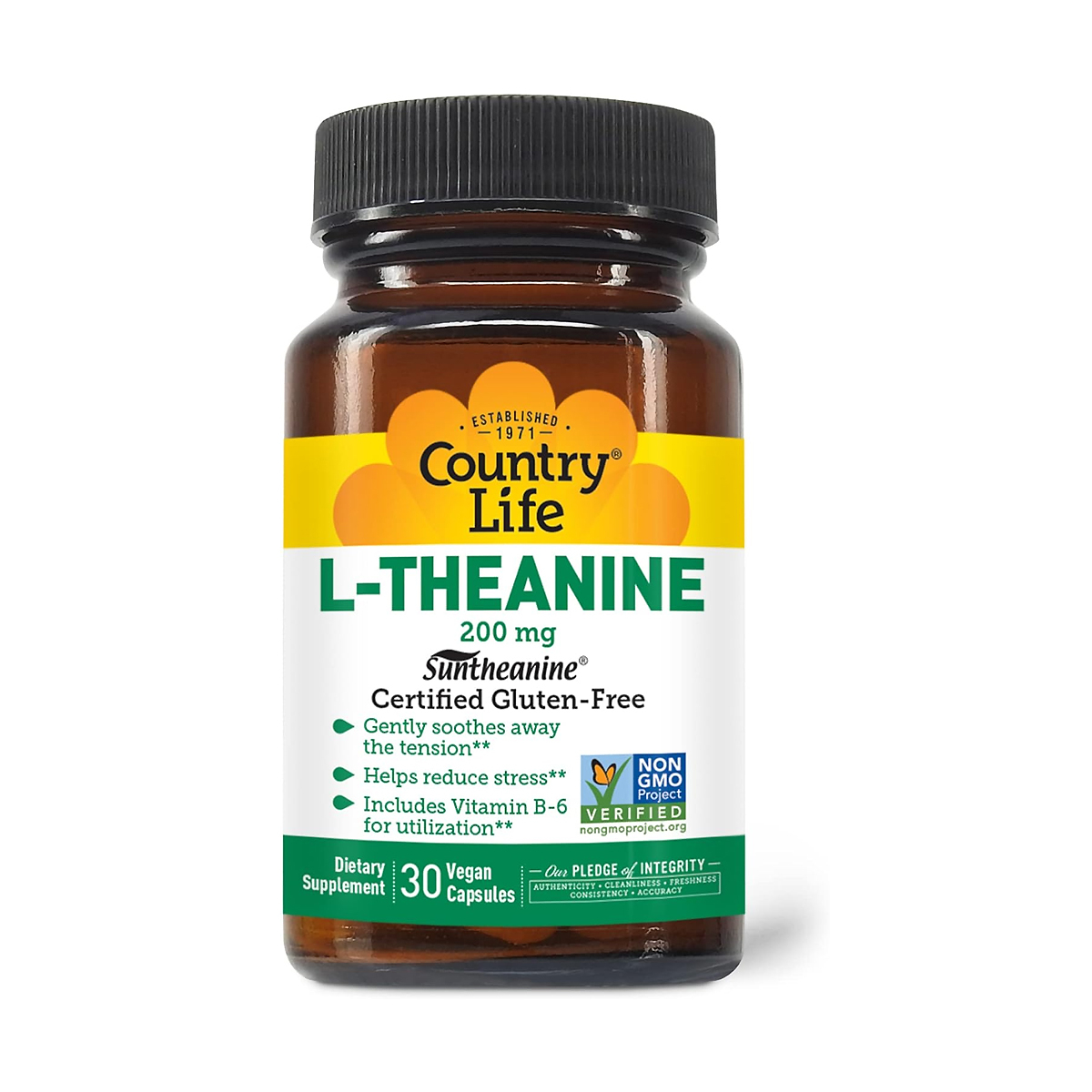
Branded Suntheanine differs from generic theanine in stereochemical purity. While natural tea produces solely the active L-isomer, cheap synthesis yields a racemic mix with D-theanine, which displays poor absorption and negligible activity. Suntheanine is enzymatically produced to yield 100% pure L-theanine.
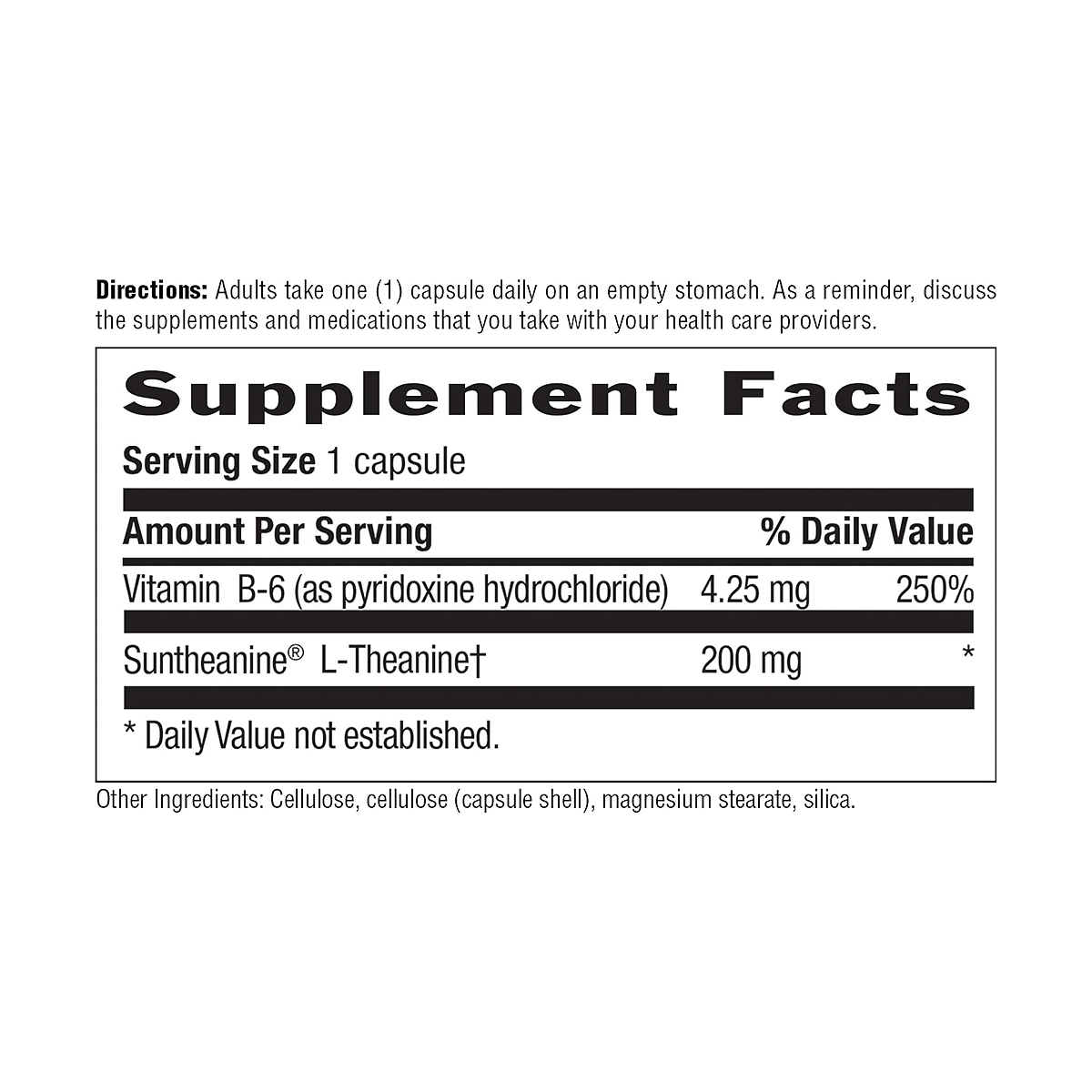
Country Life pairs 200 mg of Suntheanine with 4.25 mg of Vitamin B6 (250% DV), an enzymatic cofactor for converting glutamate to GABA. While safe, readers taking B-complexes should track cumulative intake against the 100 mg NIH upper limit for Vitamin B6.
| Nutrient / Compound | Country Life (1 cap) | Typical Shelf Dose | Clinical Studied Dose | NIH RDA / AI | Upper Limit (UL) |
|---|---|---|---|---|---|
| Suntheanine® L-Theanine | 200 mg | 100–200 mg | 200–400 mg/day | None established | None established* |
| Vitamin B-6 (Pyridoxine HCl) | 4.25 mg (250% DV) | 2–5 mg | 1.3–1.7 mg/day (RDA) | 1.3–1.7 mg | 100 mg/day (NIH ODS) |
*Note: While no formal UL exists for L-theanine, clinical trials and FDA GRAS evaluations demonstrate safety up to 250 mg per serving and 400 mg daily in clinical trials.
| Supplement | Mechanism | Onset | Daytime Sedation | Dose Floor | Safety Catch |
|---|---|---|---|---|---|
| L-Theanine | Alpha wave increase, glutamate block | 30–60 min | Very Low | 200 mg | Additive effect with BP meds |
| Melatonin | Circadian phase shifting | 30–60 min | High | 0.5–3 mg | Next-day grogginess; label variances |
| Ashwagandha | Cortisol reduction via HPA axis | 2–6 weeks | Low | 300–600 mg | Chronic dosing required; rare liver cautions |
| Magnesium Glycinate | NMDA block, GABA modulation | 1–2 hours | Low | 200–400 mg | 350 mg supplemental UL |
At $22.38 for 30 capsules ($0.75 each), a bottle lasts 30 days at 200 mg, but only 15 days if following 400 mg trial protocols ($1.49/day). For verified pure Suntheanine, it matches the clinical threshold accurately.
Who this is for:
- Individuals struggling to fall asleep due to racing thoughts who want to avoid morning grogginess or hormonal disruptions.
- Coffee drinkers seeking to eliminate caffeine-induced jitters and elevated pulse by co-ingesting 200 mg of L-theanine.
- Students and knowledge workers requiring calm, sustained mental focus during demanding cognitive tasks.
Who should skip it:
- Individuals with clinical insomnia or sleep apnea requiring medical evaluation rather than an amino acid supplement.
- Patients taking prescription blood pressure medications without physician consultation, due to potential additive hypotensive effects.
- Pregnant or breastfeeding women, as clinical safety trials in gestational populations remain scarce.
Country Life L-Theanine 200mg Suntheanine
Formulated with 200 mg of patented Suntheanine® pure L-isomer enantiomer and 4.25 mg of Vitamin B6 per vegetarian capsule. Certified Gluten-Free, Vegan, and Kosher. Delivers the exact 200 mg dose floor validated across human clinical trials for alpha wave generation and sleep latency reduction without daytime drowsiness.
Dosage Protocols, Timing, and Safety Considerations
Clinical trials administer L-theanine between 100 mg and 400 mg daily. For baseline stress management, a single morning or midday dose of 200 mg is standard. For bedtime sleep support, 200 mg taken 30 to 60 minutes prior to retiring aligns peak plasma concentrations with sleep initiation. In acute situational stress, 200 mg to 400 mg taken one hour beforehand has demonstrated efficacy in laboratory stress challenge protocols.
L-theanine displays an exceptional safety record. Evaluated under FDA GRAS Notice GRN No. 209 in 2006, the agency issued no questions regarding its safety. Animal models showed no adverse effects even at doses exceeding 2,000 mg/kg daily—far above standard human supplemental use.
A key safety distinction exists between pure L-theanine and green tea extract. While the NIH LiverTox database and NCCIH link concentrated green tea weight-loss extracts (high in EGCG catechins) to rare liver injury, isolated L-theanine contains no catechins and carries no hepatotoxicity record.
Safety Precautions and Contraindications:
- Antihypertensive Interactions: Because L-theanine reduces sympathetic nervous system arousal and can cause mild vasodilation, it may exert additive blood-pressure-lowering effects when combined with prescription antihypertensive drugs. Individuals on blood pressure therapy should monitor their readings closely.
- Central Nervous System Depressants: Although L-theanine does not cause sedation on its own, combining it with high doses of sedatives, barbiturates, or prescription sleep aids may potentiate psychomotor slowing.
- Pregnancy and Lactation: In the absence of rigorous safety data in pregnant or nursing individuals, supplemental L-theanine should be avoided unless approved by a physician.
Frequently Asked Questions
Does L-theanine make you drowsy during the day?
No. Clinical EEG trials show L-theanine increases alpha brain wave activity (8–14 Hz), inducing relaxed alertness without somnolence or motor slowing, leaving daytime cognitive function intact.
How long does it take for L-theanine to start working?
L-theanine crosses the blood-brain barrier within 30 to 60 minutes. Clinical studies show measurable EEG alpha wave increases and stress blunting starting at 45 minutes and peaking between 60 and 90 minutes post-consumption.
What is the difference between Suntheanine and regular L-theanine?
Suntheanine is a patented form containing 100% pure L-theanine enantiomer. Inexpensive synthetic theanine often contains a racemic blend of L- and D-theanine, where D-theanine shows poor absorption and negligible biological activity.
Can I take L-theanine every day, or do I need to cycle it?
Clinical trials lasting four weeks demonstrate consistent efficacy and safety with daily 200 mg dosing without evidence of tolerance, dependence, or withdrawal symptoms upon cessation.
Why is L-theanine often combined with caffeine?
At a 2:1 ratio (200 mg L-theanine to 100 mg caffeine), L-theanine smooths out caffeine's jitteriness, tachycardia, and vasoconstriction while preserving alertness, attention switching speed, and reaction time accuracy.
Is L-theanine better than melatonin for sleep?
They serve distinct roles. Melatonin shifts circadian timing for sleep onset but can cause morning grogginess. L-theanine calms bedtime mental rumination and reduces night awakenings without next-day grogginess.
Can L-theanine cause liver toxicity like green tea extract?
No. Liver injury cases in the NIH LiverTox database involve high-dose green tea catechins, specifically epigallocatechin gallate (EGCG). Purified L-theanine contains no catechins and has no documented hepatotoxicity.
What is the recommended dosage of L-theanine for stress and sleep?
Clinical trials identify 200 mg to 400 mg daily as the effective therapeutic range for stress reduction and sleep support. Products formulated with only 50 mg to 100 mg fall below established clinical dose floors.
Sources
- Nobre, A. C., Rao, A., & Owen, G. N. "L-theanine, a natural constituent in tea, and its effect on mental state." Asia Pacific Journal of Clinical Nutrition. Published 2008. Accessed 2 September 2026. europepmc.org/article/med/18296328
- Hidese, S., Ogawa, S., Ota, M., et al. "Effects of L-Theanine Administration on Stress-Related Symptoms and Cognitive Functions in Healthy Adults: A Randomized Controlled Trial." Nutrients. Published 2019. Accessed 2 September 2026. pmc.ncbi.nlm.nih.gov/articles/PMC6836118/
- Kimura, K., Ozeki, M., Juneja, L. R., & Ohira, H. "L-Theanine reduces psychological and physiological stress responses." Biological Psychology. Published 2007. Accessed 2 September 2026. europepmc.org/article/med/16930802
- Williams, J. L., Everett, J. M., D'Cunha, N. M., et al. "The Effects of Green Tea Amino Acid L-Theanine Consumption on the Ability to Manage Stress and Anxiety Levels: a Systematic Review." Plant Foods for Human Nutrition. Published 2020. Accessed 2 September 2026. europepmc.org/article/med/31758301
- Nutrition Reviews. "Effects of Tea (Camellia sinensis) or its Bioactive Compounds l-Theanine or l-Theanine plus Caffeine on Cognition, Sleep, and Mood in Healthy Participants: A Systematic Review and Meta-Analysis of Randomized Controlled Trials." Published 2025. Accessed 2 September 2026. pmc.ncbi.nlm.nih.gov/articles/PMC12422004/
- Baba, Y., Inagaki, S., Nakagawa, S., et al. "Effects of l-Theanine on Cognitive Function in Middle-Aged and Older Subjects: A Randomized Placebo-Controlled Study." Journal of Medicinal Food. Published 2021. Accessed 2 September 2026. pmc.ncbi.nlm.nih.gov/articles/PMC8080935/
- National Center for Complementary and Integrative Health (NCCIH). "Green Tea." National Institutes of Health. Updated November 2020. Accessed 2 September 2026. nccih.nih.gov/health/green-tea
- LiverTox: Clinical and Research Information on Drug-Induced Liver Injury. "Green Tea." National Institute of Diabetes and Digestive and Kidney Diseases. Updated 2020. Accessed 2 September 2026. ncbi.nlm.nih.gov/books/NBK547925/
- U.S. Food and Drug Administration. "Dietary Supplements." U.S. Department of Health and Human Services. Accessed 2 September 2026. fda.gov/food/dietary-supplements
Medical disclaimer: This article is for educational and informational purposes only and does not constitute clinical medical advice. These statements have not been evaluated by the Food and Drug Administration. This product is not intended to diagnose, treat, cure, or prevent any disease. Always consult a qualified healthcare professional before beginning any dietary supplement regimen, particularly if you take prescription medications or have an existing health condition.