
A 2023 laboratory test of 25 over-the-counter melatonin gummies found that 22 of them did not contain the amount of melatonin listed on the label — with actual content ranging from 74% to 347% of the labeled dose. Melatonin does have real, evidence-backed uses: it can shorten the time it takes to fall asleep in jet lag, in delayed sleep-wake phase disorder, and in some children with sleep problems. But for the most common reason people reach for it — ordinary chronic insomnia — the two major U.S. sleep-medicine guidelines say the evidence isn't strong enough to recommend it. Here is what the National Institutes of Health, the FDA, and the CDC actually document about melatonin's benefits, its risks, and the gap between what's on the label and what's in the bottle.
- A 2023 JAMA study found 22 of 25 melatonin gummy products were inaccurately labeled, with content ranging from 74% to 347% of the stated dose.
- In a 2018 randomized trial (307 enrolled, 116 randomized to treatment), 0.5 mg of melatonin taken 1 hour before a fixed bedtime helped people with delayed sleep-wake phase disorder fall asleep 34 minutes earlier on average.
- The American Academy of Sleep Medicine and American College of Physicians both say there isn't enough evidence to recommend melatonin for ordinary chronic insomnia; CBT-I is the guideline-preferred first-line treatment instead.
- CDC surveillance data estimate 11,000 emergency department visits between 2019 and 2022 for unsupervised melatonin ingestion by children age 5 and younger.
- Because melatonin is sold as a dietary supplement rather than a drug, the FDA does not verify its content or effectiveness before it reaches store shelves.
- What Melatonin Actually Does in the Body
- Does Melatonin Work? What the Evidence Shows
- The Label Problem: What's Actually in the Bottle
- How Much Melatonin Should You Take?
- Melatonin and Children: What the Data Show
- Who Should Be Careful: Safety and Interactions
- Melatonin vs. Sleep Hygiene: What Helps More
- FAQ
What Melatonin Actually Does in the Body
Melatonin is a hormone your brain produces in response to darkness, according to the National Institutes of Health's National Center for Complementary and Integrative Health (NCCIH). It helps set the timing of your circadian rhythm — the roughly 24-hour internal clock that governs when you feel alert and when you feel sleepy — and exposure to light at night can block its production. Research suggests melatonin plays other roles in the body beyond sleep, though NCCIH notes those effects "are not fully understood."
Melatonin supplements can be made from animals or microorganisms, but most sold today are synthetic. Your body already makes melatonin every night, so the real question for a shopper is whether taking more of it changes anything measurable — and for which conditions specifically.
Does Melatonin Work? What the Evidence Shows
The honest answer is: it depends heavily on what you're using it for. NCCIH's evidence summary draws a clear line between conditions where melatonin has reasonably good trial support and chronic insomnia, where it doesn't.
| Condition | Evidence base | Effect reported |
|---|---|---|
| Jet lag (eastward flights) | 4 studies, 142 travelers | Melatonin better than placebo for overall jet lag symptoms |
| Jet lag (westward flights) | 2 studies, 90 travelers | Melatonin better than placebo for symptom reduction |
| Delayed sleep-wake phase disorder | 2018 RCT, 116 randomized, 4 weeks, 0.5 mg | Fell asleep 34 minutes earlier on average vs. placebo |
| Anxiety before surgery | 2015 review, 12 studies, 774 people | "Strong evidence" melatonin beat placebo pre-surgery |
| Chronic insomnia (adults) | AASM 2017 & ACP 2016 guidelines | Not enough evidence to recommend; CBT-I preferred instead |
| Shift-work sleep problems | 2 reviews, up to 300 participants | Small or inconclusive; no recommendation made |
The delayed sleep-wake phase disorder (DSWPD) result is the most concrete number NCCIH cites: in a four-week randomized trial (307 people enrolled, 116 randomized to treatment), taking 0.5 mg of melatonin one hour before a fixed, deliberately-chosen bedtime led to falling asleep 34 minutes earlier on average, along with better sleep during the first third of the night. That's a real, measured effect — but DSWPD, where someone's internal clock is shifted so they can't fall asleep before 2–6 a.m., is a specific circadian disorder, not the same thing as everyday difficulty sleeping.
For ordinary chronic insomnia — trouble falling or staying asleep for a month or longer — the picture is different. Practice guidelines from the American Academy of Sleep Medicine (2017) and the American College of Physicians (2016) both concluded there isn't enough strong evidence on melatonin's effectiveness or safety for chronic insomnia to recommend its use. The ACP guideline instead strongly recommends cognitive behavioral therapy for insomnia (CBT-I) as the first-line treatment. That's an important distinction most product marketing glosses over.
Mayo Clinic Minute: what melatonin can and can't do for sleep, and who should talk to a doctor before using it.
The Label Problem: What's Actually in the Bottle
This is the part of the melatonin story that gets the least attention, and it matters more than most people realize. Because melatonin is regulated as a dietary supplement rather than a drug, the FDA does not test or approve its content before it reaches shelves. Under the Dietary Supplement Health and Education Act (DSHEA), manufacturers and distributors are responsible for evaluating their own products' safety and labeling accuracy; the FDA's authority is largely to act after a product reaches the market and is found to be adulterated or misbranded.
Two independent lab studies, both cited in NCCIH's official melatonin review, show what that gap can look like in practice:
| Study | Sample | Finding |
|---|---|---|
| 2017 study (grocery/pharmacy purchases) | 31 melatonin products | Most products' actual melatonin content didn't match the label; 26% also contained serotonin, a hormone that can be harmful even at low levels |
| Cohen et al., JAMA, 2023 | 25 over-the-counter melatonin gummies | 22 of 25 inaccurately labeled; content ranged from 74% to 347% of the labeled amount (one product had no detectable melatonin) |
How Much Melatonin Should You Take?
There is no NIH-set recommended dose or Tolerable Upper Intake Level for melatonin the way there is for vitamin D or magnesium — it's a hormone, not an essential nutrient, and studies have tested doses across a wide range. NCCIH is direct about the uncertainty this creates: For melatonin supplements, particularly at doses higher than what the body normally produces, there's not enough information yet about possible side effects to have a clear picture of overall safety.
Measurable effects have been seen at strikingly small doses: the DSWPD trial that produced the 34-minutes-earlier result used just 0.5 mg, and its authors wrote that they picked that minimal effective dose deliberately, to avoid residual next-morning effects on alertness. Products commonly range from 1 mg to 10 mg or more per serving, and more milligrams isn't established to mean a better result; it mainly means more hormone at a dose that's been studied less.
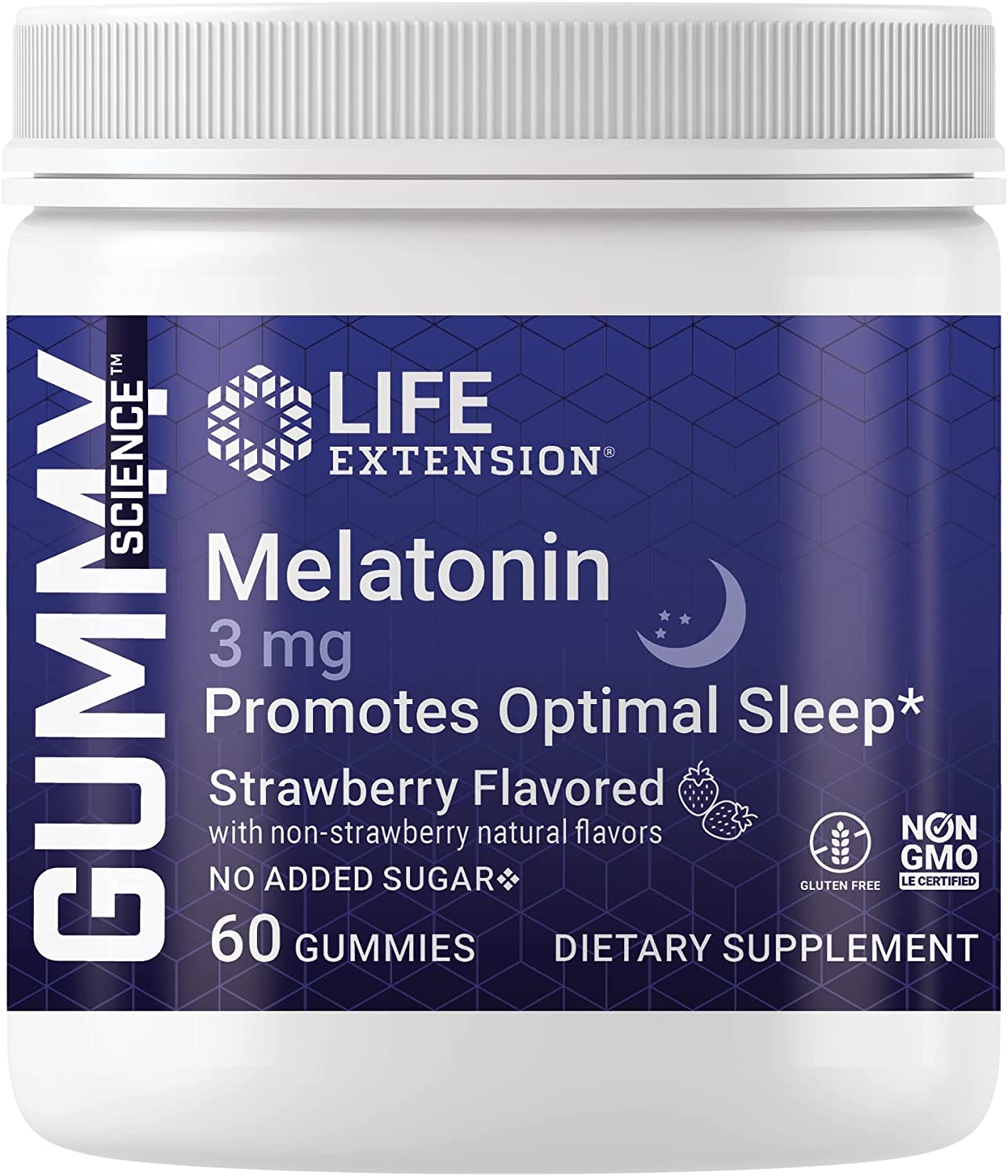
Life Extension Melatonin 3 mg Gummies deliver 3 mg of melatonin per sugar-free, strawberry-flavored gummy. Worth being straight about that number: 3 mg sits at the lower end of what's sold at retail, but it is still six times the 0.5 mg used in the DSWPD trial described above — so that trial's 34-minute result is not a claim about this product, and no melatonin product has an established "correct" dose. The label directs chewing one gummy 30 to 60 minutes before bedtime. A 60-count bottle is roughly a two-month supply at one gummy nightly. As with any melatonin product, this is a dietary supplement, not an FDA-approved sleep medication, and it hasn't been independently tested by the studies above — the label-accuracy concern in the table applies to the product category generally, not to this specific bottle.
View product detailsMelatonin and Children: What the Data Show
Melatonin use in children deserves its own section because two things are true at once: there's modest evidence it can help with sleep in certain pediatric conditions, and there's a documented, growing safety problem with accidental ingestion.
On effectiveness, a 2019 review looked at 18 studies covering 1,021 children and found melatonin outperformed placebo for time to fall asleep and total sleep time, with effects that varied by condition:
| Condition | Fell asleep | Slept |
|---|---|---|
| Autism spectrum disorder | 37 minutes earlier | 48 minutes longer |
| ADHD | 20 minutes earlier | 33 minutes longer |
| Atopic dermatitis | 6.8 minutes earlier | 35 minutes longer |
| Chronic sleep-onset insomnia | 24 minutes earlier | 25 minutes longer |
NCCIH is careful to note that because melatonin is a hormone, there are open questions about whether supplementing it could affect hormonal development — including puberty, menstrual cycles, and prolactin levels — and that long-term safety data in children simply doesn't exist yet. Its guidance is that parents should talk to a health care provider before giving a child melatonin.
Who Should Be Careful: Safety and Interactions
Short-term melatonin use appears safe for most adults, with mild side effects reported in studies — headache, dizziness, nausea, and sleepiness are the most common. Because of that drowsiness, this product's own label cautions against alcohol, driving, or operating machinery after taking it — worth following for any melatonin product, not just this one. NCCIH also flags several groups who should talk to a health care provider before using it:
- People with epilepsy or on blood-thinning medication need medical supervision when taking melatonin.
- Pregnant or breastfeeding women — there's been a lack of research on melatonin's safety in this group.
- People with dementia — the American Academy of Sleep Medicine's 2015 guidelines recommend against melatonin use in this population.
- Older adults generally — melatonin may stay active in the body longer than in younger people, which can cause next-day drowsiness.
- People undergoing cancer treatment — some products can interact with standard treatments, so NCCIH advises checking with an oncology care team first.
Long-term safety data remain limited. That doesn't make melatonin uniquely risky among supplements; it's a reason to use it at a studied dose, for a use case with actual trial support, rather than nightly and indefinitely without reassessing.
Melatonin vs. Sleep Hygiene: What Helps More
It's easy to reach for a supplement before addressing the basics, but the National Institute on Aging and MedlinePlus both put sleep habits ahead of any pill for most people with everyday sleep trouble. Adults need 7 to 9 hours of sleep a night, according to MedlinePlus's sleep-duration guidance:
| Age group | Recommended sleep |
|---|---|
| Teens (13–18 years) | 8–10 hours a day |
| Adults (18+ years) | 7–9 hours a day |
| Older adults | 7–9 hours a day, though quality often declines with age |
The National Institute on Aging notes that older adults specifically tend to go to sleep and wake up earlier than they did when younger, and that persistent difficulty sleeping is worth discussing with a doctor rather than self-treating indefinitely. Both agencies emphasize consistent sleep-wake timing, limiting light exposure before bed (which is precisely the cue that suppresses your body's own melatonin production), and avoiding caffeine and alcohol close to bedtime. If you're building a nightly routine around sleep support, our sleep support category lists melatonin alongside other options shoppers use for winding down. For chronic insomnia specifically, remember that the American College of Physicians' guideline puts CBT-I — not medication or supplements — as the recommended first step.
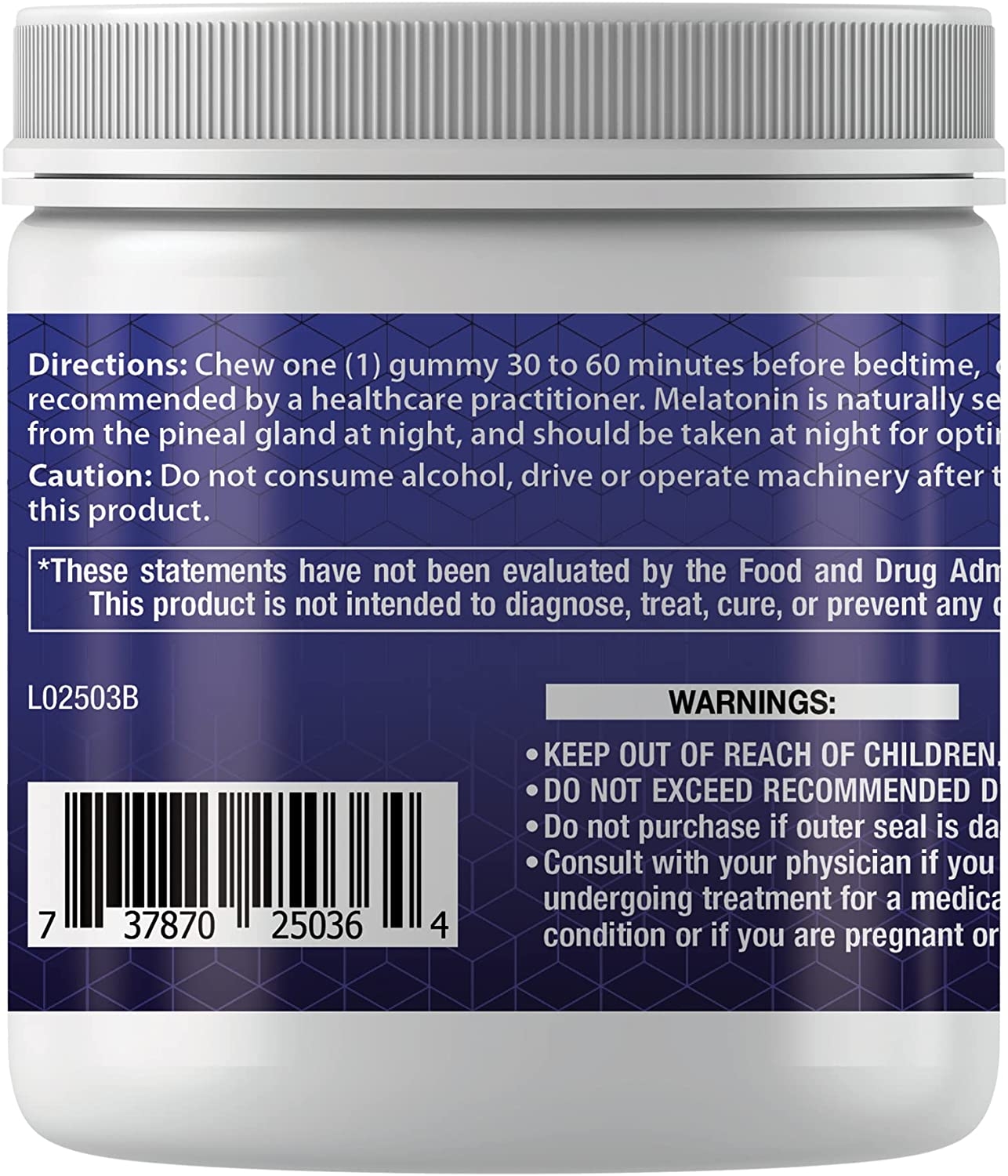
Life Extension Melatonin 3 mg Gummies — sugar-free, strawberry-flavored, 60 count. Chewed 30–60 minutes before bed, as the label directs. Because guidelines don't support open-ended nightly use for ordinary insomnia, it's worth treating a bottle as a time-limited trial to reassess rather than a standing habit. The label also cautions against alcohol, driving, or operating machinery after taking it.
Shop this productFAQ
Is melatonin safe to take every night?
Short-term use appears safe for most adults, but long-term safety data are lacking. Guidelines don't support open-ended nightly use for ordinary insomnia; the evidence is stronger for time-limited uses like jet lag or shifting your sleep schedule.
Does melatonin help with chronic insomnia?
Not according to current guidelines. The AASM (2017) and ACP (2016) both concluded there isn't enough evidence to recommend melatonin for chronic insomnia; the ACP recommends CBT-I as the first-line treatment instead.
Why did a 2023 study find problems with melatonin gummies?
Researchers tested 25 over-the-counter melatonin gummies and found 22 were inaccurately labeled, with content ranging from 74% to 347% of the stated dose — because melatonin is regulated as a supplement, not a drug, so the FDA doesn't verify content before it reaches shelves.
Is it safe to give melatonin to children?
Talk to a health care provider first. There's modest evidence it helps sleep onset in conditions like ASD or ADHD, but long-term safety data don't exist, and accidental ingestion by young children is a documented, rising cause of ER visits.
What dose of melatonin is typically used in studies?
Often far lower than retail products suggest. The DSWPD trial that produced the 34-minutes-earlier result used just 0.5 mg, taken one hour before a fixed bedtime. Retail products commonly contain 3 mg, 5 mg, or 10 mg and up per serving — doses that have been studied less, not more.
Who should avoid melatonin or check with a doctor first?
People with epilepsy, people on blood-thinning medication, pregnant or breastfeeding women, people with dementia, and people in cancer treatment, per NCCIH guidance.
- NIH National Center for Complementary and Integrative Health — Melatonin: What You Need To Know
- U.S. Food & Drug Administration — Dietary Supplements
- NIH Office of Dietary Supplements — Dietary Supplements: What You Need to Know
- National Institute on Aging — A Good Night's Sleep
- MedlinePlus — Healthy Sleep
- Sletten TL, et al. — Efficacy of melatonin with behavioural sleep-wake scheduling for delayed sleep-wake phase disorder. PLoS Medicine. 2018;15(6):e1002587
- NIH National Center for Complementary and Integrative Health — Using Dietary Supplements Wisely
This article is for educational purposes only and is not medical advice. Statements about dietary supplements have not been evaluated by the Food and Drug Administration. This product is not intended to diagnose, treat, cure, or prevent any disease. Talk to a health care provider before starting melatonin or any new supplement, especially if you are pregnant, breastfeeding, taking medication, or managing a chronic health condition.