
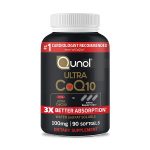
CoQ10 (coenzyme Q10) is a compound every cell in the body makes and uses to produce energy, and it is the supplement most often handed to someone who just started a statin — yet the National Center for Complementary and Integrative Health concludes plainly that "the overall scientific evidence does not support the idea that CoQ10 can reduce muscle pain caused by" statins (NCCIH, updated 2019). A separate, much larger trial found something statin users are rarely told about instead: a real drop in deaths, but in people with heart failure, on a dose most bottles don't actually contain.
Key Takeaways
- NCCIH's own review, last updated in 2019, says the evidence does not support CoQ10 relieving statin-related muscle pain — the single most common reason it's sold to statin users.
- The 420-patient Q-SYMBIO trial (2014) found a 49% relative reduction in all-cause mortality in people with moderate-to-severe heart failure taking CoQ10 alongside standard therapy — a different population and a different claim than "statin muscle pain."
- That trial used 300 mg of CoQ10 daily (100 mg three times a day). The label on this article's featured product directs one 100 mg softgel daily — a third of the studied dose.
- A 2021 NCCIH-cited review of 6 studies and 371 participants found CoQ10 may reduce migraine frequency and duration, but not severity — and NCCIH calls the evidence "small" and "uncertain."
- No Recommended Dietary Allowance, Adequate Intake, or Tolerable Upper Limit exists for CoQ10. The product's own label states its Daily Value is "not established," and NCCIH notes it can interact with the blood thinner warfarin.
In this article:
- What Is CoQ10, and Why Do Statins Deplete It?
- Does CoQ10 Actually Relieve Statin Muscle Pain?
- What the Q-SYMBIO Trial Actually Found for Heart Failure
- CoQ10 for Migraine, Blood Pressure, and Other Claims
- Safety, Interactions, and Who Should Be Careful
- Inside Qunol Ultra CoQ10: What's Actually in the Softgel
- How to Use CoQ10 Sensibly
- Frequently Asked Questions
What Is CoQ10, and Why Do Statins Deplete It?
Coenzyme Q10 is a substance naturally present throughout the body, concentrated most heavily in the heart, liver, kidneys, and pancreas, according to the National Center for Complementary and Integrative Health (NCCIH). Inside mitochondria — the structures that convert food into usable cellular energy — CoQ10 is a required cofactor in that conversion process, and it also functions as an antioxidant in cell membranes.
The body makes its own CoQ10 through the same pathway that produces cholesterol. Statins block an early enzyme in that pathway (HMG-CoA reductase), lowering cholesterol but also reducing CoQ10 production as a side effect. That mechanism is the entire rationale for marketing CoQ10 to statin users — and, as covered below, a different question from whether replacing it actually relieves muscle symptoms.
CoQ10 supplements sit in the same "heart health" aisle as other widely marketed ingredients, including fish oil and red yeast rice, and like those two, its evidence base is a mix of genuinely promising trial data and claims that outrun what's actually been shown.
| Factor | What happens |
|---|---|
| Age | Tissue CoQ10 content is highest in youth and declines over adulthood, per NCCIH and MedlinePlus Genetics summaries of CoQ10's biology |
| Statin medications | Statins inhibit HMG-CoA reductase, the same early-pathway enzyme the body uses to synthesize CoQ10, reducing production alongside cholesterol |
| Certain genetic mutations | Rare inherited defects in CoQ10-synthesis genes (COQ2, COQ4, COQ6, COQ8A/B) cause primary CoQ10 deficiency, a serious disorder affecting the brain, muscles, and kidneys |
| Some chronic diseases | Reduced CoQ10 levels have been observed in some cardiovascular and neurodegenerative conditions, which is part of why researchers have studied supplementation in those diseases |
Does CoQ10 Actually Relieve Statin Muscle Pain?
This is the claim that sells the bottle, and it's worth stating plainly: as of NCCIH's most recent overview, updated in 2019, the answer is no. Statin-associated muscle symptoms are common enough that they're a leading reason patients stop taking a cholesterol drug that's otherwise reducing their cardiovascular risk, so a cheap, well-tolerated fix would matter enormously if it worked.
"Although results of individual studies have varied, the overall scientific evidence does not support the idea that CoQ10 can reduce muscle pain caused by the cholesterol-lowering drugs known as statins."
— National Center for Complementary and Integrative Health, Coenzyme Q10, updated 2019Why the marketing outran the evidence: The statin-depletion mechanism is real and easy to explain, which is likely why it became the default sales pitch. But a plausible mechanism isn't a demonstrated clinical effect, and randomized trials testing CoQ10 against statin muscle pain haven't, on the whole, shown a benefit large enough for NCCIH to endorse the claim.
None of this means CoQ10 is worthless for people on statins — it means the claim on this product's marketing, "beneficial to statin users," rests on a mechanism, not a proven symptom benefit. The evidence is actually stronger for a different condition entirely.
What the Q-SYMBIO Trial Actually Found for Heart Failure
The strongest positive data on CoQ10 comes from a condition the bottle doesn't mention by name: heart failure. The Q-SYMBIO trial, a randomized, double-blind, placebo-controlled study published in 2014, enrolled 420 patients with moderate-to-severe heart failure (NYHA class III/IV) at centres in Europe, Asia, and Australia, according to a 2022 review in the Journal of Cardiovascular Development and Disease. Patients received either 300 mg of CoQ10 daily (100 mg three times a day) or placebo, on top of their standard heart failure medications, and were followed for two years.
The results were larger than most supplement trials produce: a 49% relative reduction in all-cause mortality (hazard ratio 0.51, p=0.018) and a 50% reduction in a composite endpoint of cardiovascular death, mechanical heart-assist implantation, or urgent transplant (hazard ratio 0.50, p=0.003). A separate 2018 systematic review of systematic reviews in the Indian Heart Journal corroborates the hospitalization benefit (hazard ratio 0.39, p<0.001), but notes older, smaller trials pooled together showed a weaker mortality signal, and ejection-fraction results were inconsistent across studies, with one Cochrane analysis finding no significant effect.
| Qunol Ultra CoQ10 (this product) | Typical shelf dose | Q-SYMBIO trial dose (heart failure) | Established Daily Value / Upper Limit | |
|---|---|---|---|---|
| CoQ10 | 100 mg (1 softgel/day, per label) | 30–200 mg | 300 mg/day (100 mg three times daily) | None established — the product's own label states "Daily Value not established," and no NIH Tolerable Upper Intake Level exists |
Put plainly: the labeled daily dose of this product is one-third the dose used in the trial above, and that trial enrolled people with diagnosed, moderate-to-severe heart failure — not healthy adults or people whose only concern is statin-related muscle aches. NCCIH's own bottom line is blunter: research on CoQ10 in heart failure "is also inconclusive." Both reviews call for larger, better-standardized trials before treating CoQ10 as settled science for heart failure; the 2022 authors specifically note their disappointment that recent European cardiology guidelines still haven't incorporated CoQ10 despite the size of the Q-SYMBIO result.
One caveat cuts the other way: this bottle's label claims 100 mg of its formulation equals 300 mg of regular CoQ10, and Q-SYMBIO did use ubiquinone dissolved in vegetable oil — the oil-suspension form that claim is benchmarked against. But the 3× figure is the manufacturer's own, from company-sponsored absorption testing, and higher blood levels are not the same thing as the mortality benefit the trial measured.
Mayo Clinic on which supplements have real evidence behind them for cardiovascular health, and which are mostly marketing.
CoQ10 for Migraine, Blood Pressure, and Other Claims
Beyond the heart, CoQ10 has been studied for several other conditions, with evidence ranging from modestly promising to flatly negative:
- Migraine: A 2021 review of 6 studies covering 371 participants, cited on NCCIH's headache page (updated August 2021), found CoQ10 "may help reduce the duration and frequency of migraines but not their severity" — though NCCIH calls the evidence small and uncertain.
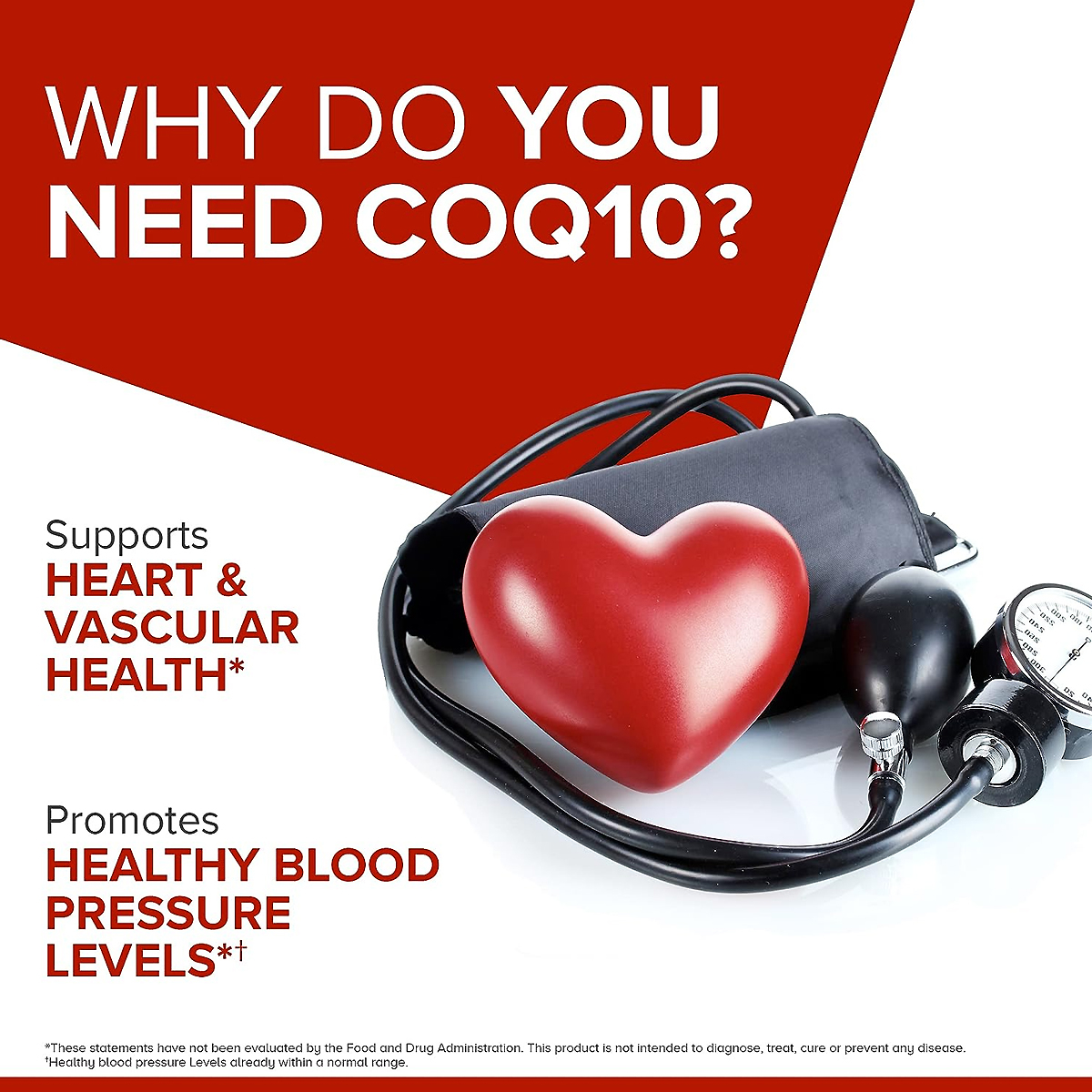
- Blood pressure: NCCIH says the limited evidence "suggests that CoQ10 probably doesn't have a meaningful effect on blood pressure" — at odds with the "healthy blood pressure" claim on this product's own marketing graphic (shown above), footnoted to apply only to levels already normal.
- Parkinson's disease: A major NIH-funded trial found higher-than-usual CoQ10 doses did not improve early Parkinson's symptoms; a 2017 evaluation of that and smaller studies concluded CoQ10 isn't helpful for Parkinson's, per NCCIH.
- Chemotherapy-related heart damage: NCCIH notes some evidence CoQ10 may reduce heart-damage risk from one chemotherapy drug class, though evidence for preventing heart disease outright remains inconclusive.
The pattern is consistent: real biological plausibility, genuinely positive signals in narrow populations, and a shakier case for the broad "heart health and energy" framing used to sell it to everyone else.
Safety, Interactions, and Who Should Be Careful
NCCIH reports no serious side effects of CoQ10 have been documented; mild effects like insomnia or digestive upset may occur. The bigger consideration is drug interactions: NCCIH states CoQ10 "may interact with the anticoagulant (blood thinner) warfarin and the diabetes drug insulin, and it may not be compatible with some types of cancer treatment."
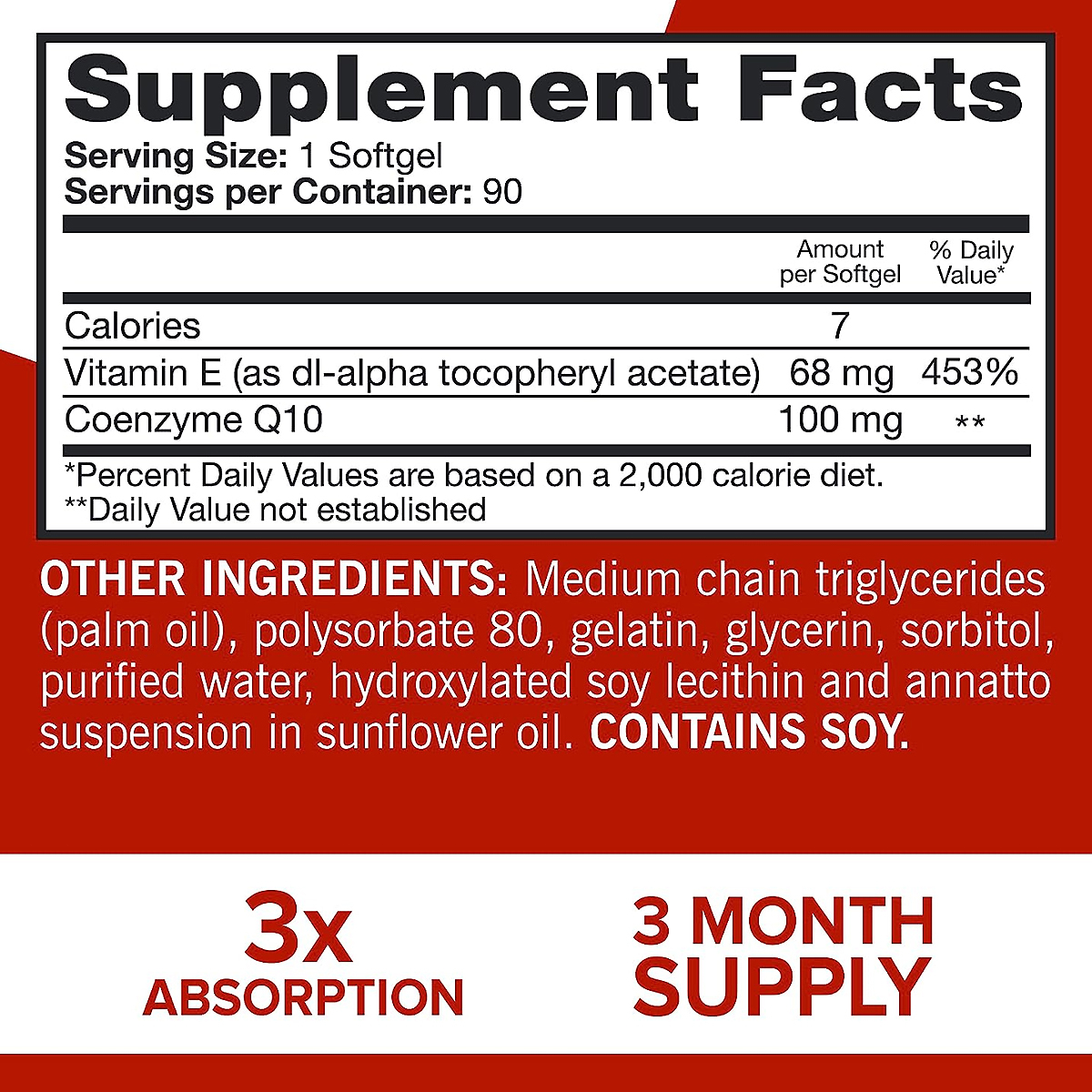
Genuine safety warning: If you take warfarin or another blood thinner, talk to your doctor before starting CoQ10 — its chemical structure resembles vitamin K, which can counteract warfarin and increase clotting risk. This specific product compounds that concern: each softgel also delivers 68 mg of vitamin E (453% DV), and high-dose vitamin E carries its own mild anticoagulant effect. Tripling the dose to match the trial would also triple the vitamin E, to about 204 mg daily — roughly 1,359% of the Daily Value.
People on insulin, anyone in cancer treatment, and pregnant or breastfeeding women (limited safety data) should also check with a doctor first. Because no Tolerable Upper Intake Level exists, "how much is too much" isn't a question the research currently answers with a number.
Inside Qunol Ultra CoQ10: What's Actually in the Softgel
Qunol Ultra CoQ10 is a 90-softgel bottle, one softgel daily, sold as a 3-month supply. Per its Supplement Facts panel, each softgel provides 100 mg of CoQ10 in a patented water- and fat-soluble delivery system the manufacturer markets as improving absorption. The label lists the ingredient only as Coenzyme Q10 and does not designate the reduced (ubiquinol) form. Each softgel also contains 68 mg of vitamin E (453% DV), plus medium chain triglycerides (palm oil), polysorbate 80, gelatin, glycerin, sorbitol, purified water, hydroxylated soy lecithin and annatto. It contains soy and gelatin, so it isn't suitable for anyone avoiding soy or following a vegetarian or vegan diet.
The "#1 cardiologist recommended" claim is footnoted on the label itself to an IQVIA ProVoice survey of cardiologists — a marketing survey, not an NIH or NCCIH evaluation. The underlying chemistry, water solubility improving uptake of a fat-soluble compound, is a real and plausible mechanism.
Framed honestly: this is a clearly labeled, standard-dose CoQ10 supplement with a disclosed vitamin E co-ingredient — and it isn't proven to relieve the statin muscle pain its own marketing leads with.
Who this is for: People with a doctor-diagnosed heart failure who want to discuss adding CoQ10 to standard therapy with their cardiologist, and people who want a well-tolerated antioxidant supplement and understand the evidence is mixed for most of the claims on the label.
Who should skip it: Anyone buying this specifically to relieve statin muscle pain, since NCCIH's own review says the evidence doesn't support that use; anyone on warfarin or other blood thinners without talking to a doctor first; and most healthy adults with no diagnosed heart condition, for whom no established benefit or recommended intake currently exists.
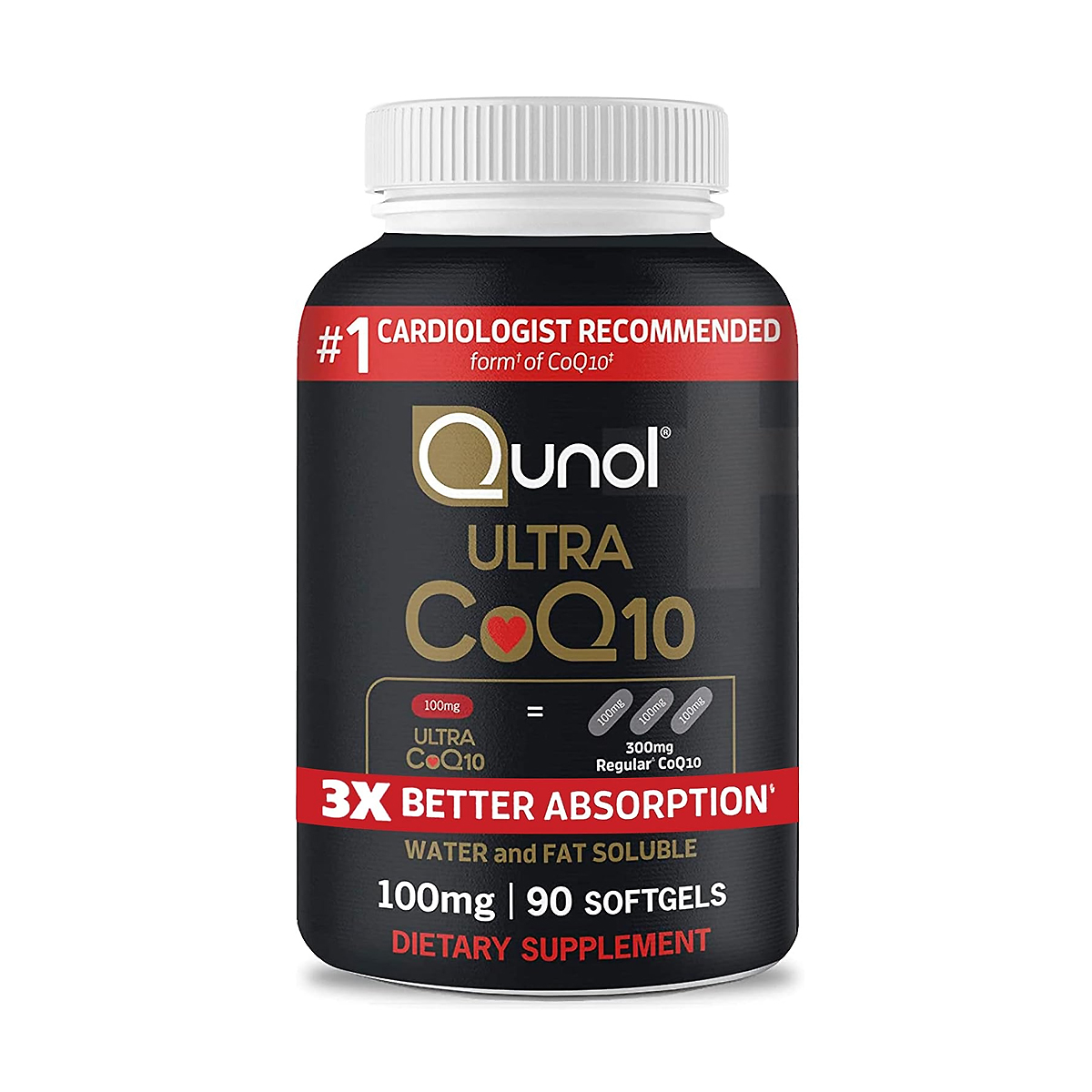
Qunol Ultra CoQ10 Superior Absorption — 90 Softgels
100 mg CoQ10 per softgel with 68 mg vitamin E, a 3-month supply at the labeled one-softgel daily dose. As covered above, that's a third of the dose used in the trial showing a heart failure mortality benefit, and it contains soy and gelatin.
View Product DetailsHow to Use CoQ10 Sensibly
A few sensible defaults follow from the evidence above:
- If you're taking CoQ10 hoping it relieves statin muscle pain, know NCCIH's review doesn't support that specific benefit — talk to your doctor about other options if symptoms are limiting your statin use.
- If you have diagnosed heart failure and are considering CoQ10 alongside existing treatment, discuss the Q-SYMBIO trial's 300 mg/day dosing with your cardiologist rather than assuming a standard 100 mg product matches what was studied.
- If you take warfarin, another blood thinner, or insulin, talk to your doctor first, and mention this product's vitamin E content too.
- Our Heart & Cardiovascular category carries other evidence-reviewed options if you're comparing CoQ10 against fish oil or red yeast rice.
Frequently Asked Questions
Does CoQ10 actually relieve muscle pain caused by statins?
NCCIH's evidence review, updated in 2019, states that despite mixed results across individual studies, the overall scientific evidence does not support CoQ10 reducing statin-related muscle pain. This is true even though the underlying mechanism, statins lowering the body's own CoQ10 production, is well established.
What did the Q-SYMBIO trial find about CoQ10 and heart failure?
The 2014 trial of 420 patients with moderate-to-severe heart failure found a 49% relative reduction in all-cause mortality among those taking 300 mg of CoQ10 daily alongside standard therapy, versus placebo. Reviewers note it needs replication in larger, more current trials before treated as definitive.
Is CoQ10 helpful for migraines?
Possibly, modestly. A 2021 review of 6 studies and 371 participants found CoQ10 may reduce migraine frequency and duration, though not severity. NCCIH describes the evidence as small in both quantity and effect size, with real uncertainty remaining.
Does CoQ10 lower blood pressure?
NCCIH states the limited evidence available suggests CoQ10 probably doesn't have a meaningful effect on blood pressure, which is worth knowing since blood-pressure support is a common marketing claim on CoQ10 products, including this one.
Is there a recommended daily dose or upper limit for CoQ10?
No. There is no NIH Recommended Dietary Allowance, Adequate Intake, or Tolerable Upper Intake Level established for CoQ10, and this product's own label states its Daily Value is not established. Clinical trial doses have ranged from about 100 mg to 300 mg daily depending on the condition studied.
Can I take CoQ10 if I'm on warfarin or another blood thinner?
Talk to your doctor first. NCCIH lists warfarin as a documented interaction because CoQ10's chemical structure resembles vitamin K and can reduce warfarin's blood-thinning effect. This specific product also contains a high dose of vitamin E, which independently carries a mild anticoagulant effect.
What's the difference between ubiquinone and ubiquinol CoQ10?
Ubiquinone is the oxidized, more common and typically less expensive form; ubiquinol is the reduced form some manufacturers market as more bioavailable. This product's label lists the ingredient only as Coenzyme Q10, with a proprietary water-solubility process, and does not designate ubiquinol; absorption comparisons between the forms come primarily from manufacturer-sponsored research.
How much CoQ10 is in Qunol Ultra CoQ10, and does it match the dose used in trials?
Each softgel contains 100 mg of CoQ10, and the label directs one softgel daily. The Q-SYMBIO heart failure trial used 300 mg daily, 100 mg three times a day, three times this product's labeled daily dose.
Sources
- National Center for Complementary and Integrative Health. "Coenzyme Q10." Updated January 2019. Accessed 30 August 2026.
- National Center for Complementary and Integrative Health. "Headaches: What You Need To Know." Updated August 2021. Accessed 30 August 2026.
- Filipiak, K.J., Surma, S., Romańczyk, M., Okopień, B. "Heart Failure—Do We Need New Drugs or Have Them Already? A Case of Coenzyme Q10." Journal of Cardiovascular Development and Disease, 2022. Accessed 30 August 2026.
- "Coenzyme Q10 in the treatment of heart failure: A systematic review of systematic reviews." Indian Heart Journal, 2018. Accessed 30 August 2026.
- MedlinePlus. "Dietary Supplements." Updated 20 November 2025. Accessed 30 August 2026.
- U.S. Food and Drug Administration. "Dietary Supplements." Content current as of 10/01/2024. Accessed 30 August 2026.
This article is for educational purposes only and is not medical advice. It is not intended to diagnose, treat, cure, or prevent any disease. These statements have not been evaluated by the Food and Drug Administration. Talk to your doctor before starting any new supplement, especially if you take warfarin or another blood thinner, have diabetes, are undergoing cancer treatment, are pregnant or breastfeeding, or have a diagnosed heart condition.