
Short answer: vitamin C will not stop you from catching a cold. What the National Institutes of Health evidence actually shows is narrower and more interesting — taking vitamin C regularly, before you get sick shortens colds by about 8% in adults, and cuts the risk of getting one roughly in half in people under heavy physical stress. Quercetin, a plant flavonoid that naturally travels alongside vitamin C in citrus and onions, is the reason many modern formulas now pair the two. Here is what is established, what is still marketing, and how to read a label like an adult.
Key takeaways
- The adult RDA for vitamin C is 90 mg/day for men and 75 mg/day for women; smokers need an extra 35 mg/day.
- The Tolerable Upper Intake Level is 2,000 mg/day for adults — exceeding it mainly causes digestive upset.
- Vitamin C is required for collagen synthesis, normal immune function, and absorption of non-heme (plant) iron.
- Starting vitamin C after symptoms appear shows no effect on cold duration or severity. Timing is the whole story.
- Quercetin is poorly absorbed on its own. Phytosome delivery wraps it in phospholipids to improve absorption — a real technology, though specific "50x" figures are manufacturer claims, not NIH findings.
- Zinc for Immune Health: What the 40 mg NIH Upper Limit Actually Means — the mineral half of the immune stack, with the trial data on cold duration
- What vitamin C actually does in the body
- How much you need — and the ceiling
- The common cold evidence, read honestly
- Why quercetin keeps showing up next to vitamin C
- The absorption problem phytosomes try to solve
- How to choose a vitamin C supplement
- Safety, side effects, and who should be careful
- Frequently asked questions
What vitamin C actually does in the body
Vitamin C — ascorbic acid — is one of the few nutrients humans genuinely cannot manufacture. Most mammals synthesise it in the liver. Somewhere in primate evolution we lost the working gene, which is why we have to eat it every day and why scurvy shadowed long sea voyages for centuries.
According to the NIH Office of Dietary Supplements, vitamin C has three well-established roles worth knowing:
- Collagen biosynthesis. Collagen is the structural protein of connective tissue, and vitamin C is a required cofactor for building it. This is why deficiency shows up as poor wound healing, bleeding gums, and fragile skin — and why "vitamin C for skin" is one of the few beauty claims with genuine biochemistry behind it.
- Immune function. Vitamin C accumulates in white blood cells at concentrations far above blood plasma levels. It supports the barrier function of epithelial tissue and the activity of phagocytes — the cells that engulf pathogens.
- Iron absorption. Vitamin C markedly improves absorption of non-heme iron, the form found in plant foods. For anyone eating a vegetarian or plant-forward diet, this is arguably the most practical benefit of all. The NIH iron fact sheet covers the interaction in more detail.
It is also an antioxidant — it donates electrons to neutralise reactive oxygen species. That word carries a lot of marketing freight, so it is worth reading the National Center for Complementary and Integrative Health's overview of antioxidants, which is refreshingly blunt about how often antioxidant supplements have failed to deliver in large trials.
Cleveland Clinic immunologist John McDonnell, MD, on what vitamin C does for immune cells.
How much you need — and the ceiling
Recommended intakes are lower than most supplement labels imply. Here are the figures from the NIH Office of Dietary Supplements:
| Group | Recommended Dietary Allowance | Upper limit (adults) |
|---|---|---|
| Adult men (19+) | 90 mg/day | 2,000 mg/day |
| Adult women (19+) | 75 mg/day | |
| Smokers | RDA + 35 mg/day | |
| Typical supplement dose | 500–1,000 mg/day |
Two things jump out. First, a single orange or a cup of chopped red bell pepper gets most people to the RDA without trying. Second, the gap between the RDA (90 mg) and the upper limit (2,000 mg) is enormous — which is why 1,000 mg supplements are common and generally well tolerated, sitting at half the ceiling.
Smokers need more because oxidative stress from tobacco smoke depletes vitamin C faster. That 35 mg adjustment is one of the few nutrient recommendations that explicitly accounts for a lifestyle factor.
The common cold evidence, read honestly
This is where most supplement content gets sloppy, so let us be precise. The NIH summarises decades of trials into four distinct findings, and they do not all point the same way:
| Question | What the evidence shows |
|---|---|
| Does regular vitamin C prevent colds in the general population? | No. Prophylactic doses of ≥200 mg/day showed no significant reduction in cold risk for average adults. |
| Does it prevent colds in people under extreme physical stress? | Yes, substantially. In marathon runners, skiers and soldiers in subarctic conditions, 250 mg–1 g/day reduced cold incidence by 50%. |
| Does regular intake shorten a cold? | Modestly. Cold duration fell by 8% in adults and 14% in children. |
| Does starting it once you feel sick help? | No. Taking vitamin C after symptoms appear had no effect on duration or severity. |
That last row deserves emphasis, because it inverts how most people actually use vitamin C. The bottle comes out of the cupboard at the first tickle in the throat — which the evidence says is precisely the moment it stops working. Any benefit comes from consistent intake beforehand, keeping tissue levels saturated.
The 50% reduction in extreme-exertion groups is the strongest signal in the whole literature, and it hints at the mechanism: vitamin C seems to matter most when the immune system is under unusual oxidative load. If you are training hard, working outdoors in the cold, or sleeping badly through a demanding stretch, you are closer to that study population than to the sedentary average.
Mayo Clinic Minute — a 60-second version of the same conclusion.
Why quercetin keeps showing up next to vitamin C
Quercetin is a flavonoid: a plant pigment compound found in onions, apples, capers, berries and citrus peel. It is not a vitamin — you will not develop a deficiency disease without it — but it is one of the most-studied flavonoids in nutrition science.
The pairing with vitamin C is not arbitrary marketing. In whole foods, bioflavonoids and vitamin C occur together; citrus delivers both in the same bite. Researchers have long suspected the combination is more than additive, and quercetin's documented activities overlap usefully with vitamin C's.
A widely cited review in the peer-reviewed literature, "Quercetin, Inflammation and Immunity", catalogues quercetin's mechanisms: modulating pro-inflammatory cytokine expression, inhibiting histamine release, and interfering with enzymes such as lipoxygenase that drive inflammatory signalling. The antihistamine angle is why quercetin has a long folk reputation for seasonal respiratory complaints.
The absorption problem phytosomes try to solve
Quercetin has a real pharmacological weakness: it barely dissolves in water, absorbs poorly through the intestinal wall, and is excreted quickly. Swallowing a large dose of plain quercetin powder means most of it passes straight through.
Phytosome technology is the industry's answer. The quercetin molecule is complexed with phospholipids — the same class of molecule your cell membranes are built from — creating a carrier that crosses the intestinal lining far more readily. The approach is well documented in pharmacology literature and is used across several botanical ingredients, not just quercetin.
Where you should apply pressure is on the numbers. Claims like "up to 50 times more absorbable than standard quercetin" come from manufacturer-sponsored comparative studies, usually against unformulated quercetin powder — the least absorbable possible comparator. The technology is genuine; the multiplier is a marketing figure. Both things are true at once.
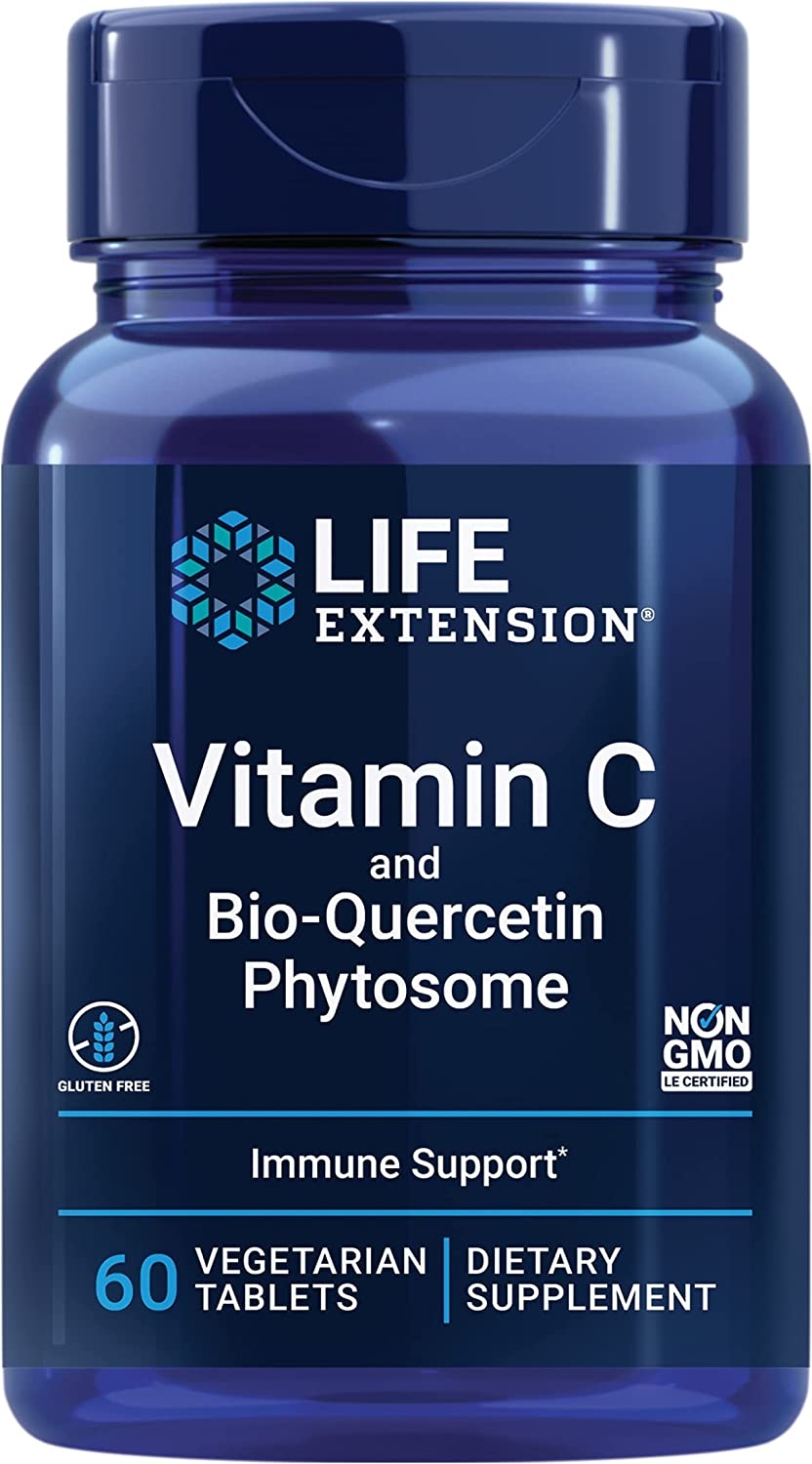
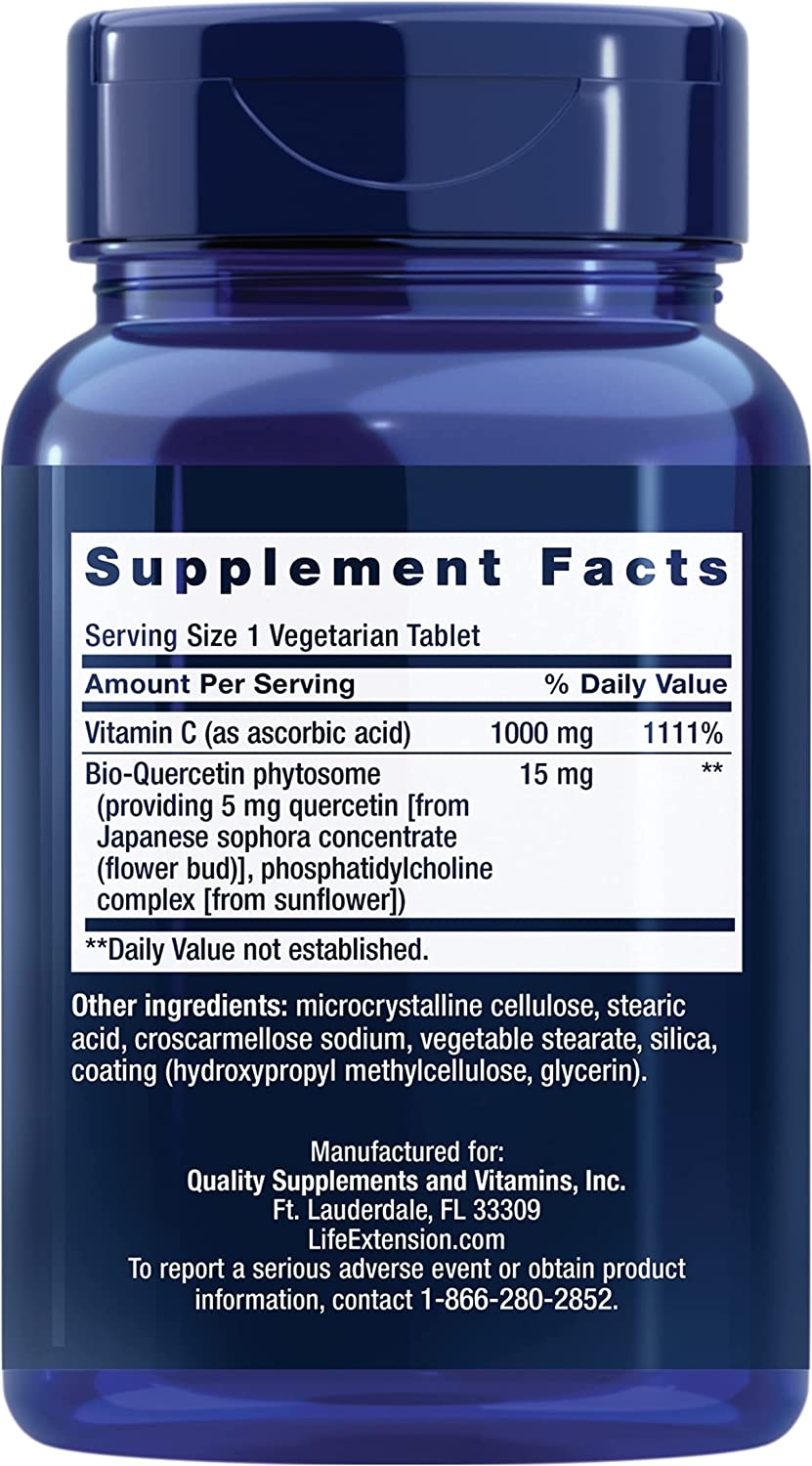
Life Extension Vitamin C with Bio-Quercetin Phytosome — 60 Vegetarian Tablets
A worked example of the format discussed above: 1,000 mg of vitamin C — half the adult upper limit — paired with quercetin in a phospholipid phytosome delivery system. One tablet daily with food. Gluten-free and non-GMO.
How to choose a vitamin C supplement
Once you strip away the packaging, there are only a handful of decisions that matter:
- Dose relative to the ceiling. Anything from 250 mg to 1,000 mg daily is a reasonable supplemental range, comfortably under the 2,000 mg upper limit. Megadoses of 5,000 mg+ are not better; absorption efficiency falls sharply as dose rises.
- Form. Plain ascorbic acid is well absorbed and cheap. Buffered forms (sodium or calcium ascorbate) are gentler if acid upsets your stomach. Liposomal and phytosome formats target absorption. There is no evidence that exotic forms outperform ascorbic acid for correcting deficiency.
- Consistency over intensity. Given that post-symptom dosing does nothing, a modest daily dose you actually take beats a heroic dose you take three times a winter.
- Third-party verification. Supplements are regulated as food, not drugs. The FDA's dietary supplement overview explains that products do not require pre-market approval for safety or efficacy — which makes independent testing and a published Certificate of Analysis meaningful signals.
- Take it with food. Improves tolerance, and if iron absorption is a goal, taking it alongside a plant-based meal is the point.
You can browse the full range in the Vitamins & Minerals category, or the broader General Wellness selection.
Safety, side effects, and who should be careful
Vitamin C has an excellent safety record — it is water-soluble, and surplus is excreted in urine. The upper limit exists mainly because high doses cause gastrointestinal problems: diarrhoea, cramps, nausea. Those effects are dose-dependent and resolve when you cut back.
A few groups should take more care:
- People with haemochromatosis or iron overload. Because vitamin C enhances iron absorption, high doses can worsen iron accumulation.
- People with a history of kidney stones. Vitamin C is metabolised partly to oxalate; very high intakes have been associated with stone formation in susceptible individuals.
- People on chemotherapy or radiotherapy. There are unresolved questions about whether antioxidant supplements interfere with treatments that work by generating oxidative stress. This is a conversation for your oncologist, not a blog.
- Anyone taking regular medication. Quercetin in particular can affect drug-metabolising enzymes and has documented interaction potential.
For a plain-language overview written for patients rather than practitioners, MedlinePlus (a service of the U.S. National Library of Medicine) is the best starting point, alongside the consumer version of the NIH vitamin C fact sheet.
Frequently asked questions
Does vitamin C prevent colds?
Not in the general population. NIH-reviewed trials found that regular doses of 200 mg or more per day did not significantly reduce the risk of catching a cold for average adults. The exception is people under extreme physical stress — marathon runners, skiers, soldiers in subarctic conditions — where 250 mg–1 g daily cut cold incidence by 50%.
How much vitamin C should I take per day?
The RDA is 90 mg/day for adult men and 75 mg/day for adult women, plus 35 mg extra for smokers. Supplemental doses of 250–1,000 mg daily are common and sit well below the adult Tolerable Upper Intake Level of 2,000 mg/day.
Is it too late to take vitamin C once I already feel sick?
For shortening that particular cold, essentially yes. Trials consistently show that starting vitamin C after symptoms appear has no effect on duration or severity. The 8% reduction in cold duration seen in adults comes only from regular intake maintained before illness begins.
What does quercetin do, and why is it combined with vitamin C?
Quercetin is a plant flavonoid found in onions, apples and citrus that occurs naturally alongside vitamin C in whole foods. Published reviews describe it modulating inflammatory cytokines and inhibiting histamine release. It is combined with vitamin C to mirror that natural pairing, though the human clinical evidence for quercetin is far younger than the evidence for vitamin C.
Is quercetin phytosome actually better absorbed?
Phytosome delivery — complexing quercetin with phospholipids — genuinely improves absorption of a compound that is otherwise poorly soluble and rapidly excreted. Specific multipliers such as "50 times more absorbable" come from manufacturer-sponsored comparisons against unformulated quercetin powder and should be read as marketing figures rather than independent findings.
Can I take too much vitamin C?
The adult upper limit is 2,000 mg/day. Above that, the main consequences are digestive: diarrhoea, cramping and nausea. People with iron-overload conditions or a history of kidney stones should be more conservative and speak to a clinician first.
- NIH Office of Dietary Supplements — Vitamin C Fact Sheet for Health Professionals
- NIH Office of Dietary Supplements — Vitamin C Fact Sheet for Consumers
- MedlinePlus (U.S. National Library of Medicine) — Vitamin C
- Li Y. et al., "Quercetin, Inflammation and Immunity," Nutrients (PubMed Central)
- NIH National Center for Complementary and Integrative Health — Antioxidants: In Depth
- NIH Office of Dietary Supplements — Iron Fact Sheet for Consumers
- U.S. Food and Drug Administration — Dietary Supplements
Medical disclaimer. This article is for general education and is not medical advice. It is not a substitute for diagnosis or treatment from a qualified healthcare professional. Talk to your doctor or pharmacist before starting any supplement, particularly if you are pregnant or breastfeeding, managing a health condition, or taking prescription medication.
These statements have not been evaluated by the Food and Drug Administration. This product is not intended to diagnose, treat, cure, or prevent any disease.