
A landmark NIH trial found that a six-ingredient supplement formula containing 10 mg of lutein and 2 mg of zeaxanthin cut the risk of progression to advanced age-related macular degeneration by about 26% over five years — and that swapping lutein and zeaxanthin in for beta-carotene kept paying off over a decade of follow-up. That 10 mg / 2 mg carotenoid dose is exactly what a two-gummy serving of Life Extension's Digital Eye Support provides. But the 26% belongs to the complete formula, not to the carotenoids on their own: the trial that produced it, AREDS2, tested that formula in people who already had the disease, and four of its six ingredients are not in this gummy — nor did it ever test the "blocks blue light from your phone" pitch printed on the box.
Key Takeaways
- The NIH reported that the reformulated AREDS2 supplement — six ingredients, of which lutein and zeaxanthin are two — reduced the risk of AMD progression by about 26% over five years. That figure describes the whole formula, not lutein and zeaxanthin taken alone.
- Over 10 years, participants originally assigned lutein/zeaxanthin rather than beta-carotene had roughly a 20% lower risk of progressing to late AMD (hazard ratio 0.80; 95% CI, 0.68–0.92). A direct head-to-head analysis of the two put the figure at hazard ratio 0.85 (95% CI, 0.73–0.98).
- That benefit was demonstrated in people who already had intermediate or late AMD in at least one eye — not as prevention for people with healthy eyes.
- The full AREDS2 formula is vitamin C (500 mg), vitamin E (400 IU), lutein (10 mg), zeaxanthin (2 mg), zinc (80 mg), and copper (2 mg). This gummy supplies only the lutein/zeaxanthin piece.
- The American Academy of Ophthalmology states there is "no scientific evidence that blue light from digital devices causes damage to your eye" — the strain people feel comes from blinking roughly half as often while staring at a screen.
- An estimated 18.34 million Americans aged 40 and over were living with early-stage AMD in 2019, and 1.49 million with vision-threatening late-stage AMD, according to a 2022 JAMA Ophthalmology analysis of CDC surveillance data.
In This Article
1. What's Actually in This Gummy
Life Extension's Gummy Science Digital Eye Support delivers its active ingredient as Lutemax 2020, a marigold-flower extract standardized to 10% lutein and 2% zeaxanthin. A two-gummy serving provides 100 mg of that extract — which works out to 10 mg of lutein and 2 mg of zeaxanthin. Servings per container: 30, from 60 gummies, at one serving (two gummies) daily with food.
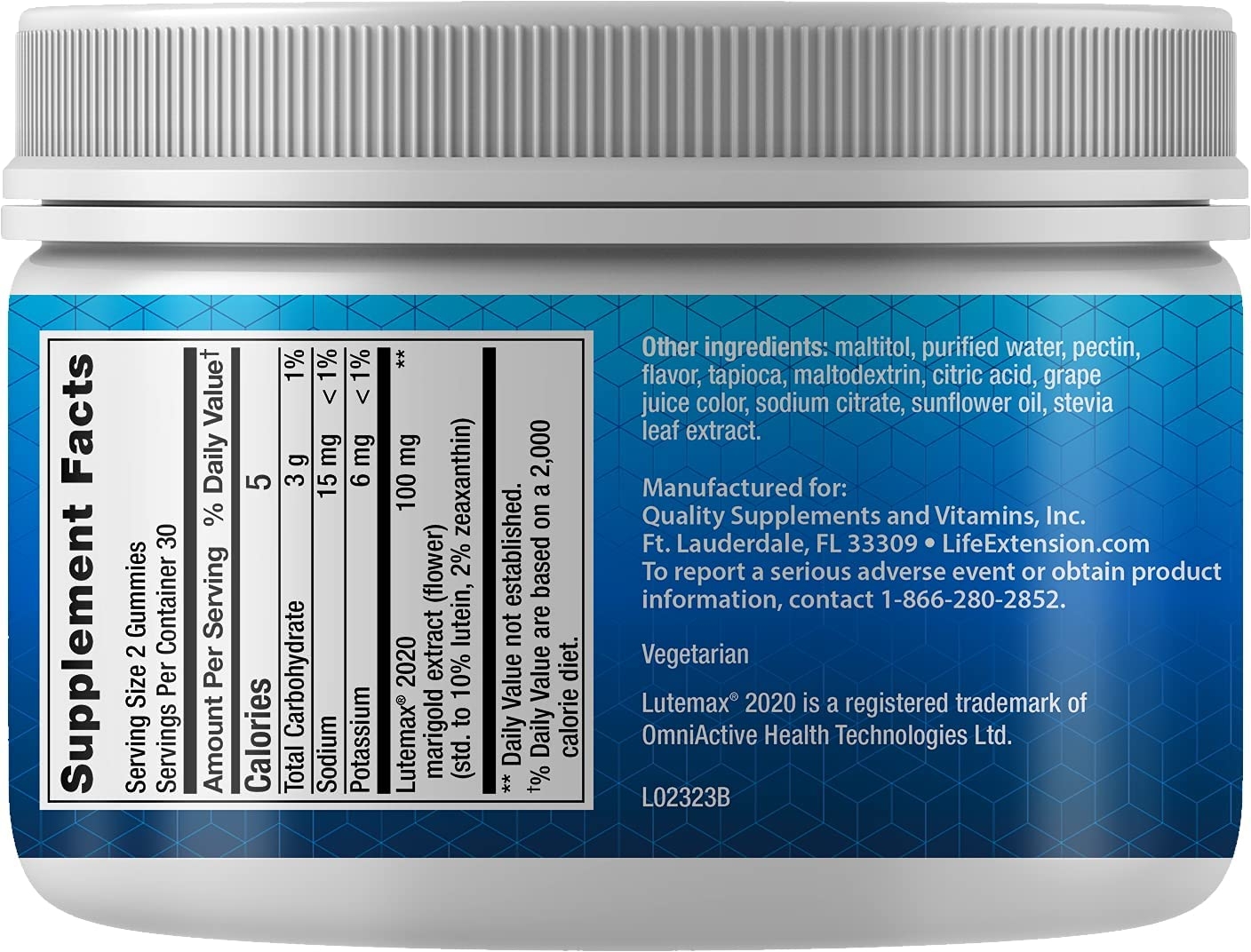
That 10 mg / 2 mg ratio is not a coincidence — it is the exact dose used in the NIH's AREDS2 trial, discussed below. That is a genuine point in this product's favor: many "eye health" gummies on the market use lower or unstated lutein doses. But it is only half the AREDS2 story, and the label's other headline claim — protection from blue light — rests on much weaker ground. Both are covered honestly in the sections that follow.
2. What AREDS2 Actually Tested
The Age-Related Eye Disease Study 2 (AREDS2) was a National Eye Institute-funded randomized clinical trial that enrolled 4,203 participants, ages 50 to 85, at 82 clinical sites across the United States. Everyone in the trial already had intermediate AMD in both eyes, or intermediate AMD in one eye and late AMD in the other. Researchers were not testing whether the formula prevents AMD from starting — they were testing whether it slows AMD that has already begun.
| Ingredient | Daily amount |
|---|---|
| Vitamin C | 500 mg |
| Vitamin E | 400 IU |
| Lutein | 10 mg |
| Zeaxanthin | 2 mg |
| Zinc (as zinc oxide) | 80 mg |
| Copper (as cupric oxide) | 2 mg |
The result, at the end of the initial five-year trial period: the reformulated supplement reduced the risk of AMD progression by about 26%, and putting lutein and zeaxanthin in place of beta-carotene removed the lung-cancer signal beta-carotene carried in people who smoked or had previously smoked. That 26% is the effect of the complete formula in the table above — all six ingredients — not of lutein and zeaxanthin by themselves. Ten years on, the NIH's AREDS2 Research Group published a long-term follow-up in JAMA Ophthalmology (2022). Among participants originally assigned beta-carotene, switching to lutein/zeaxanthin was associated with about a 20% lower risk of progression to late AMD (hazard ratio 0.80; 95% CI, 0.68–0.92; P = .002); the direct head-to-head comparison of the two carotenoid arms gave a hazard ratio of 0.85 (95% CI, 0.73–0.98; P = .02).
"This 10-year data confirms that not only is the new formula safer, it's actually better at slowing AMD progression."
— Emily Y. Chew, M.D., AREDS2 lead investigator, National Eye InstituteMayo Clinic Minute: a 60-second clinical overview of age-related macular degeneration, its two forms, and why early detection matters.
3. Who the Evidence Actually Applies To
This is the part marketing copy tends to skip, and it matters more than the dose. AREDS2 enrolled people who already had intermediate or late AMD. The NIH is explicit that earlier AREDS data showed no benefit for people with no AMD or only early AMD — which is why AREDS2 didn't even enroll them. In plain terms: if your retina is currently healthy, or you have only the earliest, mildest signs of AMD, the trial that produced the 26% figure does not tell you this supplement will do anything measurable for you. It tells you what it does for someone who already has a diagnosed, worsening condition.
Read the label, then read the trial. A supplement bottle can legally say "supports eye health" without saying who that support was proven in. If you don't have a diagnosed AMD stage, a comprehensive dilated eye exam — not a gummy — is what tells you whether this evidence even applies to you.
It's also worth being precise about what this product is not: it is not the AREDS2 formula. AREDS2 combined lutein and zeaxanthin with 500 mg of vitamin C, 400 IU of vitamin E, 80 mg of zinc, and 2 mg of copper — doses well above what most multivitamins provide, particularly the zinc. This gummy supplies only the lutein/zeaxanthin component. Someone whose ophthalmologist has recommended "the AREDS2 formula" specifically would need a product formulated to that full specification, not this one alone.
4. The Blue-Light Claim, Checked Against the Evidence
The product's own marketing leads with blue light: "the sensitive photoreceptors at the back of your eyes are susceptible to damage from light from your phone, tablet, or laptop." This is where the honest answer diverges sharply from the box copy.
The American Academy of Ophthalmology states plainly that there is "no scientific evidence that blue light from digital devices causes damage to your eye," and that screens emit far less blue light than ordinary daylight. The Academy does not recommend blue-light-blocking glasses for this reason, and several clinical reviews have found they don't reduce digital eye strain symptoms either. This is a case where a genuine, well-supported finding (lutein and zeaxanthin build macular pigment density, which filters some blue light reaching the retina, and AREDS2 showed a real clinical benefit in people with existing AMD) has been stretched into a second, unsupported claim (screens are damaging your eyes right now, and this product stops it).
Cleveland Clinic Abu Dhabi on what the evidence does and doesn't support for blue-light-blocking products.
5. What Actually Causes Digital Eye Strain
If blue light isn't the mechanism, what is causing the burning, dry, tired eyes after a day of screen work? The Academy points to a simpler culprit: people blink roughly half as often — around 7 to 8 times a minute instead of the usual 15 — while concentrating on a screen. Less blinking means the tear film evaporates faster, which produces exactly the dryness and fatigue people attribute to blue light.
| Habit | Why it helps |
|---|---|
| Blink deliberately, more often | Restores the tear film that screen focus suppresses |
| Use lubricating artificial tears | Compensates for the reduced blink rate directly |
| Look at a distant object periodically | Relaxes the focusing muscle held tight during near work |
| Sit about 25 inches from the screen, angled slightly down | Reduces the muscular effort of sustained near focus |
| Increase contrast, reduce glare | Lowers the visual effort needed to read the screen |
None of this requires a supplement. It requires behavior change, and where dryness is significant, artificial tears are the evidence-backed fix — not a carotenoid gummy.
6. Food Sources vs. Supplements
Lutein and zeaxanthin are dietary carotenoids, meaning the body cannot make them — they come entirely from food or supplements, concentrated most heavily in dark leafy greens and egg yolks. The American Academy of Ophthalmology names kale and spinach as leading sources, alongside romaine lettuce, collards, turnip greens, broccoli, peas, and eggs.
| Food | Lutein + zeaxanthin (per 100 g) |
|---|---|
| Spinach, raw | 12.2 mg |
| Spinach, cooked (boiled, drained) | 11.3 mg |
| Kale, raw | 6.3 mg |
| Kale, cooked (boiled, drained) | 5.0 mg |
| Egg yolk | Far less by weight, but absorbed more efficiently because of the fat carrying it |
Two things in that table are worth pausing on. Kale's reputation as the standout lutein source rests largely on much higher figures published in older nutrient databases; USDA's current values put spinach at roughly twice the lutein of kale, gram for gram. And egg yolks contain far less lutein by weight than either green, yet the fat in the yolk improves how much of it the body actually absorbs, since lutein is fat-soluble. On these numbers a 100 g serving of cooked spinach supplies around 11 mg of combined lutein and zeaxanthin, so a diet with regular leafy greens can genuinely reach AREDS2-level carotenoid intakes. A supplement is a more direct way to hit a specific, consistent 10 mg / 2 mg dose — which matters if that specific dose is what your eye doctor wants you at.
7. Warning Signs That Need an Eye Doctor, Not a Gummy
Sudden or gradual straight-line distortion (metamorphopsia), a new blurred or dark spot in your central vision, or a sudden change in how colors appear are classic early symptoms of AMD and warrant a prompt eye exam — not a wait-and-see approach with supplements. Wet AMD in particular can cause rapid vision loss, and earlier treatment preserves more sight. The National Eye Institute states that treatment can slow or reverse vision loss, but that no cure for AMD exists — which is why catching it early matters.
AMD is common enough that this isn't a rare-disease caveat: a 2022 analysis in JAMA Ophthalmology, drawing on the CDC's Vision and Eye Health Surveillance System, estimated that in 2019 some 18.34 million Americans aged 40 and over were living with early-stage AMD and a further 1.49 million with vision-threatening late-stage AMD. Regular comprehensive, dilated eye exams are how early AMD gets caught before symptoms are obvious.
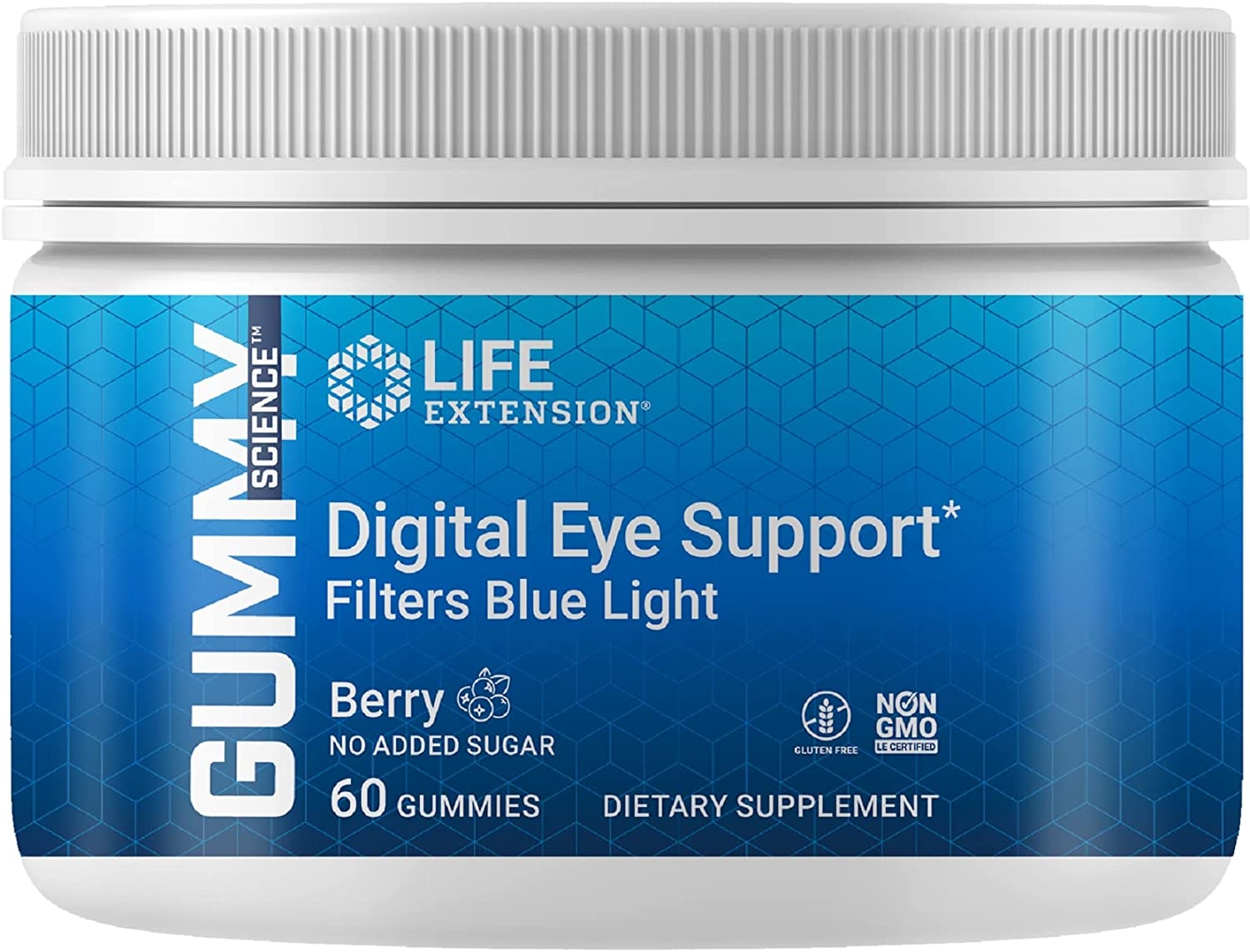
Life Extension Gummy Science Digital Eye Support
Sugar-free, berry-flavored gummies delivering 10 mg lutein and 2 mg zeaxanthin per two-gummy serving via Lutemax 2020 — the same lutein/zeaxanthin dose used in the NIH's AREDS2 trial. Gluten-free, non-GMO, made in the USA. 60 gummies (30 servings) per bottle.
Note: this product provides only the lutein/zeaxanthin portion of the AREDS2 formula, not the full formula's vitamin C, vitamin E, zinc, and copper. Speak with your eye doctor about whether the complete AREDS2 formulation is more appropriate for your stage of AMD.
View ProductFAQ
Does this supplement prevent macular degeneration?
There's no NIH evidence that it prevents AMD from developing in people with healthy eyes. AREDS2 tested this formula in people who already had intermediate or late AMD and found it slowed progression in that group — it was not tested as a prevention strategy in the general population.
Does the lutein/zeaxanthin dose match what the NIH trial used?
Yes. This product's label shows 10 mg lutein and 2 mg zeaxanthin per two-gummy serving (from 100 mg of Lutemax 2020 marigold extract, standardized to 10%/2%), which matches the AREDS2 trial dose exactly. It does not, however, include the vitamin C, vitamin E, zinc, and copper that were also part of the full AREDS2 formula.
Do blue-light-blocking claims for this product hold up?
Not according to the American Academy of Ophthalmology, which states there is no scientific evidence that blue light from digital devices damages the eye and does not recommend blue-light-blocking products for that reason. The tiredness and dryness people feel after screen time is attributed to reduced blinking, not blue light exposure.
Is 10 mg of lutein and 2 mg of zeaxanthin a safe daily dose?
The AREDS2 trial ran this dose for five years, with a further five years of follow-up, without significant safety concerns attributed to lutein/zeaxanthin specifically — unlike beta-carotene, which raised lung cancer risk in people who smoked or had previously smoked and was replaced for that reason. As with any supplement, tell your doctor what you're taking, particularly if you're pregnant, breastfeeding, taking prescription medication, or managing another condition.
Can diet alone get me to this dose?
Potentially. USDA figures put raw spinach at 12.2 mg of combined lutein and zeaxanthin per 100 g and cooked spinach at 11.3 mg, with kale lower than commonly assumed at 6.3 mg raw and 5.0 mg cooked; egg yolks supply less by weight but are absorbed particularly well because of their fat content. Regular servings of dark leafy greens and eggs can meaningfully raise intake, though hitting a precise, consistent 10 mg/2 mg daily dose is more reliable with a supplement.
What symptoms mean I should see an eye doctor instead of relying on a supplement?
Straight lines appearing wavy or broken, a new blurry or dark area in your central vision, or a sudden change in color perception are classic AMD warning signs that need a prompt eye exam. The National Eye Institute states that treatment can slow or reverse vision loss, though no cure for AMD exists, so earlier detection matters.
Sources
- National Eye Institute — About AREDS and AREDS2
- National Eye Institute — NIH Study Confirms Benefit of Supplements for Slowing Age-Related Macular Degeneration
- AREDS2 Research Group — Long-term Outcomes of Adding Lutein/Zeaxanthin and ω-3 Fatty Acids to AREDS Supplements: AREDS2 Report 28, JAMA Ophthalmology (2022)
- American Academy of Ophthalmology — Should You Be Worried About Blue Light?
- American Academy of Ophthalmology — Digital Devices and Your Eyes
- American Academy of Ophthalmology — Fabulous Foods for Your Eyes
- MedlinePlus — Macular Degeneration
- Rein DB et al. — Prevalence of Age-Related Macular Degeneration in the US in 2019, JAMA Ophthalmology (2022)
- USDA FoodData Central — SR Legacy nutrient values for lutein + zeaxanthin
This article is for educational purposes only and is not medical advice. It is not intended to diagnose, treat, cure, or prevent any disease. These statements have not been evaluated by the Food and Drug Administration. Talk to your eye doctor about symptoms, diagnosis, and whether any supplement — including this one — is appropriate for your specific stage of eye health. If you experience sudden vision changes, seek medical care promptly. See also our Vitamins & Minerals category for related products.