
Taking high-dose zinc within 24 hours of cold symptoms can shorten illness duration by nearly two days according to clinical trials, but taking that same dose daily as an "immune shield" risks copper deficiency, anemia, and permanent nerve damage. Zinc is an essential trace mineral required for catalytic activity in over 300 enzymes and cell-mediated immunity. The adult Recommended Dietary Allowance (RDA) is modest — 11 mg daily for men and 8 mg for women — yet supplement aisles are packed with 30 mg to 50 mg standalone capsules. That puts daily users uncomfortably close to, or above, the National Institutes of Health (NIH) Tolerable Upper Intake Level (UL) of 40 mg per day.
Key Takeaways
- 1.5 to 2 days shorter cold duration: A 2021 systematic review of 28 randomized trials in BMJ Open confirmed that oral zinc acetate or gluconate lozenges taken within 24 hours of symptom onset shorten cold duration by 2 days, while daily preventive use in well-nourished adults shows no reduction in infection rates.
- 11 mg vs. 8 mg daily requirement: The NIH Recommended Dietary Allowance (RDA) is 11 mg/day for adult men and 8 mg/day for adult women (updated 2022). Standard balanced diets supply 10 to 15 mg daily from food.
- 40 mg ceiling for total intake: The NIH Tolerable Upper Intake Level (UL) for adults is 40 mg/day from all sources combined. Exceeding this threshold long-term can suppress immune function rather than enhance it.
- The copper depletion mechanism: Chronic supplemental zinc above 40 mg induces intestinal metallothionein, an intracellular protein that binds dietary copper, preventing its absorption and causing sideroblastic anemia and sensory ataxia (StatPearls, updated 2023).
- Bioavailability varies by salt form: Organic chelates like zinc picolinate and zinc bisglycinate demonstrate superior fractional absorption compared to inorganic zinc oxide, which yields elemental absorption rates under 20% in human bioavailability trials.
Table of Contents
- What Zinc Actually Does in the Human Body (and How Much You Need)
- Does Zinc Actually Prevent or Shorten Colds? The Clinical Trial Evidence
- The 40 mg Upper Limit and the "Copper Trap": How High-Dose Zinc Backfires
- Zinc Forms Compared: Picolinate vs. Gluconate, Citrate, and Oxide
- Who Genuinely Needs Supplemental Zinc (and Who Should Skip It)
- Inside Thorne Zinc Picolinate 30 mg: What the Label Tells Us
- How to Take Zinc Safely: Timing, Food, and Duration
- Frequently Asked Questions
What Zinc Actually Does in the Human Body (and How Much You Need)
Zinc is the second most abundant trace mineral in human tissue after iron. It is concentrated heavily in skeletal muscle, bone, the liver, and the prostate. Unlike iron or fat-soluble vitamins, the human body has no specialized storage organ for zinc. Homeostasis depends entirely on continuous dietary intake balanced against tight gastrointestinal absorption and excretion.
Biochemically, zinc performs three primary roles:
- Catalytic activity: Zinc serves as an essential cofactor for over 300 metalloenzymes across all major enzyme classes, including carbonic anhydrase (essential for respiration), alkaline phosphatase, and RNA polymerases.
- Structural stability: Zinc stabilizes protein structures through "zinc finger" motifs — loops of amino acids that allow transcription factors to bind DNA and regulate gene expression.
- Immune signaling: Zinc is required for the development and function of natural killer cells, neutrophils, and T-lymphocytes. In zinc deficiency, the thymus atrophies and cell-mediated immunity stalls.
Severe deficiency causes growth retardation, hair loss, delayed wound healing, and impaired immunity, but it is rare in developed nations. What is far more common — and aggressively marketed — is marginal inadequacy.
| Life Stage / Group | Age | RDA (Male) | RDA (Female) | Pregnancy | Lactation | Upper Limit (UL) |
|---|---|---|---|---|---|---|
| Infants | 0–6 months | 2 mg* | 2 mg* | — | — | 4 mg |
| Infants | 7–12 months | 3 mg | 3 mg | — | — | 5 mg |
| Children | 1–3 years | 3 mg | 3 mg | — | — | 7 mg |
| Children | 4–8 years | 5 mg | 5 mg | — | — | 12 mg |
| Children | 9–13 years | 8 mg | 8 mg | — | — | 23 mg |
| Adolescents | 14–18 years | 11 mg | 9 mg | 12 mg | 13 mg | 34 mg |
| Adults | 19–50 years | 11 mg | 8 mg | 11 mg | 12 mg | 40 mg |
| Older Adults | 51+ years | 11 mg | 8 mg | — | — | 40 mg |
*Reflects Adequate Intake (AI). Data source: NIH Office of Dietary Supplements, updated 2022.
Most adults consuming whole foods easily meet these targets. Three ounces of cooked oysters provide 74 mg of zinc (673% DV), a 3-ounce beef roast provides 7 mg (64% DV), and an ounce of pumpkin seeds provides 2.2 mg (20% DV). However, plant-derived zinc is bound to phytic acid, which inhibits intestinal absorption. For strict vegans, the Institute of Medicine notes zinc needs may be roughly 50% higher.
Does Zinc Actually Prevent or Shorten Colds? The Clinical Trial Evidence
The belief that zinc "boosts immunity" has made it a top-selling supplement during respiratory virus seasons. However, clinical trials draw a sharp line between two distinct uses: acute therapeutic lozenges at symptom onset versus chronic daily pills.
1. Therapeutic Dosing (When You Are Already Sick)
When taken at the first sign of illness, zinc genuinely works. A 2013 Cochrane Systematic Review by Singh and Das found that oral zinc administered within 24 hours of cold onset shortened illness duration by roughly 1.6 days compared to placebo.
A 2021 meta-analysis in BMJ Open by Hunter and colleagues evaluated 28 randomized controlled trials with 5,446 participants. They found that oral zinc lozenges reduced cold duration by an average of 2 days and cut the risk of symptoms lasting beyond day seven by 46%.
This benefit is local rather than systemic. Positively charged free zinc ions (Zn2+) released in the throat bind directly to rhinovirus capsids, blocking viral attachment to ICAM-1 receptors on respiratory cells. Swallowing a capsule that dissolves in stomach acid does not provide the same local oropharyngeal exposure as a slowly dissolving lozenge.
2. Preventive Dosing (Taking Zinc Daily "Just in Case")
In well-nourished adults without a deficiency, taking daily zinc supplements does not prevent you from catching colds. Both the Cochrane and BMJ Open reviews confirmed that prophylactic daily zinc showed no statistically significant reduction in cold incidence in healthy adults.
Loading extra zinc into an adequate system does not produce super-immunity. Excess zinc is sequestered by metallothionein or excreted, while chronically high gut concentrations begin impairing other essential minerals.
| Trial / Review | Participants | Intervention | Key Clinical Outcome |
|---|---|---|---|
| Hunter et al. (BMJ Open, 2021) | 28 RCTs (5,446 subjects) | Lozenges ≥45 mg/day ≤24h | Reduced cold duration by 2.0 days; 46% lower risk past day 7. Daily prevention showed no benefit. |
| Singh & Das (Cochrane, 2013) | 16 therapeutic / 2 preventive trials | Lozenges ≥75 mg/day ≤24h | Shortened cold duration by 1.65 days. Prophylaxis did not reduce cold frequency in adults. |
| Prasad et al. (Ann Intern Med, 2000) | 48 adults (randomized, double-blind) | Zinc acetate lozenges (~80 mg/day) | Cold duration was 4.5 days with zinc vs. 8.1 days with placebo (P < 0.001). |
| Mossad et al. (Ann Intern Med, 1996) | 100 adults (randomized, double-blind) | Zinc gluconate lozenges (13.3 mg q2h) | Median resolution: 4.4 days with zinc vs. 7.6 days with placebo (P < 0.001). |
The 40 mg Upper Limit and the "Copper Trap": How High-Dose Zinc Backfires
The NIH and the Food and Nutrition Board established a Tolerable Upper Intake Level (UL) of 40 mg per day for adults. The UL is the maximum daily intake from food and supplements combined that is unlikely to cause adverse health effects.
Exceeding 40 mg daily on an ongoing basis triggers a dangerous biochemical trap known as zinc-induced copper deficiency.
Safety Warning — High-Dose Zinc and Copper Depletion: Taking 30 mg to 50 mg of supplemental zinc daily for more than 4 to 8 weeks without supplemental copper can induce severe secondary copper deficiency. The resulting neurological symptoms — numbness, tingling in hands and feet, and loss of balance — mimic vitamin B12 deficiency and may become irreversible if unaddressed.
The Molecular Mechanism
In the small intestine, high intracellular zinc levels trigger the hyper-expression of metallothionein, a metal-binding protein inside enterocytes. Metallothionein has a binding affinity for copper roughly 1,000 times higher than for zinc. It aggressively binds dietary copper, trapping it inside intestinal cells. When those cells shed every 3 to 5 days, the trapped copper is excreted in the stool rather than entering the bloodstream.
Clinical Consequences of Copper Deficiency
- Sideroblastic anemia: Copper is a required component of ceruloplasmin and hephaestin, enzymes needed to mobilize iron for hemoglobin synthesis. Without copper, iron cannot be incorporated into red blood cells, causing an anemia that fails to respond to iron supplements.
- Neutropenia: White blood cell counts, specifically neutrophils, drop sharply, leaving the body vulnerable to bacterial infections — the opposite of immune support.
- Copper deficiency myeloneuropathy: Copper is required for cytochrome c oxidase and myelin sheath maintenance. Depletion causes progressive sensory ataxia (loss of balance), numbness in the hands and feet, and gait difficulty.
"High-dose zinc supplementation stimulates intestinal metallothionein synthesis, blocking copper absorption and leading to profound hypocupremia, sideroblastic anemia, and irreversible neurological dysfunction."
— StatPearls, National Library of Medicine ("Copper Deficiency", updated 2023)
Physician breakdown of the competitive absorption between zinc and copper, explaining why high-dose zinc requires copper monitoring.
Zinc Forms Compared: Picolinate vs. Gluconate, Citrate, and Oxide
Elemental zinc must be bound (chelated) to an organic acid, amino acid, or mineral salt. The carrier molecule dictates intestinal absorption and stomach tolerance.
| Zinc Form | Chemical Type | Elemental Yield | Bioavailability | Stomach Tolerance | Primary Clinical Application |
|---|---|---|---|---|---|
| Zinc Picolinate | Organic acid chelate | ~20% | High | Good (with food) | Targeted supplementation; deficiency correction |
| Zinc Bisglycinate | Amino acid chelate | ~28% | High | Excellent | Daily nutritional support; sensitive stomachs |
| Zinc Gluconate | Organic acid salt | ~14% | Moderate-High | Moderate | Standard over-the-counter lozenges and tablets |
| Zinc Acetate | Organic acid salt | ~30% | Moderate-High | Moderate | Clinical cold lozenge trials (Prasad et al.) |
| Zinc Citrate | Organic acid salt | ~31% | Moderate-High | Good | Multivitamins and daily mineral blends |
| Zinc Sulfate | Inorganic salt | ~23–40% | Moderate | Poor | Low-cost clinical deficiency therapy |
| Zinc Oxide | Inorganic oxide | ~80% | Low | Moderate-Poor | Topical sunscreens; bargain multi-mineral tablets |
Why Picolinate Leads in Human Absorption Studies
Zinc picolinate is the zinc salt of picolinic acid, a natural metabolite of tryptophan. In a classic comparative human trial by Barrie and colleagues in Agents and Actions, zinc picolinate significantly increased zinc concentrations in hair, urine, erythrocytes, and serum compared to zinc gluconate and zinc citrate. Picolinate enhances active transport across the jejunal brush border, allowing effective repletion at measured doses.
In contrast, zinc oxide has poor aqueous solubility. While it carries 80% elemental zinc by weight on paper, human isotopic studies show its fractional absorption in non-fasted states is roughly half that of organic chelates. It is cheap to produce, but poorly suited for reliable absorption.
Who Genuinely Needs Supplemental Zinc (and Who Should Skip It)
Because the gap between the adult RDA (8–11 mg) and the upper limit (40 mg) is narrow, standalone zinc supplementation should be deliberate rather than habitual.
Who this is for:
- Strict vegans and vegetarians: Plant diets rich in phytates reduce zinc bioavailability. A moderate supplemental dose (10–15 mg) or alternate-day 30 mg chelate offsets lower absorption.
- Gastrointestinal malabsorption: Patients with Crohn's disease, celiac disease, or prior bariatric surgery frequently have impaired mineral uptake and elevated zinc loss.
- Short-term acute cold defense: Individuals taking zinc lozenges at the earliest onset of symptoms for a maximum of 5 to 7 days.
- Documented clinical deficiency: Confirmed by low plasma zinc or alkaline phosphatase testing under physician supervision.
Who should skip it:
- Healthy omnivores: If you regularly eat poultry, red meat, seafood, and eggs, your diet already provides 10 to 18 mg of bioavailable zinc daily.
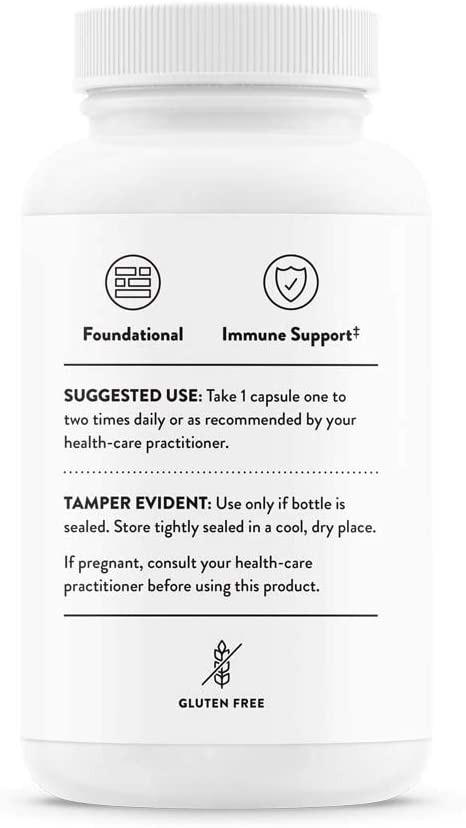
- Anyone taking a daily multivitamin: Multivitamins already supply 11 to 15 mg of zinc. Adding a 30 mg standalone capsule pushes total daily intake past the 40 mg safety limit.
- Patients on fluoroquinolone or tetracycline antibiotics: Zinc binds these medications in the gut, blocking absorption unless separated by 2 to 4 hours.
- Anyone taking high-dose zinc for months without copper: Unmonitored long-term supplementation creates an avoidable risk of copper deficiency.
Inside Thorne Zinc Picolinate 30 mg: What the Label Tells Us
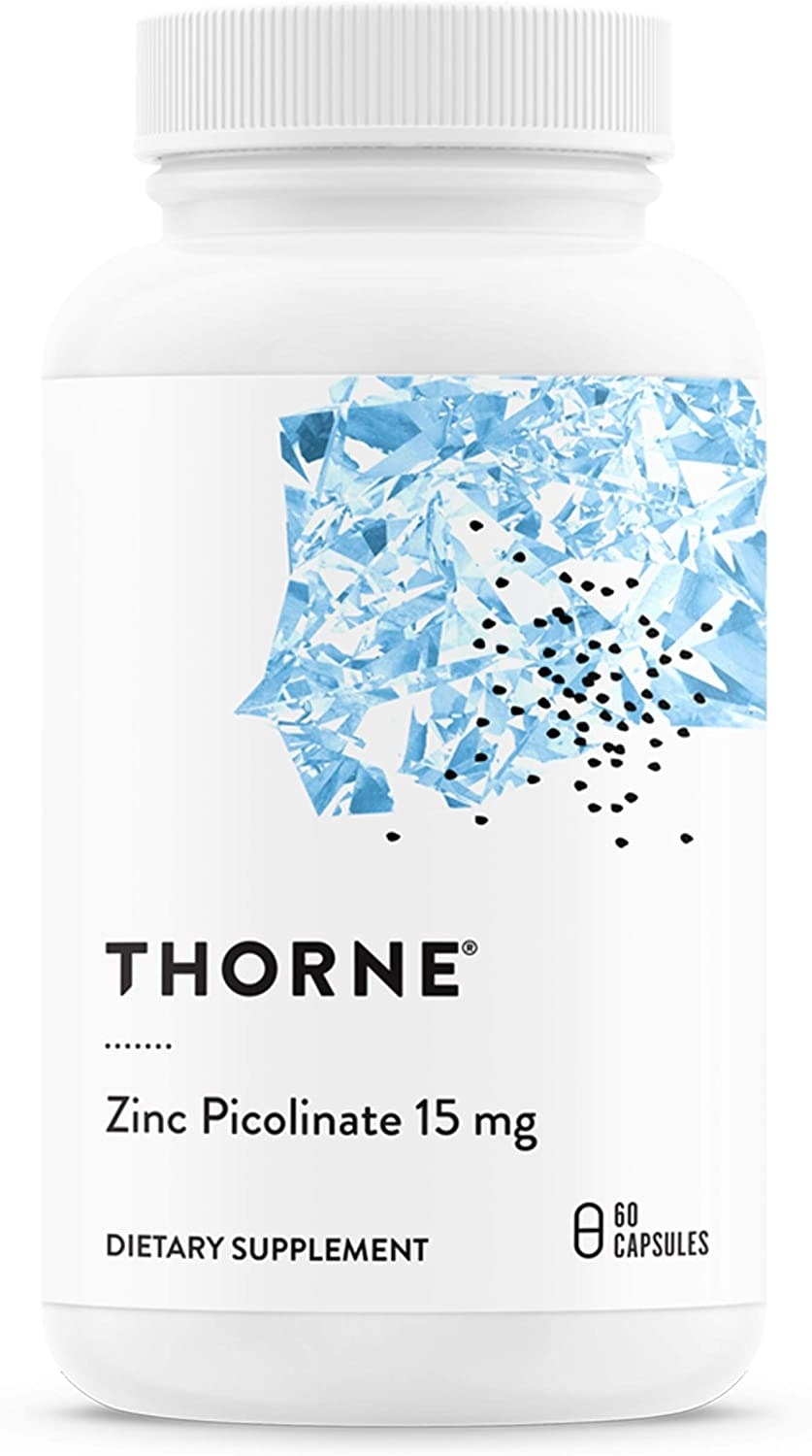
Thorne is recognized in clinical medicine for manufacturing purity and stringent quality control. Their Zinc Picolinate 30 mg is a staple recommendation among practitioners. Here is what the formulation delivers:
Label Breakdown and Formulation Details
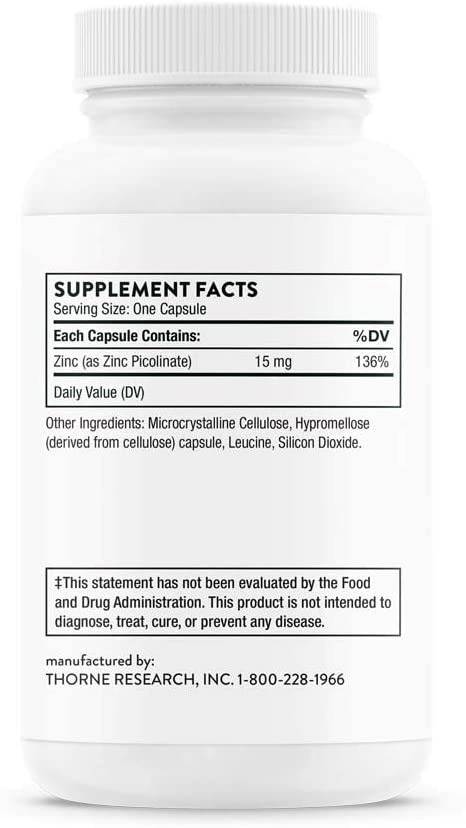
- Active Ingredient: 30 mg of elemental zinc per capsule as Zinc Picolinate (273% Daily Value).
- Serving Size: 1 vegetarian capsule. One 60-capsule bottle provides a 60-day supply at $25.75 ($0.43 per serving).
- Other Ingredients: Hypromellose capsule, Leucine (natural lubricant), Microcrystalline Cellulose (plant fiber), and Silicon Dioxide.
- Exclusions: Formulated without magnesium stearate, artificial preservatives, gluten, soy, or dairy.
This is a clean, practitioner-grade formulation. The picolinate chelate ensures robust mucosal absorption without irritating tablet binders. However, 30 mg is a potent dose. When added to 12 mg from food, total daily intake reaches 42 mg — exceeding the NIH upper limit. For short-term use (2–4 weeks) or alternate-day maintenance, it is an excellent tool. For continuous daily use, pairing it with dietary copper or a 1–2 mg copper supplement is the prudent clinical choice.
Thorne Zinc Picolinate 30 mg (60 Vegetarian Capsules)
Delivers 30 mg of elemental zinc as bioavailable zinc picolinate in a clean, stearate-free vegetarian capsule. Designed for superior absorption to support cellular repair, immune response, and protein synthesis.
How to Take Zinc Safely: Timing, Food, and Duration
To maximize benefits and prevent mineral imbalances, follow these practical guidelines:
1. Never Take High-Dose Zinc on an Empty Stomach
Zinc salts stimulate gastric acid secretion. Taking 30 mg on an empty stomach frequently triggers acute nausea and cramping within 15 minutes. Always take your capsule with a meal or substantial snack.
2. Watch Phytate and Calcium Timing
Avoid taking zinc alongside meals heavy in raw bran or high-dose calcium supplements (such as 600 mg calcium carbonate). Both phytic acid and calcium compete for intestinal transport and lower zinc uptake by 30% to 50%.
3. Manage Drug Spacing
Zinc binds several prescription medications in the gastrointestinal tract:
- Antibiotics: Separate zinc from quinolones (ciprofloxacin) and tetracyclines (doxycycline) by at least 2 to 4 hours.
- Penicillamine: Zinc substantially reduces penicillamine absorption.
- Thiazide Diuretics: Medications like hydrochlorothiazide increase urinary zinc loss over time.
4. Respect the 40 mg Total Daily Limit
Audit your total supplement intake. If your daily multivitamin provides 15 mg and food adds 10 mg, a 30 mg standalone pill brings your total to 55 mg. Alternate days or choose a lower-dose formula for routine daily support.
Frequently Asked Questions
What is the difference between zinc picolinate and regular zinc?
Zinc picolinate is elemental zinc bound to picolinic acid, which facilitates active transport across the intestinal wall. Clinical trials show zinc picolinate produces higher red blood cell and hair concentrations than standard inorganic forms like zinc oxide, which has lower fractional absorption.
Can I take 30 mg of zinc every day safely?
Taking 30 mg of supplemental zinc daily is safe for short periods (several weeks), but combined with 10 to 15 mg from food, total intake exceeds the 40 mg NIH upper limit. Over months, this level can deplete copper stores, causing anemia and nerve issues unless copper is supplemented.
Why does zinc cause nausea on an empty stomach?
Free zinc ions irritate the gastric lining and trigger sensory vagal reflexes that stimulate the brain's vomiting center. Inorganic salts cause the most intense nausea. Taking zinc with a meal containing protein or carbohydrates prevents stomach upset for most individuals.
Does zinc deplete copper levels in the body?
Yes. High intestinal zinc induces metallothionein, a protein that binds dietary copper with high affinity, trapping it in mucosal cells that are lost in feces. Over time, this causes secondary copper deficiency, resulting in low white blood cell counts and neuropathy.
Does taking zinc prevent you from catching the common cold?
No. Large systematic reviews show that daily preventive zinc supplementation does not reduce how often healthy adults catch colds. However, taking zinc lozenges within 24 hours of cold symptom onset reduces the duration of illness by roughly 1.5 to 2 days.
Should I take zinc with vitamin C or other supplements?
Taking zinc with vitamin C is safe and compatible. However, do not take high doses of zinc simultaneously with iron or calcium supplements, as these divalent minerals compete for the same intestinal transporters. Separate them by at least two hours.
What are the earliest signs of zinc toxicity or excess?
Acute toxicity causes sudden nausea, vomiting, stomach cramps, and a metallic taste within hours. Chronic excess develops over months, manifesting as fatigue, microcytic anemia, low neutrophil counts, and numbness or tingling in the hands and feet.
Which foods provide the highest amounts of natural zinc?
Cooked oysters are the richest source, providing 74 mg per 3-ounce serving (673% DV). Beef chuck roast provides 7 mg (64% DV), pumpkin seeds supply 2.2 mg per ounce (20% DV), cooked lentils provide 2.5 mg per cup (23% DV), and fortified cereals provide 2.8 mg (25% DV).
Sources
- Maxfield, L., Shukla, S., & Crane, J. S. (2023). "Zinc Deficiency." StatPearls. National Library of Medicine. Updated 4 July 2023. Accessed 2 September 2026. https://www.ncbi.nlm.nih.gov/books/NBK493231/
- Duncan, A., Yacoubian, C., Watson, N., & Morrison, I. (2023). "Copper Deficiency." StatPearls. National Library of Medicine. Updated 1 May 2023. Accessed 2 September 2026. https://www.ncbi.nlm.nih.gov/books/NBK499994/
- MedlinePlus Medical Encyclopedia. (2024). "Zinc in diet." U.S. National Library of Medicine. Updated 23 January 2024. Accessed 2 September 2026. https://medlineplus.gov/ency/article/002416.htm
- Hunter, J., Arentz, S., Goldenberg, J., et al. (2021). "Zinc for the prevention and treatment of SARS-CoV-2 and other viral respiratory tract infections: a rapid systematic review and meta-analysis of randomized controlled trials." BMJ Open, 11(11), e047474. Accessed 2 September 2026. https://www.ncbi.nlm.nih.gov/pmc/articles/PMC8564882/
- Wessels, I., Maywald, M., & Rink, L. (2017). "Zinc in Infection and Inflammation." Advances in Nutrition, 8(6), 772–783. Accessed 2 September 2026. https://www.ncbi.nlm.nih.gov/pmc/articles/PMC6457050/
- Kumar, N. (2006). "Copper Deficiency Myeloneuropathy." Journal of Clinical Neuromuscular Disease, 8(2), 77–87. Accessed 2 September 2026. https://www.ncbi.nlm.nih.gov/pmc/articles/PMC4519489/
- U.S. Food and Drug Administration. (2024). "Questions and Answers on Dietary Supplements." Center for Food Safety and Applied Nutrition. Updated 26 February 2024. Accessed 2 September 2026. https://www.fda.gov/food/information-consumers-using-dietary-supplements/questions-and-answers-dietary-supplements
Medical Disclaimer: This article is for informational and educational purposes only and does not constitute medical advice, diagnosis, or treatment. Dietary supplements are not evaluated or approved by the Food and Drug Administration (FDA) to diagnose, treat, cure, or prevent any disease. Always consult a qualified physician or healthcare provider before starting any new dietary supplement, especially if you take prescription medications, have a kidney or gastrointestinal condition, or are pregnant or breastfeeding.