
Lecithin is a fatty mixture of phospholipids, extracted commercially from soybeans; the part that matters nutritionally is phosphatidylcholine, which the body breaks down to release choline, an essential nutrient. That is why a 1,200 mg lecithin softgel does not contain 1,200 mg of choline — commercial lecithin is only about 25% phosphatidylcholine, which works out to roughly 3 to 4% choline by weight, according to the National Academies' dietary reference intake report hosted by the NIH. That means a typical softgel is delivering somewhere around 36–48 mg of the actual nutrient, against a 425–550 mg daily target — and NHANES data show only 6.6% of American adults hit that target from food alone (Wallace & Fulgoni, 2016).
Key takeaways
- Only 6.6% of US adults meet the NIH's Adequate Intake for choline from diet (NHANES 2009–2012, Wallace & Fulgoni, J Am Coll Nutr, 2016).
- A 1,200 mg lecithin softgel supplies an estimated 36–48 mg of choline — about 3–4% of its weight, not 1,200 mg of the nutrient (National Academies/NIH, 1998).
- The NIH Adequate Intake for choline is 550 mg/day for men and 425 mg/day for women (National Academies/NIH, 1998).
- The Tolerable Upper Limit is 3.5 g/day, based on hypotension risk — this product's estimated dose sits nowhere close to it (National Academies/NIH, 1998).
- A 2023 review found choline's gut-bacteria byproduct TMAO has been linked to higher cardiovascular and stroke risk in some studies (Kansakar et al., Frontiers in Endocrinology, 2023).
In this article
- What Is Lecithin, and What Does "1,200 mg" Actually Mean?
- Does Lecithin Actually Do What It's Marketed For?
- The Choline Gap: What a Softgel Really Delivers
- Who Is Genuinely Short on Choline?
- The Safety Side: TMAO, the Upper Limit, and Who Should Be Careful
- Inside Amazing Formulas Lecithin 1,200 mg: What's Actually in the Bottle
- How to Close the Choline Gap Sensibly
- Frequently Asked Questions
What Is Lecithin, and What Does "1,200 mg" Actually Mean?
Lecithin is a fatty substance found in every cell membrane in the body, extracted commercially from soybeans (or sometimes sunflower seeds and egg yolks) as a byproduct of oil refining. It is not a single nutrient — it is a mixture of phospholipids, and the one that matters nutritionally is phosphatidylcholine, the compound the body breaks down to release choline, an essential nutrient the body needs for cell membranes, fat transport, and making acetylcholine, the neurotransmitter involved in memory and muscle control.
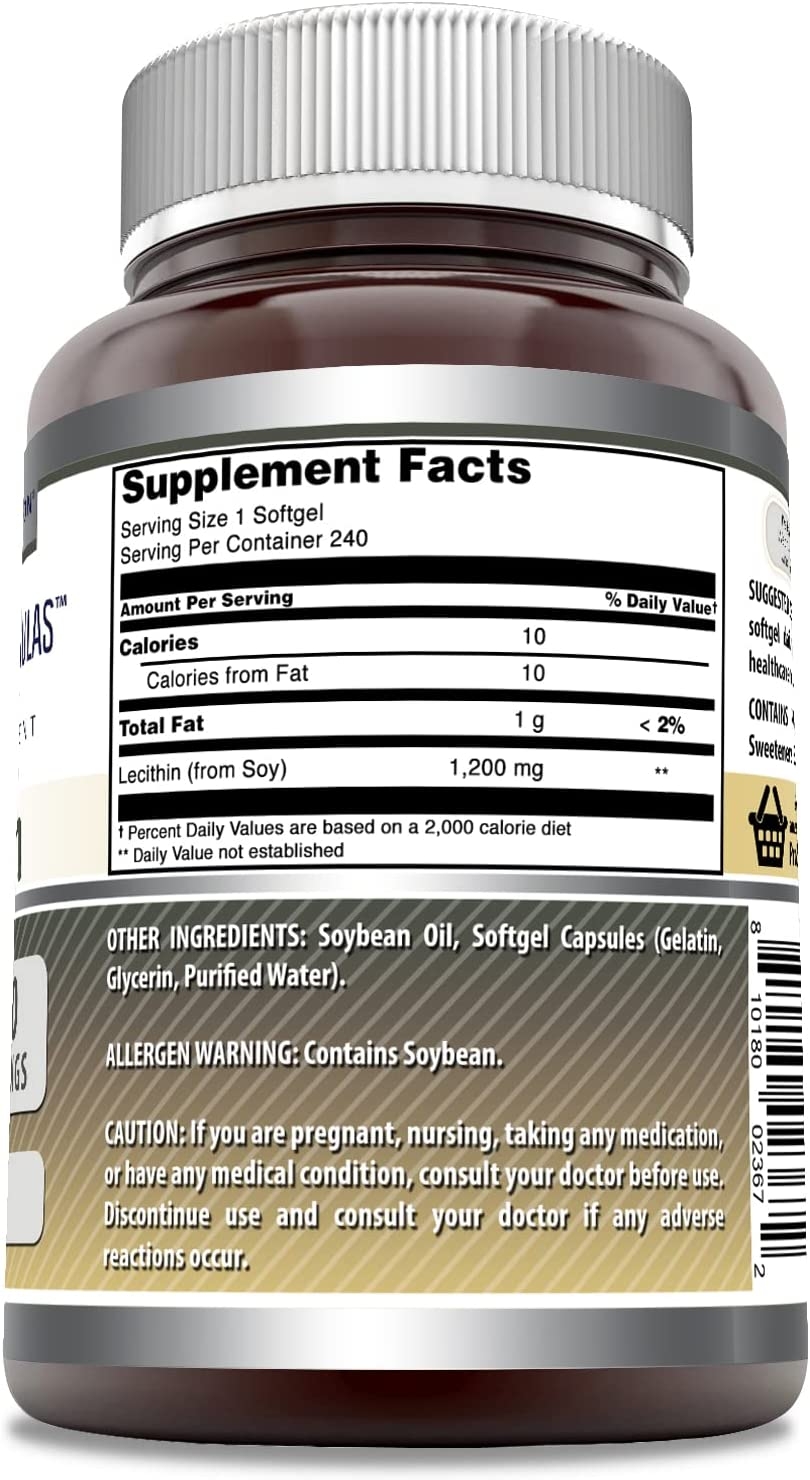
That distinction matters because it is the source of nearly every marketing claim on a lecithin bottle. A label that says "1,200 mg of lecithin" is describing the whole fatty mixture, not the choline dose. According to the 1998 Institute of Medicine dietary reference intake report on choline — the National Academies document the NIH hosts and that underlies every current choline recommendation — choline is available as a supplement "as choline chloride or choline bitartrate and as lecithin, which usually contains approximately 25 percent phosphatidylcholine or 3 to 4 percent choline by weight." A shopper reading "1,200 mg" on the front of the bottle has no way to work that figure out from the label: this product's Supplement Facts panel lists only Lecithin (from Soy) 1,200 mg, marked "Daily Value not established," with no choline or phosphatidylcholine figure anywhere on the bottle or in the online listing.
Does Lecithin Actually Do What It's Marketed For?
Lecithin supplements are commonly sold for three things: brain support, liver health, and cholesterol management. The evidence behind each is a different story.
The brain and nervous-system claim has the most legitimate biology behind it: choline genuinely is a precursor for acetylcholine and for the phospholipids in neuronal membranes. What is in dispute is whether a lecithin softgel, at the small choline dose it actually supplies, does anything measurable for cognition in someone who isn't deficient — no large randomized trial has tested a standard over-the-counter softgel against a placebo for memory or focus.
The liver and cholesterol claims rest on much thinner ground, and the most-cited animal study is genuinely mixed. A 2022 trial in 180 laying hens fed soy lecithin for five weeks reported lower serum triglycerides by day 35 — but also lower HDL ("good") cholesterol, higher total cholesterol and oxidative-damage markers in the liver at day 21, and higher serum ALT, a liver-stress enzyme (Hu et al., Frontiers in Physiology, 2022). The authors concluded lecithin "can improve the blood lipids and liver lipids of laying hens," though several were employed by a biotech company, a conflict the paper discloses. Either way it is poultry, not people, and no large randomised trial has tested a standard softgel against placebo for either outcome in humans.
"Our body produces some choline so it's rare to be in a state of total deficiency. But we often don't get enough of it naturally through high-choline foods."
— Julia Zumpano, RD, LD, Cleveland Clinic (2024)The Choline Gap: What a Softgel Really Delivers
Here is the arithmetic the label doesn't do for you. Using the National Academies' own figure — commercial lecithin runs about 25% phosphatidylcholine, and phosphatidylcholine is about 13% choline by weight — a 1,200 mg softgel of lecithin works out to roughly 300 mg of phosphatidylcholine, which yields somewhere in the 36–48 mg range of actual choline. That is an estimate, not a lab result, because Amazing Formulas' listing does not disclose a phosphatidylcholine or choline amount — but it is the same math the NIH's own reference document uses to describe lecithin as a choline source in general.
| This product (per 1,200 mg softgel, estimated) | Typical dedicated choline supplement | NIH Adequate Intake | Tolerable Upper Limit | |
|---|---|---|---|---|
| Choline | ~36–48 mg | 250–500 mg (choline bitartrate or CDP-choline) | 550 mg (men) / 425 mg (women) | 3,500 mg/day |
In other words, one softgel supplies roughly 7–11% of a day's Adequate Intake — a person would need on the order of a dozen softgels a day just to reach the AI from this product alone, which is emphatically not how it is meant to be taken: the label directs one softgel daily. The Upper Limit is a non-issue here in the other direction: at this concentration, overshooting 3,500 mg/day from this product alone is not realistic.
Who Is Genuinely Short on Choline?
The NHANES data are stark. Using 2009–2012 survey data on 16,809 Americans, researchers found only 10.8% of people aged 2 and older met the Adequate Intake for choline — 15.6% of males against 6.1% of females — and among adults 19 and older, the figure drops to 6.6% (Wallace & Fulgoni, Journal of the American College of Nutrition, 2016). Choline wasn't formally classified as an essential nutrient until 1998, so it is a relatively recent addition to the list of things a "healthy diet" is checked against — most people have never been told to track it.
Cleveland Clinic identifies the groups most likely to fall short: pregnant and breastfeeding people (choline demand rises for fetal brain development), vegetarians and vegans (top food sources — liver, eggs, meat, fish — are animal products), people with food allergies, and postmenopausal women. That last group has a specific mechanism: the DRI report notes estrogen boosts the liver enzyme (PEMT) the body uses to make its own choline, so internal synthesis may decline after menopause. Cleveland Clinic also notes a common gene variant affecting methylation — carried by close to half the population — raises some people's requirement above the standard AI (2024).
| Food | Serving | Choline |
|---|---|---|
| Beef liver | 3 oz | 356 mg |
| Egg, hard-boiled | 1 large | 147 mg |
| Shiitake mushrooms, cooked | 1 cup | 116 mg |
| Soybeans, roasted | ½ cup | 107 mg |
| Chicken breast, roasted | 3 oz | 72 mg |
| Atlantic cod | 3 oz | 71 mg |
| Milk, 1% | 8 oz | 43 mg |
Reading that table against the earlier one is the point of this article: a single egg (147 mg) supplies roughly three to four times more choline than an estimated softgel of this lecithin product (36–48 mg) (Cleveland Clinic, 2024).
The Safety Side: TMAO, the Upper Limit, and Who Should Be Careful
The dose in this product is too small to trigger the classic high-dose choline side effects — the Upper Limit of 3.5 g/day exists because of hypotension risk at very high intakes, with a secondary concern about fishy body odor at extreme doses (National Academies/NIH, 1998). Notably, the same report points out that lecithin specifically does not carry the fishy-odor risk the way free choline or choline bitartrate can, because gut bacteria can't cleave it the same way.
There is a separate, more nuanced safety conversation, about choline generally, not this product specifically. A 2023 review in Frontiers in Endocrinology summarized research showing dietary choline (and the related compound carnitine) can be converted by gut bacteria into trimethylamine N-oxide (TMAO), linked in some studies to atherosclerosis; one retrospective study cited found a related choline metabolite (GPC) associated with higher 10-year stroke risk (Kansakar et al., 2023). The same review is candid the mechanisms aren't fully worked out and the picture is mixed — other research points to choline having protective cardiovascular effects. This is an open research question, not a settled warning, but anyone with cardiovascular risk factors considering choline supplementation beyond food should raise it with a clinician first.
The same report also names several groups as unusually susceptible to choline's adverse effects — chiefly kidney and liver disease, where plasma choline runs higher after a supplemental dose (National Academies/NIH, 1998). An estimated 36–48 mg triggers none of it, but it is a reason to involve a clinician rather than self-direct.
Talk to a clinician before supplementing choline if you have cardiovascular disease, kidney or liver disease, trimethylaminuria, depression or Parkinson's disease; if you are pregnant or breastfeeding (dosing should be individualised, not self-directed); or if you are already taking a separate choline, citicoline, alpha-GPC or multivitamin product with added choline — stacking supplements is the realistic way to approach the Upper Limit, not this product used alone. This particular product is soy-derived and its label carries an allergen warning: contains soybean. Its own bottle also advises anyone who is pregnant, nursing, taking medication or managing a medical condition to consult a doctor before use.
NutritionFacts.org on the choline–TMAO research discussed above — one useful primer on why this question is more contested than either "choline is essential" or "choline is dangerous" alone would suggest.
Inside Amazing Formulas Lecithin 1,200 mg: What's Actually in the Bottle
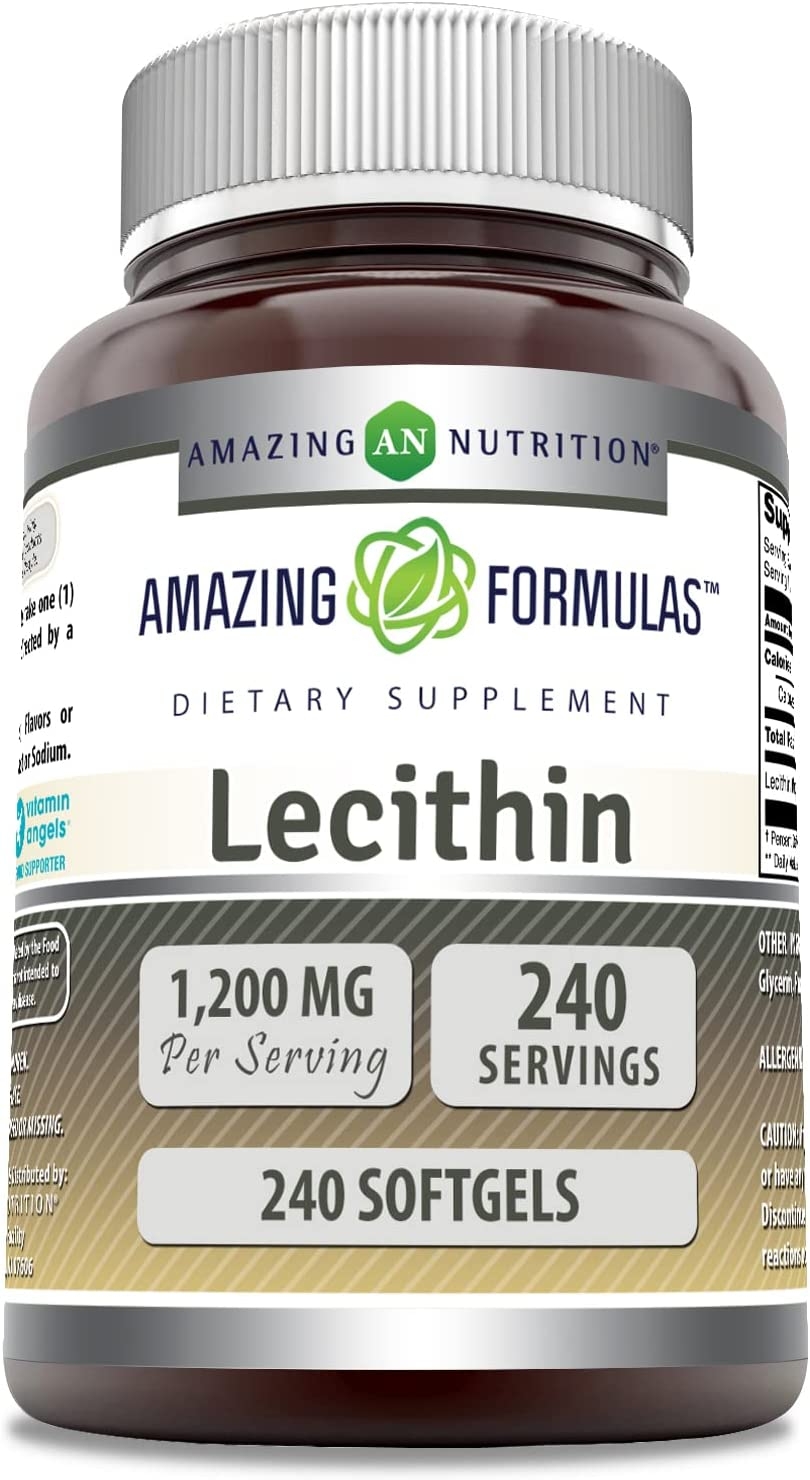
This product is exactly what its name says: soy-derived lecithin, 1,200 mg per softgel, 240 softgels per bottle, priced at $20.80. The Supplement Facts panel is short — one serving is one softgel, there are 240 servings in the bottle, and the only active line is Lecithin (from Soy) 1,200 mg, flagged "Daily Value not established." The other ingredients are soybean oil and the softgel shell itself: gelatin, glycerin and purified water. That gelatin shell is worth noting, because it means this is not a vegetarian or vegan product — and vegetarians and vegans are one of the groups most likely to be short on choline in the first place.
The bottle gives directions the online listing omits: "As a dietary supplement, adults take one (1) softgel daily, preferably with a meal or as directed by a healthcare professional." What no part of the label or listing states is a choline content, or any comparison to the NIH's Adequate Intake — the industry norm is to market by lecithin weight, not nutrient content. That is exactly why the estimate in this article exists: without it, "1,200 mg" reads like a meaningful dose of the nutrient, when it is a meaningful dose of the fatty carrier.
The manufacturer's description mixes the defensible with the promotional. That lecithin is a natural source of choline, that choline is needed to make acetylcholine, and that lecithin is a component of cell membranes are all accurate general points. Its claim that lecithin "supports heart health by promoting cleaner arteries," though, is a marketing statement rather than a sourced finding, and it sits awkwardly beside the unresolved TMAO research above.
Who this is for: people who want a general, food-adjacent source of phosphatidylcholine as part of a broader diet, people who prefer a soy-based lecithin over egg-derived phosphatidylcholine or synthetic choline salts, and people who are not relying on this product alone to meaningfully close a choline gap.
Who should skip it: anyone who specifically needs a measured choline dose — including most people trying to reach the 425–550 mg Adequate Intake, who would need a dedicated choline supplement instead, since a dozen softgels a day of this product is not a realistic way to get there. Vegetarians and vegans should skip it too: the softgel shell is gelatin. So should anyone avoiding soy. Pregnant people with a clinician-recommended choline target should use a product with a stated choline amount, not this one.
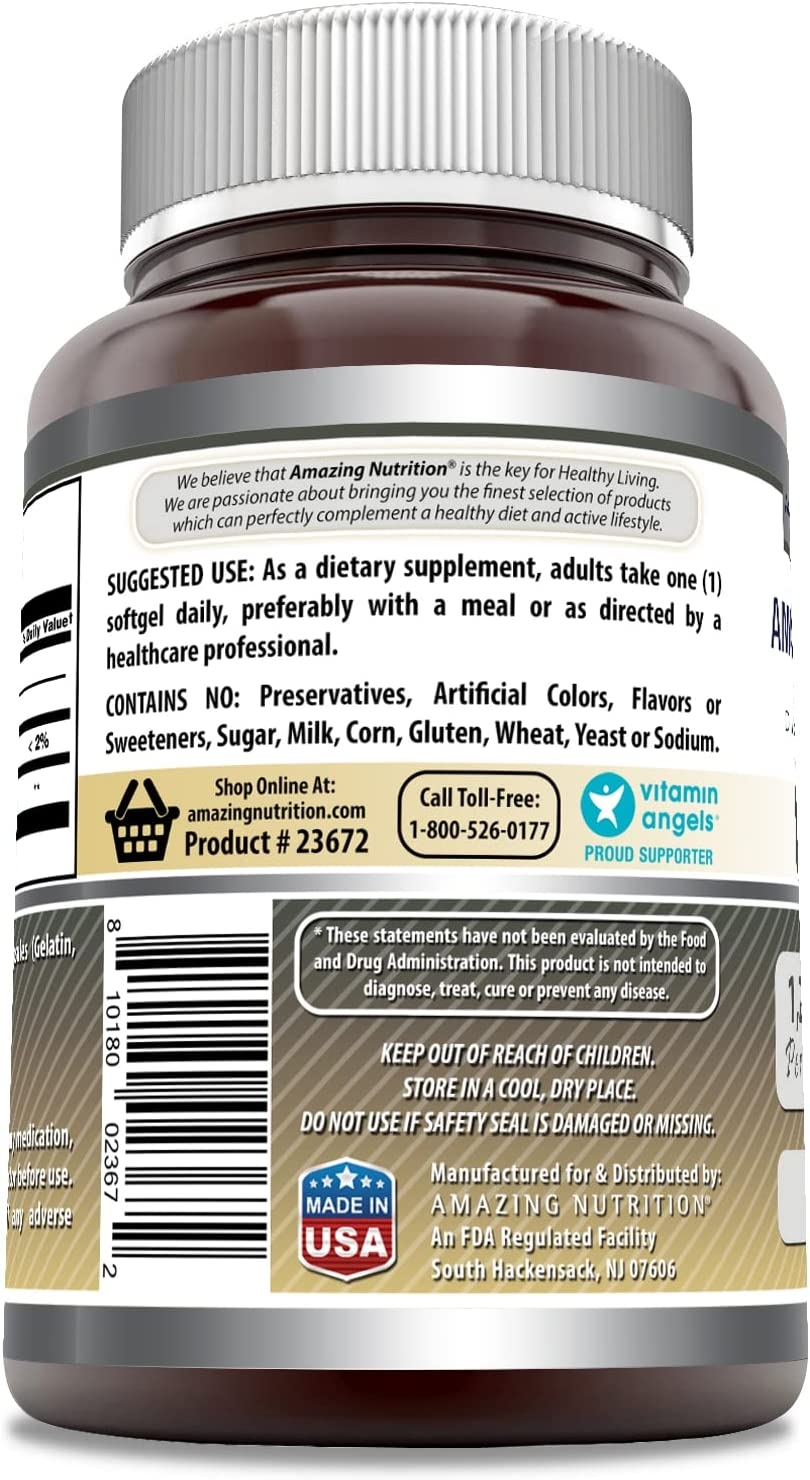
Amazing Formulas Lecithin Dietary Supplement, 1,200 mg, 240 softgels — soy-derived, and at the label's own one-softgel-daily direction, an eight-month supply. Best suited as a general phosphatidylcholine source alongside choline-rich foods, not as a stand-alone way to reach the NIH's Adequate Intake. Contains soybean; the softgel shell is gelatin, so it is not vegetarian.
View Amazing Formulas LecithinHow to Close the Choline Gap Sensibly
Food is the most direct route, and it doesn't take dramatic changes: two eggs cover close to 300 mg of choline on their own, and a serving of soybeans, chicken, or fish most days closes most of the remaining gap to the 425–550 mg Adequate Intake. People who don't eat eggs or meat — by preference, allergy, or diet — are the group genuinely likely to need a supplement, and for them, a product that states an actual choline amount, such as choline bitartrate, makes it possible to dose against the AI in a way a plain lecithin softgel does not. Citicoline (CDP-choline) and alpha-GPC are distinct compounds, not two names for one — and alpha-GPC is the form the stroke research above concerns, so choose between them with a clinician rather than on price. If lecithin is being taken for a stated purpose — a soy-based phosphatidylcholine source, rather than a measured choline dose — treat it as a food-like addition, not the answer to a choline gap. Anyone managing cardiovascular disease should raise choline supplementation with a clinician first, in any form.
Frequently Asked Questions
Is lecithin the same thing as choline?
No. Lecithin is a mixture of fatty phospholipids, of which phosphatidylcholine is the nutritionally relevant component; choline is the nutrient the body extracts from phosphatidylcholine. A lecithin label states the weight of the whole mixture, not the choline dose (National Academies/NIH, 1998).
How much choline does a 1,200 mg lecithin softgel actually provide?
Based on the NIH's own figure that commercial lecithin runs roughly 3–4% choline by weight, a 1,200 mg softgel works out to an estimated 36–48 mg of choline — about 7–11% of the adult Adequate Intake, per softgel.
What is the NIH's recommended choline intake?
The Adequate Intake is 550 mg/day for adult men and 425 mg/day for adult women, rising to 450 mg during pregnancy and 550 mg during lactation (National Academies/NIH, 1998).
Can I get enough choline from food alone?
Yes, for most people — two eggs plus a normal serving of meat, fish, or soybeans in a day gets close to the Adequate Intake. The problem is that most Americans don't eat that way: NHANES data show only 6.6% of US adults meet the AI (Wallace & Fulgoni, 2016).
Does lecithin lower cholesterol or help fatty liver?
There is no good human evidence that it does. The most-cited animal trial, in 180 laying hens, was mixed: soy lecithin lowered serum triglycerides but also lowered HDL cholesterol and raised liver cholesterol and liver-stress markers (Hu et al., 2022). Controlled human trials on standard lecithin softgels for these outcomes are sparse, so treat this as unproven, not established.
Is too much choline dangerous?
At very high intakes (the Upper Limit is 3.5 g/day), choline is linked to hypotension and, for some choline forms, fishy body odor. A softgel of this lecithin product supplies an estimated 36–48 mg, far below that threshold. People with kidney or liver disease, trimethylaminuria, depression or Parkinson's disease are more susceptible to choline's adverse effects and should ask a clinician first (National Academies/NIH, 1998).
Who is most likely to be low in choline?
NHANES and Cleveland Clinic both point to the same groups: pregnant and breastfeeding people, vegetarians and vegans, people with food allergies, and postmenopausal women, whose capacity to synthesize choline internally may decline as estrogen drops. Close to half the population also carries a gene variant that raises their personal choline requirement above the standard AI (Cleveland Clinic, 2024).
Should I worry about choline and heart disease?
It's a genuinely open research question rather than a settled answer. Gut bacteria can convert dietary choline into TMAO, which some studies link to higher cardiovascular and stroke risk, while other research points to protective cardiovascular effects of adequate choline. Anyone with existing heart disease or risk factors should discuss choline supplementation with a clinician rather than assume more is automatically better (Kansakar et al., 2023).
Sources
- Institute of Medicine (National Academies). "Dietary Reference Intakes for Thiamin, Riboflavin, Niacin, Vitamin B6, Folate, Vitamin B12, Pantothenic Acid, Biotin, and Choline — Chapter 12: Choline." 1998. Hosted by NIH/NCBI Bookshelf. Accessed 4 September 2026. ncbi.nlm.nih.gov/books/n/nap6015/ch12
- Wallace TC, Fulgoni VL 3rd. "Assessment of Total Choline Intakes in the United States." Journal of the American College of Nutrition. 2016. Accessed 4 September 2026. pubmed.ncbi.nlm.nih.gov/26886842
- Kansakar U, Trimarco V, Mone P, Varzideh F, Lombardi A, Santulli G. "Choline supplements: An update." Frontiers in Endocrinology. 2023. Accessed 4 September 2026. pmc.ncbi.nlm.nih.gov/articles/PMC10025538
- Cleveland Clinic. "What Foods Should You Eat To Boost Your Choline Levels?" Published 5 April 2024. Accessed 4 September 2026. health.clevelandclinic.org/choline-foods
- Hu GL, Xiong J, Liu Y, et al. "Effects of Lecithin Supplementation in Feed of Different Fat Levels on Serum Indexes and Liver Health of Laying Hens." Frontiers in Physiology. Published 19 July 2022. Accessed 4 September 2026. pmc.ncbi.nlm.nih.gov/articles/PMC9343795
- U.S. Food and Drug Administration. "Dietary Supplements." Accessed 4 September 2026. fda.gov/food/dietary-supplements
These statements have not been evaluated by the Food and Drug Administration. This product is not intended to diagnose, treat, cure or prevent any disease. This article is for educational purposes only and is not medical advice. Dietary supplements are not reviewed by the FDA for safety or effectiveness before they are sold. Talk to a doctor or registered dietitian before starting any new supplement, especially if you are pregnant, breastfeeding, managing a chronic condition, or taking medication.