
Soy isoflavone research looks contradictory until you learn one thing: roughly two-thirds of Western adults lack the gut bacteria needed to convert soy into its most active compound. That single fact explains why some trials show meaningful relief from hot flashes and others show almost nothing — and why "does soy work for menopause?" may have a different answer for you than for the woman next to you. Here is what the National Institutes of Health actually conclude, where the evidence is genuinely strong, and the safety conversation nobody should skip.
Key takeaways
- NCCIH concludes soy isoflavones may reduce the frequency and severity of hot flashes, but effects are modest and results inconsistent across studies.
- Evidence for bone density in postmenopausal women is stronger — NCCIH describes a probable beneficial effect.
- Only 20–30% of Western adults can convert daidzein into equol, versus 50–60% of Asian adults. This is the leading explanation for inconsistent trial results.
- Typical isoflavone intake is 25–50 mg/day in East Asia versus about 2 mg/day in Western countries — a more than tenfold dietary gap.
- Anyone with a history of estrogen-dependent cancer, or taking MAOI antidepressants, must speak to a clinician before starting soy supplements.
- What menopause is, medically
- What isoflavones are and how they act
- The hot flash evidence
- The equol problem — why studies disagree
- Bone health: the stronger finding
- The breast cancer question, answered carefully
- Safety, side effects and interactions
- How to evaluate a soy isoflavone supplement
- Frequently asked questions
What menopause is, medically
The National Institute on Aging defines menopause as the point at which menstrual periods stop permanently and pregnancy is no longer possible. Its framing is worth quoting, because it sets the tone for everything that follows:
The years leading up to it are the menopausal transition, or perimenopause. Most women begin this transition between ages 45 and 55, and it may last several years. Some pass through with few or no symptoms. Others experience a cluster that NIA lists as hot flashes, night sweats, trouble sleeping, joint and muscle discomfort, pain during sex, moodiness and irritability, forgetfulness and difficulty concentrating.
Hot flashes are the symptom most people seek help for, and the one most often studied. They are also, usefully for research, something people can count — which is why almost every soy trial measures them.
What isoflavones are and how they act
Isoflavones are plant compounds concentrated in soybeans. NCCIH describes them as "compounds similar in structure to the hormone estrogen" — which is the source of both their appeal and the caution around them.
The three that matter are genistein, daidzein and glycitein. Because their molecular shape resembles estradiol, they can bind to estrogen receptors — but weakly, and with a preference for the beta receptor rather than the alpha receptor that drives most classic estrogenic effects in breast and uterine tissue. This is why they are called phytoestrogens and also why they behave nothing like hormone therapy in potency. The effect is a fraction of a percent of estradiol's.
Depending on the tissue and the body's own hormone levels, isoflavones can act mildly estrogenic or mildly anti-estrogenic. That dual behaviour is genuinely unusual and is part of why the research literature is so tangled.
The hot flash evidence
The National Center for Complementary and Integrative Health reviews the trial evidence and lands on a carefully hedged conclusion: soy isoflavone supplements or soy protein may help reduce the frequency and severity of menopausal hot flashes, but the effects are modest and study results have been inconsistent.
"Modest and inconsistent" is not a dismissal. In context it means:
| Outcome | NCCIH assessment | How to read it |
|---|---|---|
| Hot flash frequency and severity | May help; modest effect; inconsistent results | Worth a trial period for many; not a reliable fix for everyone |
| Bone density in postmenopausal women | Probably beneficial | The strongest finding on the page |
| Breast cancer risk reduction (supplements) | Not shown | Do not take supplements for this purpose |
Set expectations accordingly. Soy isoflavones are not hormone therapy and do not perform like it. For women with severe vasomotor symptoms, the conversation to have is with a clinician about the full range of options, including non-hormonal prescription medications. For milder symptoms, or where hormone therapy is unsuitable or unwanted, a modest effect can still be a meaningful improvement in daily life.
NutritionFacts.org reviews the published trial data on soy phytoestrogens and hot flashes.
The equol problem — why studies disagree
This is the part that reframes everything, and it is largely absent from consumer supplement content.
Daidzein, one of the three main isoflavones, is not the most biologically active form. Certain gut bacteria metabolise it into a compound called equol, which binds estrogen receptors more effectively and persists longer in the body. Equol, not daidzein, appears to drive much of the benefit attributed to soy.
The catch: not everyone hosts those bacteria. Published research consistently finds that only about 20–30% of adults in Western populations are "equol producers," compared with roughly 50–60% in East Asian populations.
The implication for research design is significant. Recruit a hundred American women into a soy trial and you may have seventy participants who physically cannot produce the active metabolite. Their non-response dilutes the average, and the study reports a small or null effect — even if the equol producers in the group improved substantially. Run the same protocol in Japan and the result looks better.
Practically, this means a personal trial beats reading averages. Give a consistent dose eight to twelve weeks and track symptoms honestly — ideally writing them down, since recall is unreliable for something as variable as hot flashes. You are effectively running a study with a sample size of one, which is the only sample size that describes you.
Bone health: the stronger finding
Bone gets less attention than hot flashes and probably deserves more. Estrogen restrains bone resorption; when it declines at menopause, bone loss accelerates, and the years immediately following are when most of it happens.
NCCIH states that soy isoflavones probably have a beneficial effect on bone density in postmenopausal women — noticeably firmer language than the hedging applied to hot flashes.
Isoflavones are not a substitute for the fundamentals: adequate calcium and vitamin D, weight-bearing and resistance exercise, not smoking, and bone density screening on the schedule your doctor recommends. But as a supporting measure during the highest-risk window, the evidence is more solid than most shoppers realise.
The breast cancer question, answered carefully
This is where clarity matters most, because the topic generates real anxiety and a great deal of confused advice.
What NCCIH reports: among Asian populations, higher dietary soy intake correlates with lower breast cancer risk. However, soy in supplement form has not been shown to reduce breast cancer risk, and Western consumption levels may simply be too low for protective associations to appear.
Two conclusions follow, and they are different from each other:
- Soy foods — tofu, tempeh, edamame, soy milk — are widely regarded as safe within a normal diet, and observational data leans mildly favourable. The National Cancer Institute's diet and cancer risk resources are the place to explore that literature.
- Concentrated isoflavone supplements are a different proposition. They deliver doses well above dietary levels in an isolated form, and the safety data in people with hormone-sensitive cancers is not sufficient to give a blanket reassurance.
Safety, side effects and interactions
For most healthy adults soy isoflavones are well tolerated. NCCIH documents the following concerns:
| Concern | Detail |
|---|---|
| Allergy | Soy is a major food allergen; allergic reactions occur in susceptible individuals |
| Digestive effects | Bloating, constipation, diarrhoea and nausea are the commonly reported side effects |
| MAOI interaction | High-tyramine soy products can interact dangerously with monoamine oxidase inhibitor antidepressants |
| Pregnancy and breastfeeding | Safety beyond ordinary food amounts is uncertain — avoid supplemental doses |
| Hormone-sensitive conditions | Requires medical guidance before use |
| Thyroid | Discuss with your doctor if you take levothyroxine; separate dosing timing is commonly advised |
Taking capsules with food reduces digestive complaints. Splitting a daily dose across two servings rather than one is a common tolerance strategy where the label permits it.
How to evaluate a soy isoflavone supplement
- Look for total isoflavone content in milligrams, not just capsule weight. Trials generally use 40–80 mg of total isoflavones daily. A label quoting only "soy extract 500 mg" without an isoflavone figure is unhelpfully vague.
- Consider fermented or absorption-enhanced forms. In whole soybeans, isoflavones are bound to sugar molecules as glycosides and must be cleaved by gut enzymes before absorption. Fermentation performs some of that conversion during manufacturing — one way of reducing dependence on individual gut chemistry.
- Give it a fair trial. Eight to twelve weeks of consistent daily use, with symptoms tracked in writing. Hot flashes fluctuate week to week; impressions after ten days are noise.
- Check third-party testing. Supplements are not pre-approved by the FDA for safety or efficacy, so an accessible Certificate of Analysis is a genuine differentiator.
- Keep the whole picture in view. Sleep, alcohol, caffeine, room temperature, layered clothing and stress all modulate vasomotor symptoms. Womenshealth.gov, from the HHS Office on Women's Health, covers the full menu of management options.
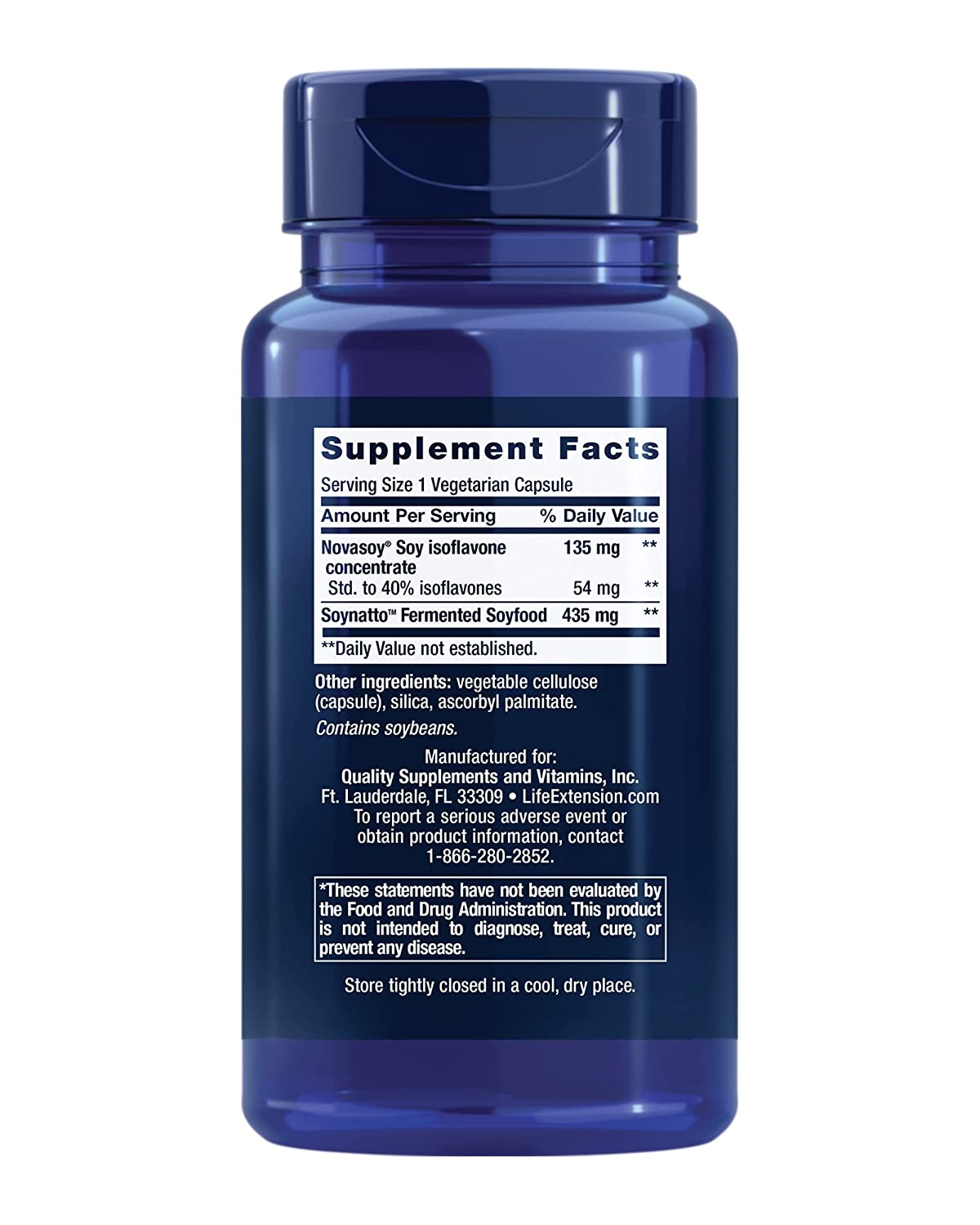
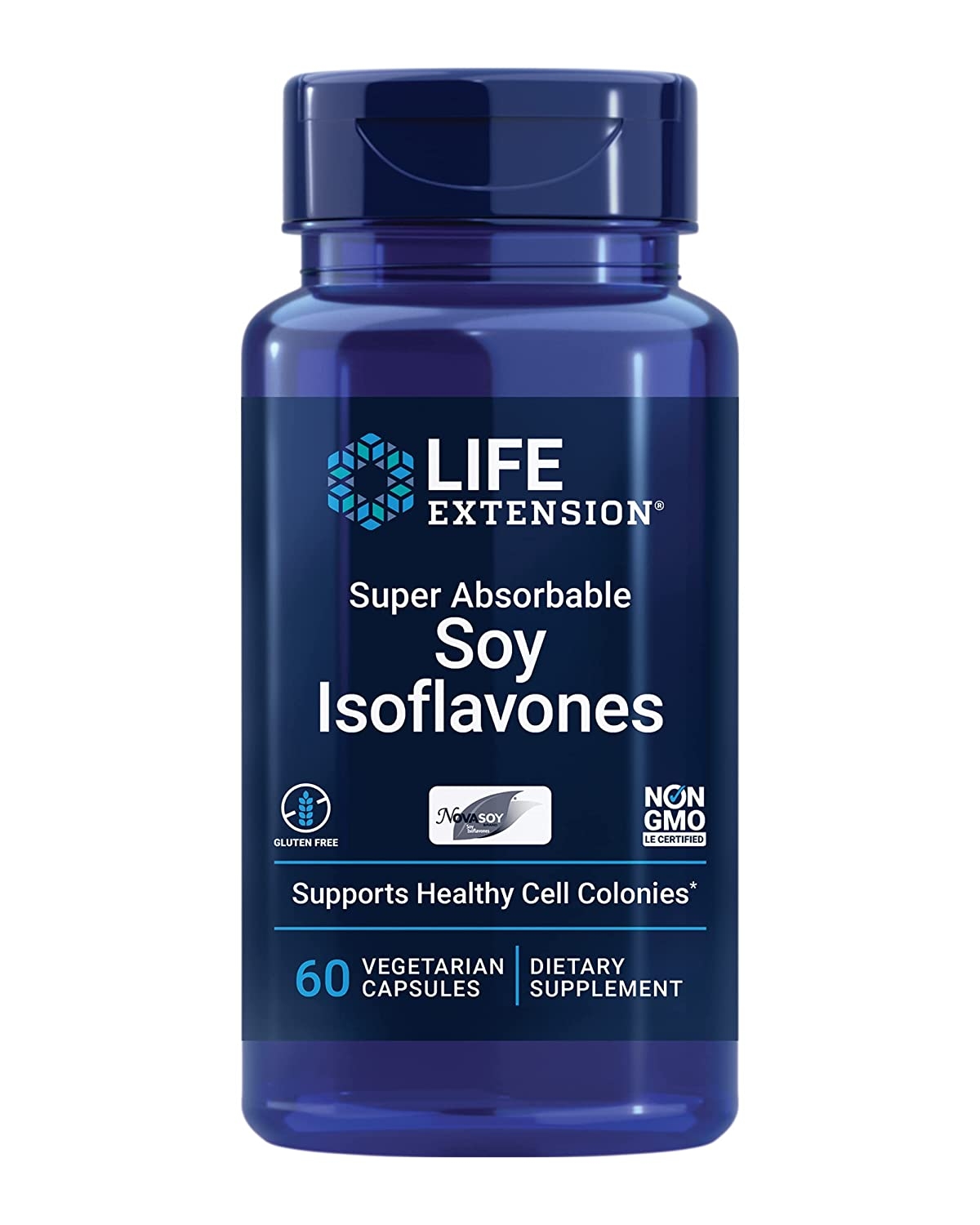
Life Extension Super-Absorbable Soy Isoflavones — 60 Vegetarian Capsules
An example of the fermented, absorption-focused approach described above, using a soybean yeast fermentation process. One capsule once or twice daily with food. Gluten-free and non-GMO certified, with a Certificate of Analysis available. Note the manufacturer's own caution: people with estrogen-dependent cancers should consult a healthcare professional before beginning a soy regimen.
You can browse related options in Women's Health, or the wider General Wellness range.
Frequently asked questions
Do soy isoflavones actually help with hot flashes?
NCCIH concludes that soy isoflavone supplements or soy protein may reduce the frequency and severity of menopausal hot flashes, but that effects are modest and study results inconsistent. They are not equivalent to hormone therapy. Many women find a worthwhile improvement; a substantial number notice little change.
Why do soy studies contradict each other?
The leading explanation is equol. Gut bacteria convert the isoflavone daidzein into equol, a more active compound, but only about 20–30% of Western adults host the necessary bacteria compared with 50–60% of East Asian adults. Trials in Western populations therefore contain many participants who cannot produce the active metabolite, diluting the average result.
How long should I take soy isoflavones before deciding if they work?
Allow eight to twelve weeks of consistent daily use and track symptoms in writing. Hot flash frequency varies considerably week to week, so short trials and unaided recall are unreliable guides.
Are soy isoflavones safe if I have had breast cancer?
Concentrated isoflavone supplements should not be started without speaking to your oncologist, and manufacturers carry this warning themselves. This caution applies specifically to supplements rather than soy foods, which are generally regarded as safe within a normal diet.
Do soy isoflavones help bones?
This is the stronger finding. NCCIH states that soy isoflavones probably have a beneficial effect on bone density in postmenopausal women — firmer language than it uses for hot flashes. They complement rather than replace calcium, vitamin D and weight-bearing exercise.
What are the side effects of soy isoflavone supplements?
The most commonly reported are digestive: bloating, constipation, diarrhoea and nausea. Soy is also a major allergen. High-tyramine soy products can interact dangerously with MAOI antidepressants, and supplemental doses are not advised during pregnancy or breastfeeding.
- NIH National Center for Complementary and Integrative Health — Soy
- NIH National Institute on Aging — What Is Menopause?
- HHS Office on Women's Health — Menopause
- MedlinePlus (U.S. National Library of Medicine) — Menopause
- National Cancer Institute — Diet and Cancer Risk
- Prevalence of the Equol-Producer Phenotype in Healthy Adults (PubMed Central)
- U.S. Food and Drug Administration — Dietary Supplements
Medical disclaimer. This article is for general education and is not medical advice. It is not a substitute for diagnosis or treatment from a qualified healthcare professional. Menopause management should be discussed with your doctor, particularly if you have a personal or family history of hormone-sensitive cancer, blood clots, or cardiovascular disease, or if you take prescription medication.
These statements have not been evaluated by the Food and Drug Administration. This product is not intended to diagnose, treat, cure, or prevent any disease.