
Saw palmetto is one of the best-selling herbal supplements marketed to men, and the two largest NIH-funded trials ever run on it — 225 men over one year, then 369 men over 72 weeks at triple the usual dose — both found it worked no better than a sugar pill. Saw palmetto is a herbal supplement made from the berries of Serenoa repens, a small palm native to the southeastern United States, sold mainly for the urinary symptoms of an enlarged prostate. None of that has slowed sales, but the evidence trail here is unusually clear.
Key Takeaways
- A 2023 Cochrane review of 27 randomized trials in 4,656 men concluded saw palmetto does not improve urinary symptoms or quality of life, short-term or long-term.
- The two pivotal NIH-funded trials — 225 men (2006, one year) and 369 men (2011, dose-escalated to 960 mg/day) — both found no benefit over placebo, at any dose tested.
- This product supplies 500 mg per capsule of a blend of saw palmetto powder and saw palmetto extract, the extract specified at 45% fatty acids — about half the 85–95% marker concentration of the extract used in the 2011 trial (CAMUS, JAMA 2011).
- Saw palmetto does not appear to affect PSA readings, even at higher-than-usual amounts (NCCIH) — so, unlike finasteride, it doesn't interfere with prostate cancer screening.
- Benign prostatic hyperplasia (BPH) affects an estimated 29–33% of men over 65, and new urinary symptoms in that age group should be evaluated by a doctor before assuming it's BPH at all.
In this article:
- What Is Saw Palmetto, and What Is It Sold For?
- Does Saw Palmetto Actually Shrink an Enlarged Prostate?
- What About the Hair Loss Claim?
- Is Saw Palmetto Safe? What NIH Actually Documents
- Inside Havasu Nutrition Saw Palmetto: What's Actually in the Capsule
- How to Use Saw Palmetto Sensibly
- Frequently Asked Questions
What Is Saw Palmetto, and What Is It Sold For?
Saw palmetto (Serenoa repens) is a small, scrubby palm native to the southeastern United States; the supplement is made from its dark berries, according to the NIH National Center for Complementary and Integrative Health (NCCIH). It's one of the most widely used herbal supplements marketed to men, sold primarily for urinary symptoms tied to an enlarged prostate — benign prostatic hyperplasia, or BPH — and secondarily for male pattern hair loss and chronic prostatitis/chronic pelvic pain syndrome.
BPH itself is common and not cancerous: the prostate gland enlarges with age and can squeeze the urethra, causing a weak stream, frequent urination, or waking at night to urinate. According to the NIH National Institute of Diabetes and Digestive and Kidney Diseases (NIDDK, updated 2024), BPH affects roughly 5–6% of men ages 40–64 and 29–33% of men 65 and older, making it the most common prostate problem in men over 50.
| Age group | Estimated prevalence |
|---|---|
| Under 40 | Rarely causes symptoms |
| 40–64 years | 5–6% |
| 65 years and older | 29–33% |
Standard treatment ranges from watchful waiting, to alpha-blockers and 5-alpha-reductase inhibitors, to surgery for severe cases, per NIDDK. Saw palmetto sits outside that system: it's regulated as a dietary supplement, not a drug, so it reached store shelves without the FDA ever reviewing whether it works.
Does Saw Palmetto Actually Shrink an Enlarged Prostate?
It is among the best-answered questions in the supplement aisle: the NIH funded two large independent trials to settle it.
The first, led by researchers at UC San Francisco and published in the New England Journal of Medicine in 2006, randomly assigned 225 men over 49 with moderate-to-severe BPH symptoms to one year of saw palmetto extract (160 mg twice daily) or placebo. NIH-funded, the trial found no significant difference between saw palmetto and placebo on the AUA Symptom Index, peak urinary flow rate, prostate size, or quality of life, according to the American Academy of Family Physicians' summary of the trial.
The obvious objection to a null result is dose: maybe 320 mg/day just wasn't enough. The NIH tested that too. The CAMUS trial, published in JAMA in 2011, enrolled 369 men across 11 North American sites and doubled, then tripled, the daily dose over 72 weeks. Symptom scores improved in both arms, but placebo improved slightly more: a 2.99-point drop versus 2.20 points with saw palmetto. The proportion improving by a clinically meaningful margin was nearly identical — 42.6% on saw palmetto, 44.2% on placebo.
| Bent et al., 2006 (NEJM) | CAMUS, 2011 (JAMA) | |
|---|---|---|
| Participants | 225 men | 369 men |
| Dose | 320 mg/day | 320 → 640 → 960 mg/day |
| Duration | 1 year | 72 weeks |
| Result | No significant benefit over placebo | No benefit at any dose tested |
"Saw palmetto, alone or in combination with other phytotherapeutic agents, does not improve urologic symptoms or quality of life in the short term (3 to 6 months) or long term (12 to 17 months). Also, it does not cause significant adverse events."
— Evidence-Based Answer summarizing the 2023 Cochrane review, American Family Physician, May 2024Those two trials aren't outliers. The 2023 Cochrane systematic review pooled 27 randomized trials covering 4,656 men and reached the same conclusion; American Family Physician graded it Strength of Recommendation A, consistent, good-quality patient-oriented evidence (2024). The few studies that did show improvement, it noted, were industry funded, used a very small sample, or showed no clinically relevant benefit. Saw palmetto did not cause more side effects than placebo — the honest finding is "doesn't work," not "is dangerous."
What About the Hair Loss Claim?
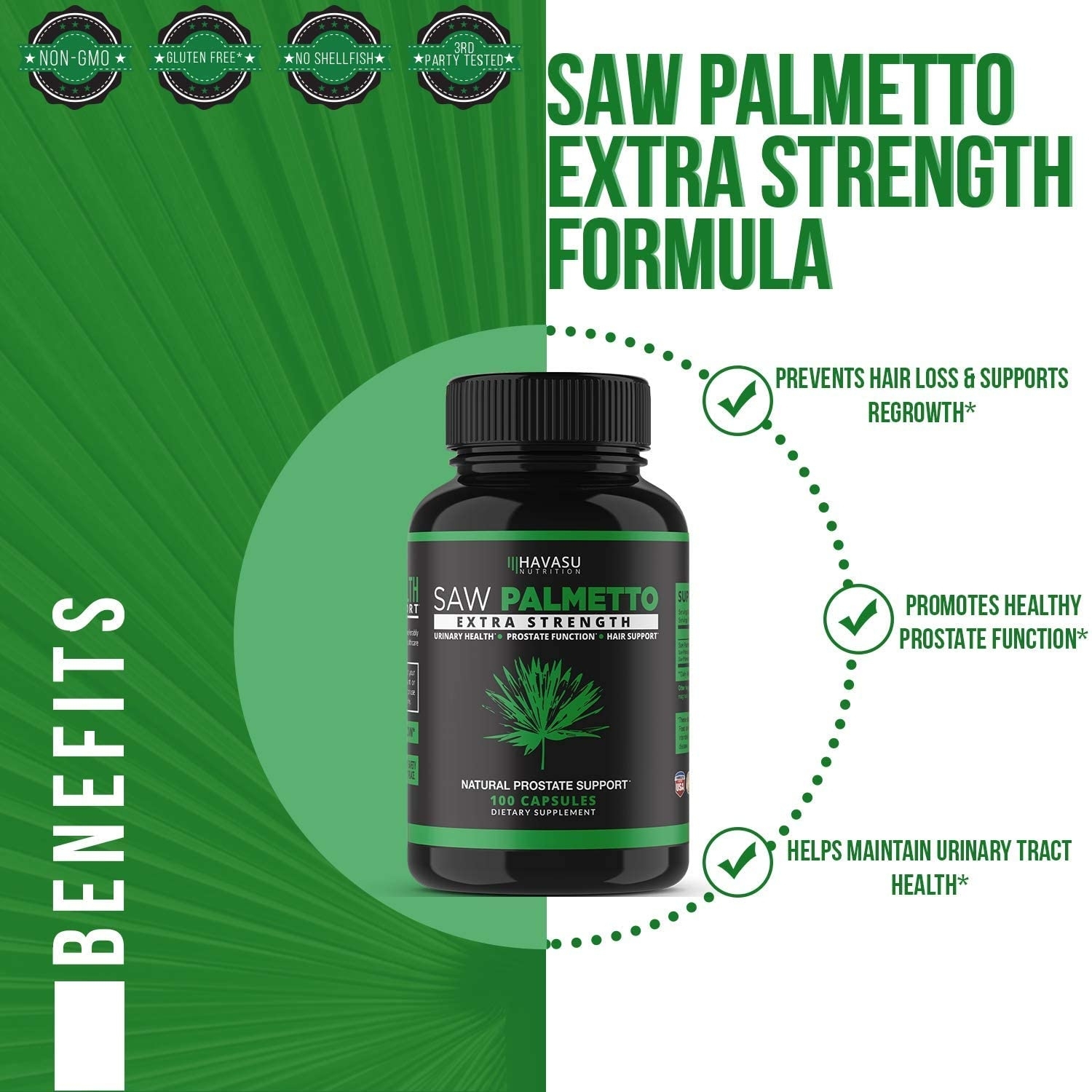
Saw palmetto is also marketed as a natural "DHT blocker" for hair thinning, on the theory that it inhibits 5-alpha-reductase, the enzyme that converts testosterone into dihydrotestosterone (DHT). What hasn't happened is a trial anywhere near the scale of the BPH research. NCCIH (updated 2025) puts it this way: "A few small studies have tested saw palmetto, used orally or topically (applied to the scalp), for male-pattern hair loss. The evidence is too limited to allow conclusions to be reached." The large BPH trials didn't measure hair outcomes at all. On the third marketed use, chronic prostatitis, NCCIH is more definite: it cites a 2022 review of five studies that found no significant benefit.
The honest summary: the prostate claim was tested at scale and did not hold up; the hair claim has never been tested at that scale in either direction. Both are unproven, but differently so, and a shopper deserves to know which they are buying.
Is Saw Palmetto Safe? What NIH Actually Documents
Independent of whether it works, saw palmetto's safety profile is reassuring by supplement standards. NCCIH (updated 2025) describes it as well tolerated, with safe use documented for up to three years, and side effects limited to mild, infrequent digestive upset, dizziness, and headache. NCCIH also reports it does not appear to affect PSA (prostate-specific antigen) readings, even at higher-than-usual amounts — unlike finasteride, which lowers PSA and complicates prostate cancer screening. Not interfering with that test is a genuine, if quiet, advantage.
Genuine safety warning: New or worsening urinary symptoms in a man over 50 — frequent urination, a weak stream, blood in the urine, pelvic pain — can also signal prostate cancer or a urinary tract infection, not just BPH. Self-treating with an over-the-counter supplement without seeing a doctor first risks delaying a diagnosis that actually matters. Get evaluated before assuming it's BPH, regardless of what you take afterward.
Per the Cleveland Clinic's drug information page, anyone with liver disease, a prostate cancer diagnosis, or a known allergy to saw palmetto or related plants should tell their care team before taking it — as should anyone pregnant, trying to become pregnant, or breastfeeding. NCCIH goes further on that last group, stating saw palmetto may be unsafe during pregnancy or breastfeeding. It can interact with prostate medications (finasteride, tamsulosin), hormones, and the blood thinner warfarin, so it's worth disclosing to a doctor even though it isn't a prescription drug. Because it's a dietary supplement, it reached the market without FDA review of its safety or effectiveness — manufacturers are responsible for substantiating their own claims, per the FDA's consumer guidance on dietary supplements.
NutritionFacts.org reviews the randomized-trial evidence on saw palmetto and other dietary approaches to enlarged prostate symptoms.
Inside Havasu Nutrition Saw Palmetto: What's Actually in the Capsule
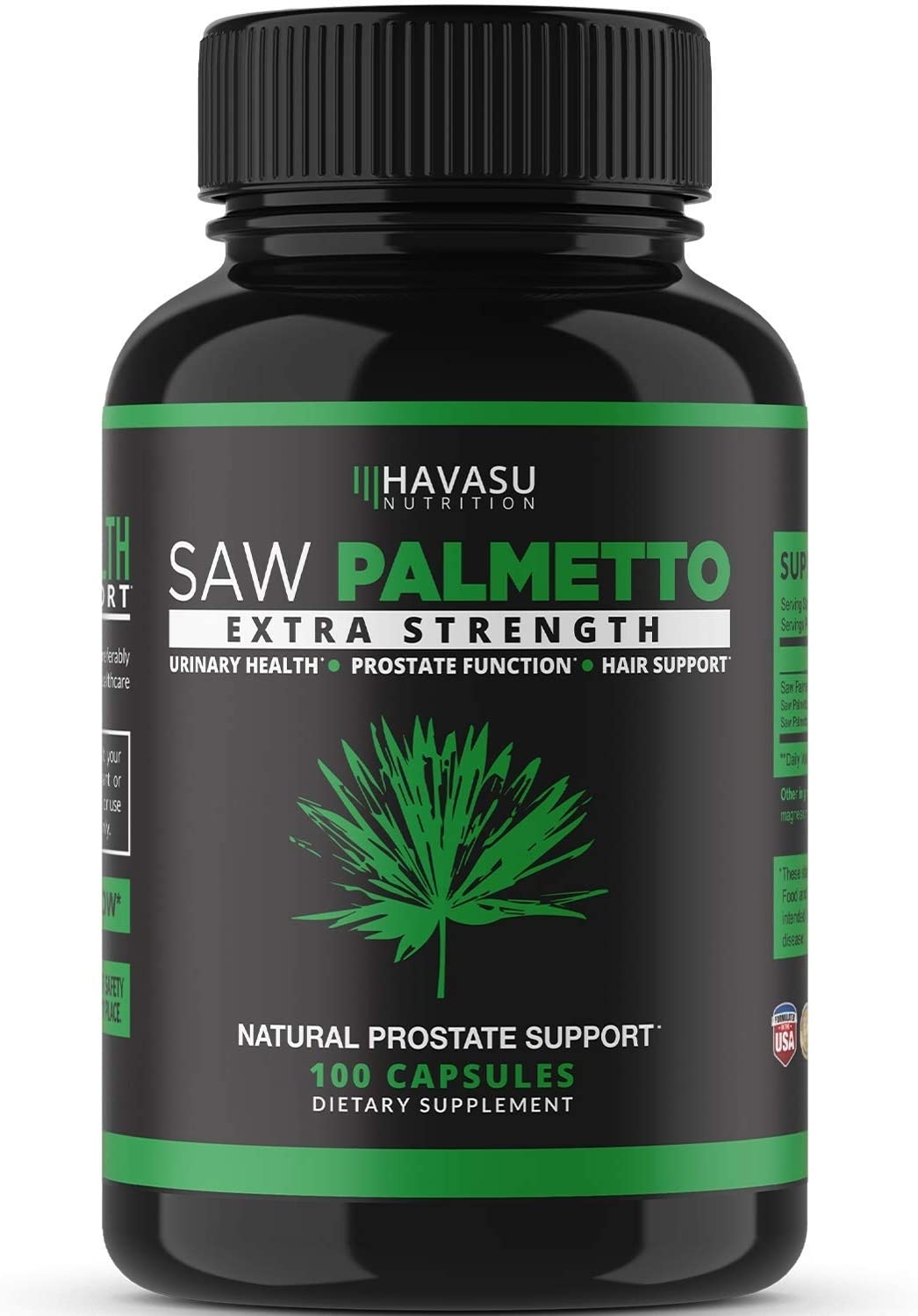
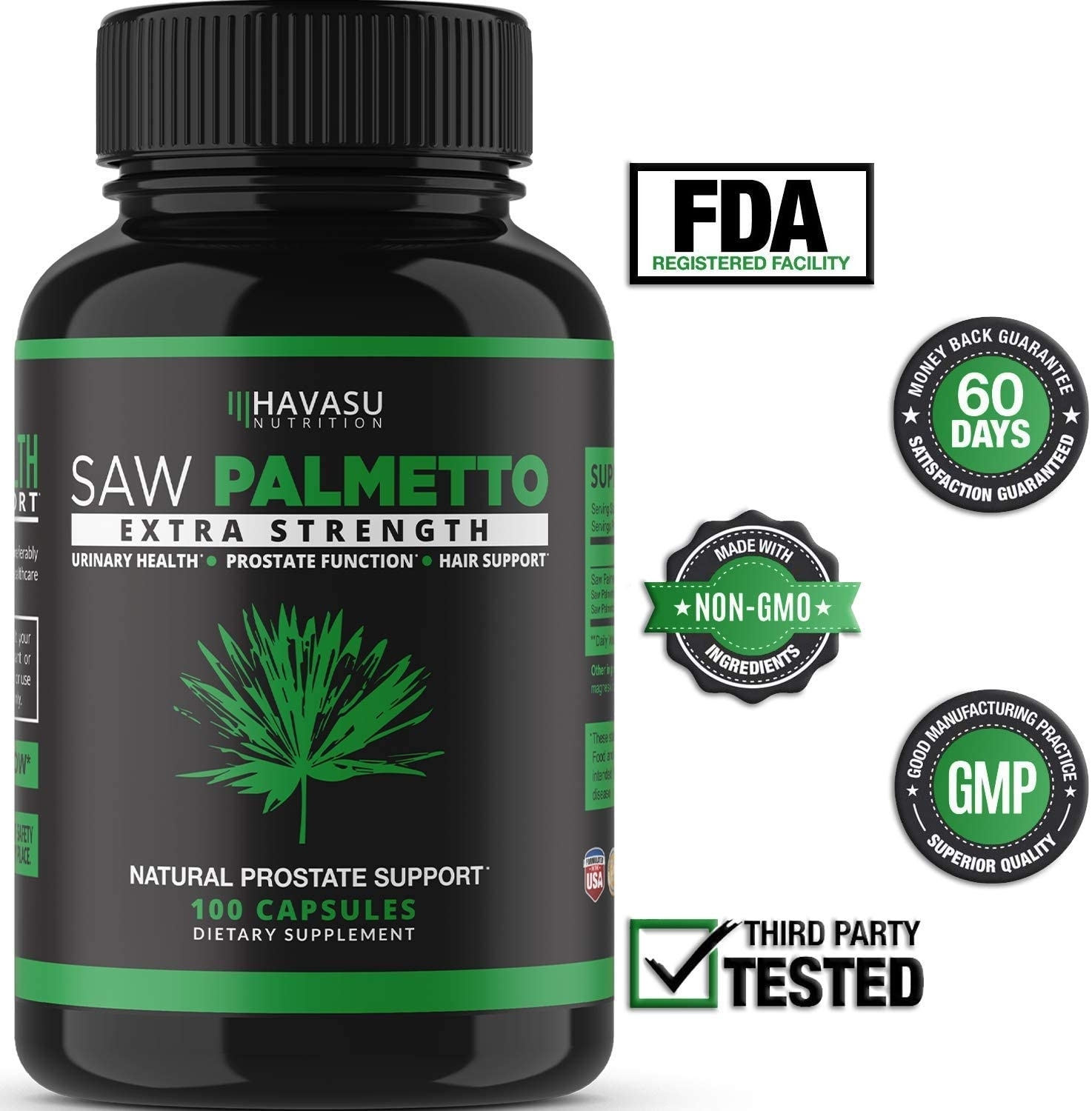
Havasu Nutrition's Saw Palmetto is a 100-capsule bottle, one capsule daily with a meal, so a bottle lasts roughly 100 days. Each capsule delivers 500 mg of a "Saw Palmetto Blend" — a combination of saw palmetto powder and saw palmetto extract standardized to 45% fatty acids — in a vegan, non-GMO capsule made in a GMP-registered US facility.
Worth flagging: the CAMUS extract was standardized to a reference chromatogram carrying 85–95% fatty acids as marker substances (JAMA, 2011) — roughly double this product's 45% extract specification, and the 500 mg here is a blend that is part plain powder, so its fatty-acid content is lower still. A weaker preparation has even less basis for a benefit claim than the trial material that already found none.
| This product | Clinical trial extract | Typical shelf range | |
|---|---|---|---|
| Daily dose | 500 mg blend (1 capsule) | 320–960 mg/day tested | 320–500 mg/day |
| Fatty-acid standardization | 45% (extract component only; blend also contains plain powder) | 85–95% (CAMUS, JAMA 2011) | Varies widely; often undisclosed |
| NIH RDA / AI | None — saw palmetto is not an essential nutrient, so no Adequate Intake exists | ||
| Tolerable Upper Limit | None established — NCCIH has documented no serious toxicity at studied doses, so safety is tracked through trial monitoring (up to 3 years) rather than a numeric limit | ||
The store's own marketing calls this "one of the leading prostate supplements on the market" and a "natural DHT inhibitor" — manufacturer claims, not findings from the trials above. The label supports a vegan, non-GMO, GMP-manufactured capsule at a stated 500 mg dose; the trial evidence supports only that saw palmetto does not outperform placebo for BPH symptoms.
Who this is for: Men who want a low-risk, well-tolerated option alongside — not instead of — a doctor's evaluation of new urinary symptoms, and who value that it won't interfere with a PSA test the way some prescription options do. Also anyone specifically seeking a vegan, allergen-conscious capsule.
Who should skip it: Most men expecting measurable symptom relief — the largest trials found none. Anyone with new or worsening urinary symptoms who hasn't yet seen a doctor; anyone on warfarin, finasteride, or hormone therapy without medical guidance; and anyone with liver disease or a prostate cancer diagnosis, without first talking to their clinician.
How to Use Saw Palmetto Sensibly
- See a doctor for any new urinary symptom before assuming it's BPH — this rules out prostate cancer and UTIs, which saw palmetto does nothing for.
- Set expectations from the trial evidence, not the label — including at triple the standard dose.
- Take it with food, as directed, to reduce the mild digestive upset some users report.
- Tell your doctor if you're on warfarin, finasteride, tamsulosin, or any hormone therapy before adding saw palmetto.
- If symptoms are affecting your quality of life, ask your doctor about the alpha-blockers and 5-alpha-reductase inhibitors that do have trial evidence behind them. Our Prostate Health category carries other options if you and your doctor decide a supplement is worth trying.
Havasu Nutrition Saw Palmetto — 500 mg, 100 Capsules
500 mg saw palmetto blend (powder plus 45%-fatty-acid extract) per capsule, one daily with food, roughly a 100-day supply. Vegan, non-GMO, GMP-manufactured in the USA. As covered above, the trial evidence for the BPH claim is null at higher concentrations than this, so treat it as a low-risk try, not a proven fix, and loop in your doctor first.
View Product DetailsFrequently Asked Questions
Does saw palmetto really help an enlarged prostate?
The best evidence says no. A 2023 Cochrane review of 27 trials in 4,656 men, along with the two largest NIH-funded trials (225 men in 2006, 369 men in 2011), found saw palmetto performed no better than placebo for BPH urinary symptoms, even at triple the standard dose.
How long does saw palmetto take to work?
In the trials that tested it properly, it didn't work regardless of how long it was taken — the 2006 trial ran a full year and the 2011 trial ran 72 weeks with escalating doses, and neither found a benefit over placebo at any timepoint measured.
What dose of saw palmetto was used in the clinical trials that found no benefit?
320 mg/day of saw palmetto extract in the 2006 trial, and 320 mg/day escalating to 640 and then 960 mg/day in the 2011 CAMUS trial, whose extract was standardized to 85–95% fatty acids as marker substances. Higher doses did not produce better results at any step.
Is saw palmetto safe to take long-term?
NIH's NCCIH describes it as well tolerated, with safe use documented in studies for up to three years and only mild side effects (digestive upset, dizziness, headache) reported. NCCIH still says it may be unsafe in pregnancy or breastfeeding, and Cleveland Clinic says to tell your care team first if you have liver disease or prostate cancer, or take warfarin or hormone therapy.
Does saw palmetto affect PSA test results?
No, and that's actually a genuine advantage. Unlike the prescription drug finasteride, which can lower PSA and complicate prostate cancer screening, saw palmetto does not affect PSA levels, according to NCCIH.
Can saw palmetto help with hair loss?
The evidence is far thinner than for BPH. NCCIH says only a few small studies have tested saw palmetto for male-pattern hair loss, and that the evidence is "too limited to allow conclusions to be reached." The large trials that tested the prostate claim did not measure hair outcomes at all.
What are the side effects of saw palmetto?
Mostly mild: digestive upset, dizziness, and headache. Rare allergic reactions (rash, itching, facial or throat swelling) have been reported. Clinical trials found no significant increase in side effects compared with placebo.
Should I see a doctor before taking saw palmetto for prostate symptoms?
Yes. New or worsening urinary symptoms can also indicate prostate cancer or a urinary tract infection, neither of which saw palmetto treats. Get evaluated first, then decide with your doctor whether a low-risk supplement, a prescription option with trial evidence, or both makes sense.
Sources
- NIH National Center for Complementary and Integrative Health — Saw Palmetto: Usefulness and Safety. Updated April 2025. Accessed 28 August 2026.
- NIH National Institute of Diabetes and Digestive and Kidney Diseases — Prostate Enlargement (BPH). Updated June 2024. Accessed 28 August 2026.
- American Family Physician — Saw Palmetto for the Treatment of Lower Urinary Tract Symptoms Due to Benign Prostatic Hyperplasia (Cochrane for Clinicians). Published May 2024. Accessed 28 August 2026.
- American Family Physician — Saw Palmetto Ineffective for Prostate Patients, summarizing Bent et al., NEJM 2006. Published June 2006. Accessed 28 August 2026.
- ScienceDaily, reporting the NIH-funded CAMUS trial published in JAMA. Published 27 September 2011. Accessed 28 August 2026.
- Barry MJ et al. — Effect of Increasing Doses of Saw Palmetto Extract on Lower Urinary Tract Symptoms: A Randomized Trial (CAMUS). JAMA. Published 28 September 2011. Accessed 28 August 2026.
- Cleveland Clinic — Saw Palmetto (Serenoa repens) Capsules or Tablets. Accessed 28 August 2026.
- U.S. Food and Drug Administration — Questions and Answers on Dietary Supplements. Accessed 28 August 2026.
This article is for educational purposes only and is not medical advice. It is not intended to diagnose, treat, cure, or prevent any disease. These statements have not been evaluated by the Food and Drug Administration. New or worsening urinary symptoms should be evaluated by a doctor. Talk to your doctor before starting any new supplement, especially if you are pregnant, breastfeeding, have liver disease, or take warfarin, finasteride, tamsulosin, or hormone therapy.