
Salicylic acid works on acne for a reason no other common exfoliant can match: it is oil-soluble. That single chemical property lets it travel into a pore already plugged with sebum, where water-soluble acids simply cannot follow. It is also an FDA-recognised acne drug ingredient, permitted at 0.5–2% under a federal monograph. But there is a catch worth understanding before you buy a cleanser: a face wash is a rinse-off product, and contact time is most of the battle. Here is what the ingredient does, what the NIH recommends for acne-prone skin, and how to build a routine where a wash actually earns its place.
Key takeaways
- Salicylic acid is FDA Category I — safe and effective — for acne at 0.5% to 2% under the OTC monograph in 21 CFR part 333, subpart D.
- It is a beta hydroxy acid and oil-soluble, so unlike glycolic or lactic acid it can penetrate sebum-filled pores.
- NIAMS describes acne as three things at once: excess oil, dead skin cell buildup, and bacterial growth in the pore. Salicylic acid targets the middle one.
- NIAMS advises a mild cleanser morning, evening, and after heavy exercise — and explicitly warns against strong soaps and rough scrub pads.
- A wash has seconds of contact time. For persistent acne it is a supporting player; leave-on treatments do the heavy lifting.
What acne actually is
The National Institute of Arthritis and Musculoskeletal and Skin Diseases identifies three mechanisms operating together inside a pore:
- Excess or high production of oil in the pore
- Buildup of dead skin cells in the pore
- Growth of bacteria in the pore
That three-part definition is the most useful framework for choosing products, because no single ingredient addresses all three. Salicylic acid works primarily on the second. Benzoyl peroxide works primarily on the third. Retinoids work on the second and the underlying cell turnover. Hormonal treatments work on the first.
NIAMS describes six lesion types — whiteheads, blackheads, papules, pustules, nodules, and severe nodular or cystic acne — ranging from surface-level plugged follicles to deep, painful lesions. This matters for expectations: over-the-counter ingredients are aimed at the milder end. Nodular and cystic acne needs a dermatologist, and delaying that visit risks permanent scarring.
Acne predominantly affects teenagers and young adults, appears more often in male adolescents, and becomes more common in adult women when it persists past the teenage years. Risk factors include hormonal changes at puberty, family history and certain medications.
How salicylic acid works — and why oil-solubility matters
NIAMS puts the mechanism succinctly: salicylic acid "helps break down blackheads and whiteheads and also helps reduce the shedding of cells lining the hair follicles."
Two distinct actions are bundled in there. It loosens the bonds between dead skin cells (a keratolytic effect), and it moderates how quickly the follicle lining sheds cells in the first place. Together those clear existing plugs and slow the formation of new ones.
The property that makes it a first choice for acne rather than general exfoliation is its chemistry. Salicylic acid is a beta hydroxy acid (BHA), and it is lipophilic — oil-soluble. Alpha hydroxy acids such as glycolic and lactic acid are water-soluble. A pore blocked with sebum is an oily environment, and a water-soluble acid cannot get into it; an oil-soluble one dissolves right in.
| Acid type | Solubility | Works mainly on |
|---|---|---|
| Salicylic acid (BHA) | Oil-soluble | Inside the pore — blackheads, whiteheads, congestion |
| Glycolic acid (AHA) | Water-soluble | Skin surface — texture, tone, fine lines |
| Lactic acid (AHA) | Water-soluble | Skin surface — gentler, more hydrating |
This is also why salicylic acid suits oily and combination skin particularly well, and why it can be drying on skin that is already dry.
Board-certified dermatologist Sandra Lee, MD, on how salicylic acid treats acne.
The FDA monograph and the 0.5–2% range
Like colloidal oatmeal, salicylic acid is not a cosmetic ingredient making vague promises. It is a recognised over-the-counter drug active ingredient, governed by the FDA's topical acne monograph in 21 CFR 333.310, part of part 333, subpart D.
Under that monograph, salicylic acid is permitted as a single active ingredient at 0.5% to 2% and is classified Category I: safe and effective for acne treatment. Products at those concentrations carry a Drug Facts panel rather than a plain ingredients list.
One monograph consequence worth knowing: salicylic acid can increase sun sensitivity. Daily broad-spectrum sunscreen is not optional alongside it — and it also protects against the post-inflammatory dark marks that acne leaves behind, which for many people outlast the spots themselves.
The contact time problem with cleansers
Here is the part product marketing tends not to volunteer.
Salicylic acid needs time in contact with skin to do its work. A serum or leave-on treatment stays put for hours. A cleanser is on your face for perhaps 20 to 60 seconds and is then rinsed down the sink. The same active at the same concentration delivers substantially less effect in a wash than in a leave-on product.
That does not make a salicylic acid wash pointless — it makes it a specific tool for specific jobs:
- Genuinely useful for oily skin, body acne on the chest and back (where leave-on treatments are impractical over large areas), mild congestion and blackheads, and as a gentler entry point for people whose skin cannot yet tolerate a leave-on acid.
- Not sufficient alone for persistent inflammatory acne, papules and pustules that keep recurring, or anything approaching nodular or cystic disease.
You can improve a wash's odds by leaving it on for 30–60 seconds before rinsing, as long as your skin tolerates it. But if a wash is your only acne treatment and results have plateaued, the missing piece is usually a leave-on product, not a stronger cleanser.
Salicylic acid vs benzoyl peroxide
These are the two workhorse over-the-counter acne actives, and they are not interchangeable. NIAMS distinguishes them cleanly: benzoyl peroxide "kills bacteria and may decrease the production of sebum," while salicylic acid breaks down blackheads and whiteheads and reduces shedding of follicle-lining cells.
| Salicylic acid | Benzoyl peroxide | |
|---|---|---|
| Primary action | Unclogs pores, exfoliates inside the follicle | Kills acne bacteria, reduces oil |
| Best for | Blackheads, whiteheads, congestion, oily skin | Inflammatory acne — red papules and pustules |
| Main drawback | Dryness, irritation; sun sensitivity | Dryness; bleaches fabric — towels, pillowcases, clothing |
| Monograph strengths | 0.5–2% | 2.5–10% (2.5% is often as effective and less irritating) |
If your acne is mostly non-inflamed congestion — blackheads, small bumps, rough texture — salicylic acid is the better fit. If it is red, angry and inflamed, benzoyl peroxide targets the bacterial component more directly. Many people use both, at different times of day, rather than choosing.
A dermatology practice compares the two main over-the-counter acne actives.
Building a routine that works
NIAMS guidance is refreshingly unglamorous, and most acne routines fail by ignoring it:
- Cleanse gently, twice daily plus after heavy exercise. NIAMS specifies a mild cleanser morning and evening and after sweating. More washing is not better — it strips the barrier and drives rebound oil production.
- Use lukewarm water. Avoid strong soaps and rough scrub pads. Physical scrubs on inflamed acne increase irritation without clearing pores.
- Start once daily and build up. With any acid, introduce slowly. If a product directs up to three times daily, begin with one and increase only if your skin stays comfortable.
- Moisturise anyway. Oily skin still has a barrier to protect, and dryness from acids is the most common reason people abandon a routine. A light, non-comedogenic moisturiser makes the actives easier to tolerate.
- Wear sunscreen daily. Salicylic acid increases sun sensitivity, and sun exposure darkens post-acne marks.
- Do not pick. NIAMS is explicit: squeezing or picking blemishes "can cause scars or dark blotches to develop." This is the single most consequential habit change available, and it is free.
- Give it 8–12 weeks. Cell turnover takes time. Judging a routine after two weeks tells you nothing except whether it irritates you.
Also worth knowing: wash hair regularly if it is oily, shave with a sharp blade and a gentle hand, and avoid rubbing or touching lesions through the day.
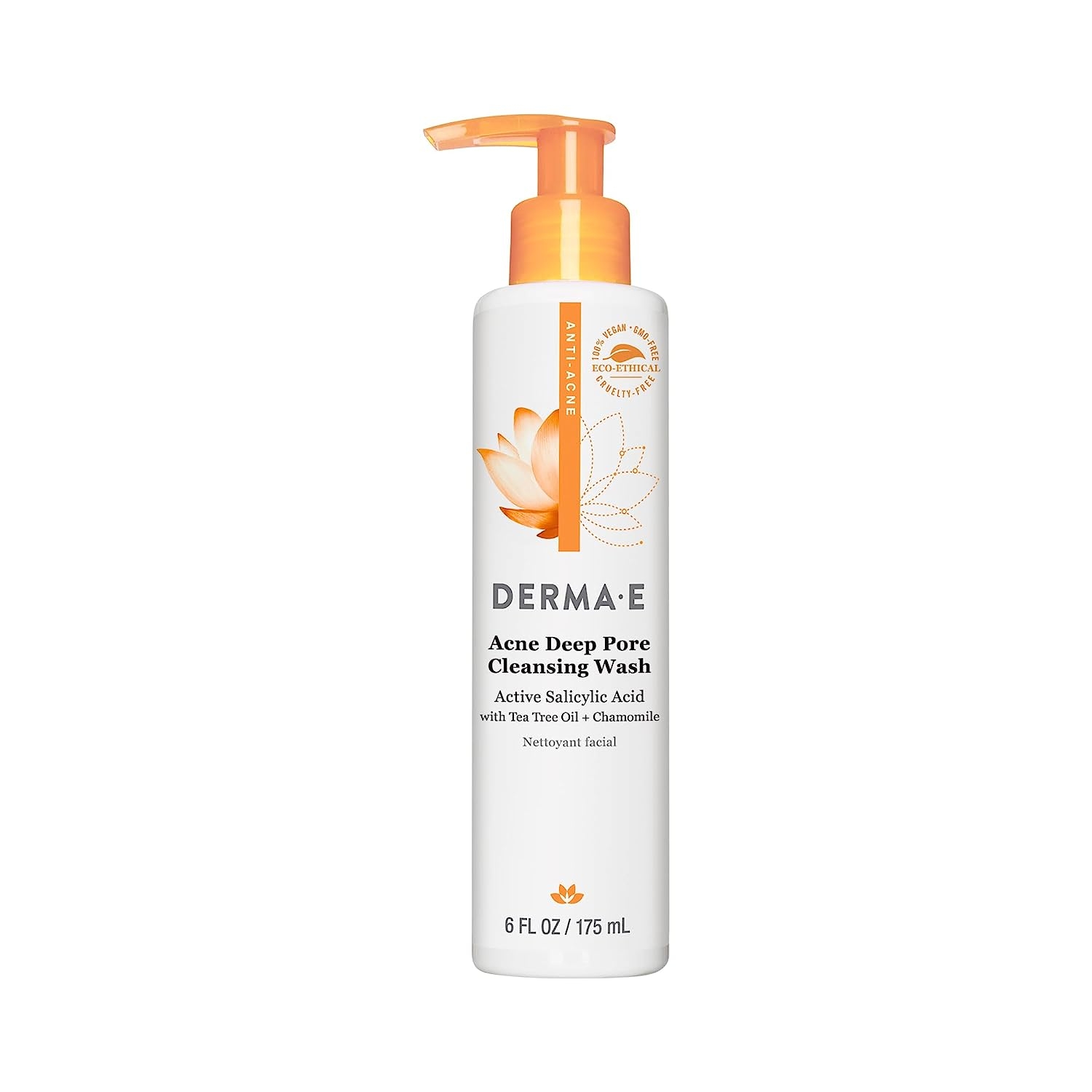
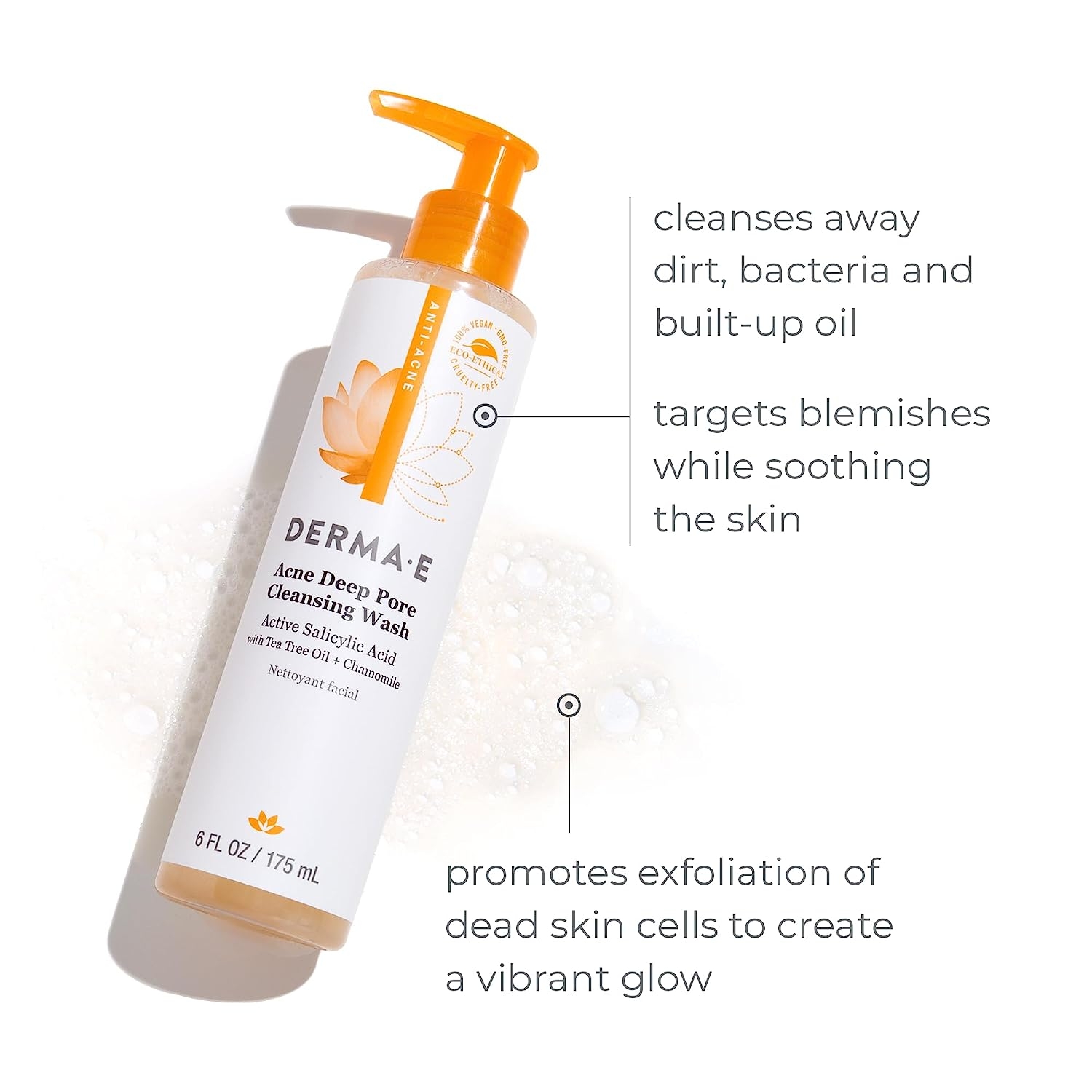
Derma E Acne Deep Pore Cleansing Wash — Active Salicylic Acid, 6 oz
A salicylic acid cleanser of the type discussed above, vegan-formulated. Directions: apply to a damp face, massage gently, avoid the eye area, then rinse thoroughly and pat dry. The manufacturer advises starting with one application daily and increasing to two or three only if tolerated, since the skin may become excessively dry. Check the Drug Facts panel for the exact salicylic acid percentage.
Browse related options in Body Lotion and General Wellness.
Reading "consumer tested" claims
Acne products often advertise figures like "90% soothed skin" or "87% helped skin look clearer" from a four-week consumer trial. These are worth understanding rather than dismissing.
A consumer perception study asks a panel of users whether they agree with statements about a product. It measures satisfaction. A clinical trial uses trained assessors, standardised lesion counts, a control group and often blinding. It measures effect.
Consumer studies are not fraudulent — they are simply answering a different question, usually without a placebo group, which matters enormously in acne where perception and natural fluctuation are both large. Treat those percentages as evidence that users liked the product, and treat the FDA monograph status of the active ingredient as the evidence that it works.
Frequently asked questions
What percentage of salicylic acid is best for acne?
The FDA monograph permits 0.5% to 2% for over-the-counter acne treatment, all classified as safe and effective. 2% is the most common treatment strength, but 0.5–1% is often better for sensitive or dry skin and for products used twice daily. Higher is not automatically better, since irritation can worsen the appearance of acne.
Is a salicylic acid face wash enough to clear acne?
Often not on its own. A cleanser is rinsed off after 20–60 seconds, so the active has very little contact time compared with a leave-on serum or treatment. A wash works well for oily skin, blackheads, body acne and as a gentle starting point, but persistent inflammatory acne usually needs a leave-on product too.
Why is salicylic acid better than glycolic acid for acne?
Salicylic acid is a beta hydroxy acid and is oil-soluble, so it can penetrate a pore already blocked with sebum. Glycolic and lactic acid are alpha hydroxy acids and water-soluble, so they work on the skin surface rather than inside the pore. That makes salicylic acid the better fit for blackheads and congestion.
Can I use salicylic acid and benzoyl peroxide together?
Many people do, typically at different times of day, because they address different parts of the problem — salicylic acid unclogs pores while benzoyl peroxide targets bacteria and oil. Introduce them one at a time and watch for dryness or irritation. Benzoyl peroxide also bleaches fabric, so keep it away from towels and pillowcases.
How often should I wash my face if I have acne?
NIAMS recommends cleansing gently with a mild cleanser in the morning, in the evening, and after heavy exercise. Use lukewarm water, and avoid strong soaps and rough scrub pads. Washing more frequently tends to irritate skin and strip the barrier rather than improve acne.
How long before I see results?
Allow 8 to 12 weeks of consistent use. Skin cell turnover takes weeks, and acne fluctuates naturally, so shorter trials mostly reveal whether a product irritates you. If there is no improvement after about 12 weeks, that is a reasonable point to see a dermatologist.
- NIH NIAMS — Acne: Overview, Symptoms & Causes
- NIH NIAMS — Acne: Diagnosis, Treatment & Steps to Take
- eCFR — 21 CFR 333.310, Acne Active Ingredients
- eCFR — 21 CFR Part 333, Subpart D: Topical Acne Drug Products
- MedlinePlus (U.S. National Library of Medicine) — Acne
- American Academy of Dermatology — Acne Resource Center
Medical disclaimer. This article is for general education and is not medical advice. It is not a substitute for diagnosis or treatment from a qualified healthcare professional. If you have severe, scarring or persistent acne, consult a doctor or dermatologist. Patch test new products, and stop use if significant irritation develops.
These statements have not been evaluated by the Food and Drug Administration. This product is not intended to diagnose, treat, cure, or prevent any disease.