
The longevity case for resveratrol comes from lower organisms; in a 9-year cohort of 783 adults aged 65 or older (JAMA Internal Medicine, 2014), those with the highest resveratrol exposure did not live longer than those with the lowest. Resveratrol is a polyphenol made by grapes, Japanese knotweed and some berries, and it is sold in capsules for “healthy aging”. The capsule reviewed here holds 250 mg, about 1.7 times the 150 mg a day that Europe’s food safety agency assessed in 2016.
Key Takeaways
- In the 2014 InCHIANTI cohort, 268 of 783 older adults (34.3%) died over 9 years; deaths by resveratrol quartile were 34.4%, 31.6%, 33.5% and 37.4% (P = .67, JAMA Internal Medicine).
- Three placebo-controlled trials found no metabolic benefit: 1,500 mg a day for 4 weeks (24 obese men, 2013), 250 mg for 8 weeks (men aged 60–72, 2014) and 75 mg for 12 weeks (postmenopausal women, 2012).
- A 2019 meta-analysis of 17 trials found no significant overall fall in systolic blood pressure (−2.5 mmHg, 95% CI −5.5 to 0.6); effects appeared only at 300 mg or more a day and in diabetes.
- A 2026 meta-analysis of 23 trials and 1,005 people with overweight or obesity found no significant change in body weight (−1.42 kg, 95% CI −3.19 to 0.35) but a 1.93 cm smaller waist.
- EFSA (January 2016) judged 150 mg a day of synthetic trans-resveratrol safe for adults, noted diarrhoea at 1 g a day or more, and warned of CYP2C9 drug interactions. This capsule has 250 mg.
In this article:
- What Resveratrol Is, and Where the Longevity Idea Comes From
- Three Human Trials on Metabolism and Aging: Mostly Nothing
- Blood Pressure, Blood Sugar and Weight: What Pooled Trials Say
- The Safety Catch: What EFSA Assessed, and What It Did Not
- Inside Life Extension Optimized Resveratrol: Label Versus Listing
- Who Might Consider It, and Who Should Skip It
- Frequently Asked Questions
What Resveratrol Is, and Where the Longevity Idea Comes From
Resveratrol is a plant polyphenol, a compound plants make that is not a vitamin or mineral. EFSA (EFSA opinion, published 12 January 2016) notes that it “occurs naturally in grapes, grape juice and wine with low amounts found in peanuts, pistachios, and in blueberries”, and that it “does not have a nutritionally relevant role in the human diet”. So there is no recommended intake and no deficiency to correct.
The authors of the 2014 InCHIANTI paper (Semba et al., JAMA Internal Medicine, July 2014) describe resveratrol as “related to longevity in some lower organisms”. They tested the idea by following 783 community-dwelling adults aged 65 or older in two Chianti villages from 1998 to 2009, measuring 24-hour urinary resveratrol metabolites as a marker of dietary intake.
“Resveratrol levels achieved with a Western diet did not have a substantial influence on health status and mortality risk of the population in this study.”
— Semba et al., JAMA Internal Medicine, July 2014, conclusion of the abstractThe caveat is real: this was observational and measured diet, not a capsule. EFSA puts the gap in numbers: 150 mg a day is “about 50 times higher than the high percentile background intake from foods” (EFSA, 2016). So the trials below matter more than the cohort, which only removes the easy assumption that more dietary resveratrol means a longer life.
Three Human Trials on Metabolism and Aging: Mostly Nothing
Supplement copy often says resveratrol mimics calorie restriction. Three randomised, placebo-controlled trials tested versions of that, at doses that bracket this capsule.
| Study | People and dose | What it found |
|---|---|---|
| Yoshino et al., Cell Metabolism, 2012 | Nonobese postmenopausal women with normal glucose tolerance; 75 mg a day for 12 weeks | No change in body composition, resting metabolic rate, plasma lipids, inflammatory markers or insulin sensitivity; no effect on AMPK, SIRT1, NAMPT or PPARGC1A in muscle or fat |
| Poulsen et al., Diabetes, 2013 | 24 obese but otherwise healthy men; 500 mg three times daily (1,500 mg a day) for 4 weeks | Insulin sensitivity, the primary outcome, did not improve; no effect on blood pressure, energy expenditure, fat content or inflammation. The authors said the result “raises doubt about the justification of resveratrol as a human nutritional supplement in metabolic disorders” |
| Olesen et al., Journal of Physiology, 2014 | Healthy, physically inactive men aged 60–72; 250 mg a day for 8 weeks, alone or with exercise training | No exclusive metabolic effects from resveratrol; it blunted exercise-training decreases of about 20% in protein carbonylation and about 40% in TNFα mRNA in muscle |
The Olesen trial used 250 mg, the same amount as the capsule’s resveratrol content. The authors wrote that the work “does not support the contention that resveratrol is a potential exercise mimetic in healthy aged subjects”, and that resveratrol “even impaired” the exercise-training improvements in markers of oxidative stress and inflammation in skeletal muscle. It is one small study in men, but it is the opposite of an “antioxidant helps recovery” story.
NutritionFacts.org, “Does Resveratrol Make You Live Longer?”. We could not read a transcript, so it is background viewing only and no figure in this article is taken from it.
Blood Pressure, Blood Sugar and Weight: What Pooled Trials Say
Pooled analyses are where the case is strongest, and where the doses get high.
| Analysis | Scope | Result |
|---|---|---|
| Fogacci et al., Crit Rev Food Sci Nutr, 2019 | 17 randomised trials, searched to 17 October 2017; blood pressure | Systolic −2.5 mmHg (95% CI −5.5 to 0.6, P = 0.116), diastolic −0.5 mmHg (P = 0.613): not significant. Significant effects in subsets at 300 mg or more a day and in diabetes |
| Hausenblas et al., Mol Nutr Food Res, January 2015 | 6 datasets, 196 people with type 2 diabetes taking medication (104 resveratrol, 92 control) | Better systolic blood pressure, HbA1c and creatinine; not fasting glucose, insulin resistance, insulin, triglycerides, LDL or HDL cholesterol |
| Setayesh et al., Int J Obesity, 2026 | 23 randomised trials, 1,005 people with overweight or obesity, searched to September 2025 | No significant change in weight, BMI, fat mass or leptin; waist circumference −1.93 cm (95% CI −3.10 to −0.76) |
Read together, resveratrol may nudge a few markers in people with diabetes or excess weight, mostly at 300 mg or more. The diabetes authors themselves write that “limitations in sample size and treatment duration preclude definitive changes in clinical practice” (Hausenblas et al., 2015), and none of these analyses measured lifespan or heart attacks.
The tension for a shopper is the dose. The subsets that did better took 300 mg or more, or above 500 mg, while the only regulatory safety assessment we found covers 150 mg. For grape polyphenols and blood pressure more broadly, our review of grape seed extract covers a similar dose-versus-label problem.
The Safety Catch: What EFSA Assessed, and What It Did Not
Medication warning: EFSA reported that the resveratrol metabolite trans-resveratrol sulfate “could inhibit CYP enzymes in humans and may interact with medicines which are mainly metabolised by CYP2C9”. If you take any prescription medicine, ask a pharmacist whether it is cleared by that enzyme before you start a resveratrol capsule.
EFSA’s Panel on Dietetic Products, Nutrition and Allergies (EFSA, adopted 11 December 2015, published 12 January 2016) assessed synthetic trans-resveratrol of at least 99% purity, intended as a supplement at up to 150 mg a day for adults. It concluded that “the intended intake level of 150 mg/day for adults does not raise safety concerns”. It derived a margin of exposure of 172 from a rat study, which fell below 62 for pregnant rats, and it noted that diarrhoea or other gastrointestinal symptoms appeared in four uncontrolled studies at 1 g a day or more.
The European Commission followed with Implementing Decision (EU) 2016/1190 (Commission Implementing Decision, 19 July 2016). It authorised trans-resveratrol for adults only, at a maximum of 150 mg per day, and required supplements to carry a statement that “people using medicines should only consume the product under medical supervision”.
Three limits apply. First, it was an assessment of a synthetic ingredient for one applicant, not a Tolerable Upper Intake Level; we found no NIH UL for resveratrol. Second, EFSA said the human studies “per se do not provide sufficient evidence of safety” because of small numbers and short durations. Third, this capsule’s resveratrol comes from Japanese knotweed root, which that opinion did not assess. We are not claiming 250 mg is unsafe, only that it is above the one dose a regulator reviewed.
On hormones, EFSA noted receptor binding in cell studies but concluded that animal data “do not indicate concerns with respect to oestrogenic activity of resveratrol in vivo”. Anyone with a hormone-sensitive condition should still ask a clinician; the bottle says to consult a physician if you are pregnant, lactating or being treated for a medical condition.
Inside Life Extension Optimized Resveratrol: Label Versus Listing
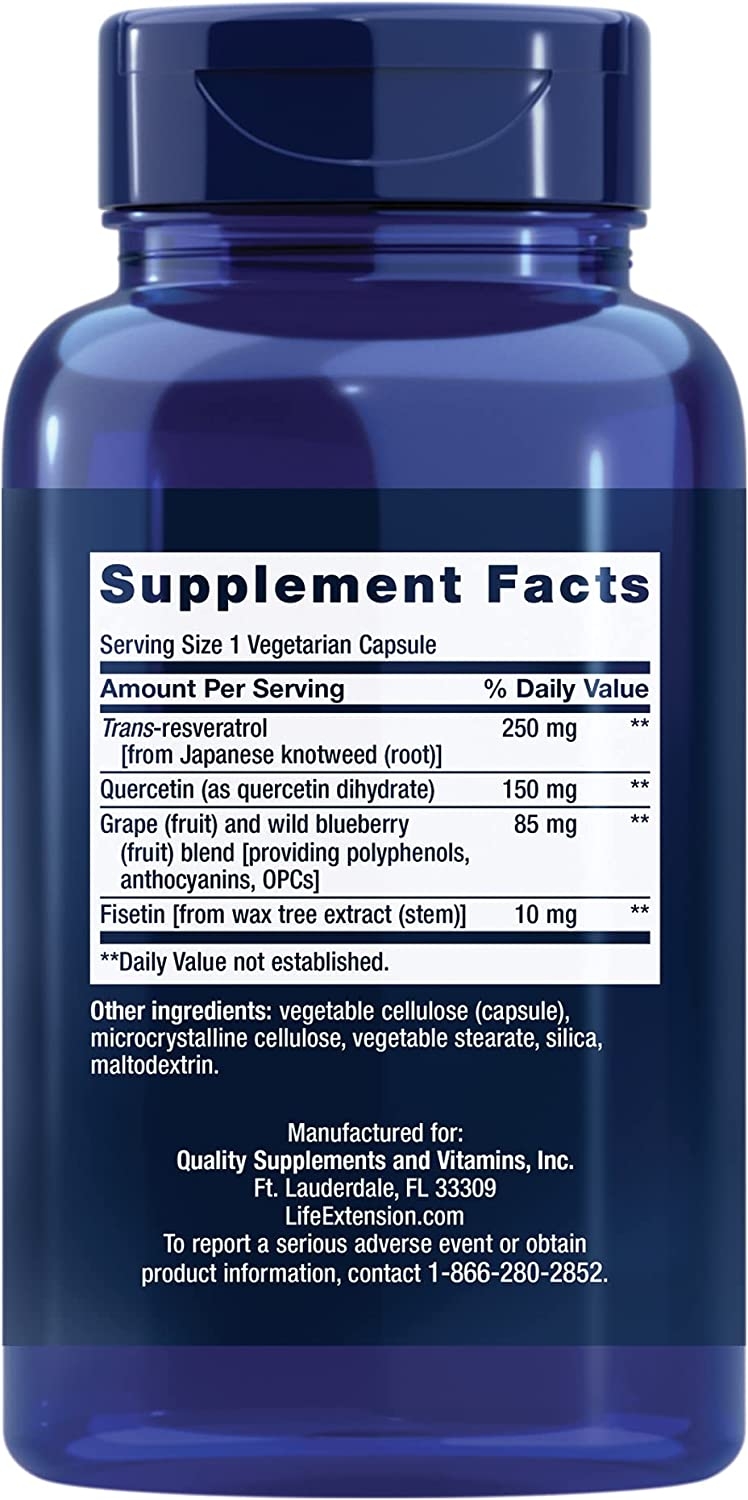
The product is Life Extension Optimized Resveratrol, 60 vegetarian capsules. The Supplement Facts photo shows a serving of one capsule with four ingredients, all with Daily Value not established. The directions read “Take one (1) capsule daily, or as recommended by a healthcare practitioner”, so a bottle lasts 60 days at the label dose (our calculation).
| This product (label directions) | Yoshino 2012 | Olesen 2014 | Poulsen 2013 | EFSA-assessed dose | NIH RDA / AI | Tolerable Upper Limit | |
|---|---|---|---|---|---|---|---|
| Trans-resveratrol per day | 250 mg (1 capsule) | 75 mg | 250 mg | 1,500 mg | Up to 150 mg (synthetic, adults) | None; not an essential nutrient | None established |
The capsule is about 1.7 times EFSA’s 150 mg, 3.3 times the dose in the null Yoshino trial and one-sixth of the dose in the null Poulsen trial (our calculations). “None established” for the upper limit reflects that no US authority has set one for this compound, not that any dose is safe. The panel also carries 150 mg of quercetin, which we discuss in our vitamin C and quercetin review, and 10 mg of fisetin. We did not review fisetin trials and take no position on that dose.
| Claim | Where it appears | What we checked |
|---|---|---|
| “Trans-pterostilbene” among the polyphenols | Store short description | Not on the Supplement Facts photo. The label lists trans-resveratrol, quercetin, a grape and blueberry blend and fisetin. The short description is wrong on this point |
| “Promotes youthful gene expression similar to calorie-restricted diets” | Store listing bullet | Manufacturer wording. In the 2012 trial at 75 mg, resveratrol did not change its putative targets, including SIRT1 and AMPK, in muscle or fat, though that was in nonobese women with normal glucose tolerance |
| “250 mg of resveratrol”, one capsule daily | Listing and label | Agree with the label photo |
The listing also leans on moderate red wine drinking and heart health; nothing above shows a capsule reproduces that. We did not verify potency, purity or contaminant testing; the photos show a Non-GMO mark but no laboratory or results. Under DSHEA these statements have not been evaluated by the FDA, and the label says the product is not intended to diagnose, treat, cure or prevent any disease.
Who Might Consider It, and Who Should Skip It
Who this is for: a healthy adult who has talked to a clinician or pharmacist, takes no CYP2C9-metabolised medicine, and is happy to pay for a polyphenol capsule on the strength of modest, mixed evidence rather than proof of longevity. Adults with diabetes or excess weight should raise the pooled results with their own doctor, since those effects were small and mostly at higher doses.
Who should skip it: most people, if the goal is living longer, protecting the heart or boosting metabolism; the cohort and the three trials above do not support those goals. Skip it, or ask first, if you take prescription medicines, are pregnant, breastfeeding or planning pregnancy, have a hormone-sensitive condition, or are under 18 (the EU authorisation is adults only). If you exercise to stay fit as you age, the 2014 trial is a reason to leave it out.
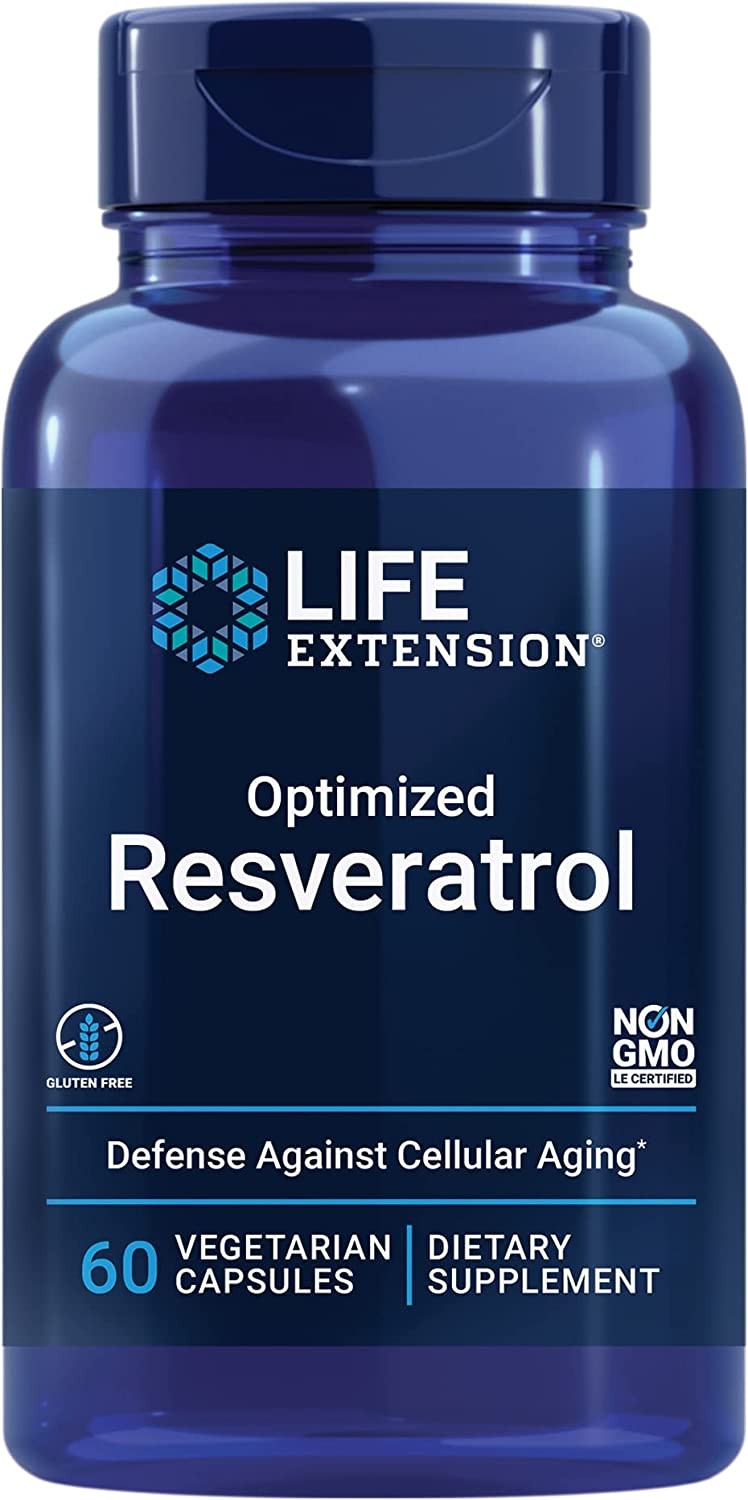
Life Extension Optimized Resveratrol, 60 Vegetarian Capsules
250 mg of trans-resveratrol from Japanese knotweed root per capsule, with quercetin, a grape and wild blueberry blend and fisetin; label directions are one capsule daily. Browse more supplements.
View Product DetailsFrequently Asked Questions
What does resveratrol do for the body?
Resveratrol is a plant polyphenol with no nutritional role in the human diet, per EFSA (2016). Its effects in trials are small and inconsistent: pooled analyses see modest changes in some blood pressure, glucose and waist measures, while three trials found no metabolic benefit.
Does resveratrol help you live longer?
Not shown in people. A 2014 study of 783 adults aged 65 or older found death rates over 9 years did not differ by dietary resveratrol exposure (P = .67). That study measured diet, not supplements, and no trial we reviewed measured lifespan.
Is 250 mg of resveratrol too much?
It exceeds the 150 mg a day that EFSA assessed in 2016 and the EU authorised for synthetic trans-resveratrol. That is not a formal upper limit, and EFSA reported stomach symptoms at 1 g a day or more.
Does resveratrol lower blood pressure or blood sugar?
Possibly, in some groups. A 2019 meta-analysis of 17 trials found no significant overall fall in systolic pressure (−2.5 mmHg), only at 300 mg or more and in diabetes. A 2015 diabetes analysis found better HbA1c but not fasting glucose.
Is resveratrol in a capsule the same as red wine?
No. EFSA says 150 mg a day is about 50 times the high-percentile intake from foods (2016). The 2014 cohort measuring dietary resveratrol found no mortality benefit, and nothing here supports drinking alcohol for health.
What are the side effects of resveratrol?
EFSA (2016) reported diarrhoea or other gastrointestinal symptoms in four uncontrolled studies at 1 g a day or more, and no treatment-related effects below 1 g in studies up to 3 months. The meta-analyses reported mostly no serious adverse events.
Can I take resveratrol with medication?
Ask first. EFSA (2016) said its metabolite may interact with medicines metabolised mainly by CYP2C9, and the 2016 EU decision requires a label statement that people using medicines should only consume it under medical supervision.
Who should not take resveratrol?
The label advises consulting a physician if you are pregnant, lactating or being treated for a medical condition. EFSA’s pregnant-rat margin of exposure was below 62 (2016), and the EU authorisation covers adults only. Also ask first with a hormone-sensitive condition or prescription medicines.
Sources
- EFSA Panel on Dietetic Products, Nutrition and Allergies. “Safety of synthetic trans-resveratrol as a novel food pursuant to Regulation (EC) No 258/97.” EFSA Journal 14(1):4368, published 12 January 2016. Accessed 20 October 2026. PDF copy hosted by the German BfR
- European Commission. “Commission Implementing Decision (EU) 2016/1190 authorising the placing on the market of trans-resveratrol as a novel food ingredient.” 19 July 2016. Accessed 20 October 2026. legislation.gov.uk
- Semba RD, Ferrucci L, Bartali B et al. “Resveratrol levels and all-cause mortality in older community-dwelling adults.” JAMA Internal Medicine, July 2014. Accessed 20 October 2026. PubMed record 24819981 (NLM)
- Yoshino J, Conte C, Fontana L et al. “Resveratrol supplementation does not improve metabolic function in nonobese women with normal glucose tolerance.” Cell Metabolism, November 2012. Accessed 20 October 2026. PubMed record 23102619 (NLM)
- Poulsen MM, Vestergaard PF, Clasen BF et al. “High-dose resveratrol supplementation in obese men.” Diabetes, April 2013. Accessed 20 October 2026. PubMed record 23193181 (NLM)
- Olesen J, Gliemann L, Bienso R et al. “Exercise training, but not resveratrol, improves metabolic and inflammatory status in skeletal muscle of aged men.” Journal of Physiology, April 2014. Accessed 20 October 2026. PubMed record 24514907 (NLM)
- Fogacci F, Tocci G, Presta V et al. “Effect of resveratrol on blood pressure: a systematic review and meta-analysis of randomized, controlled, clinical trials.” Critical Reviews in Food Science and Nutrition, 2019. Accessed 20 October 2026. PubMed record 29359958 (NLM)
- Hausenblas HA, Schoulda JA, Smoliga JM. “Resveratrol treatment as an adjunct to pharmacological management in type 2 diabetes mellitus: systematic review and meta-analysis.” Molecular Nutrition & Food Research, January 2015. Accessed 20 October 2026. PubMed record 25138371 (NLM)
- Setayesh A, Arzhang P, Baniasadi MM et al. “The effect of resveratrol supplementation on anthropometric indices, adiponectin and leptin levels in individuals with overweight and obesity.” International Journal of Obesity, March 2026. Accessed 20 October 2026. PubMed record 41455817 (NLM)
This article is for educational purposes only and is not medical advice. It is not intended to diagnose, treat, cure, or prevent any disease. These statements have not been evaluated by the Food and Drug Administration. Under the Dietary Supplement Health and Education Act, the FDA does not approve dietary supplements for safety or effectiveness before they are marketed. Talk to your doctor or pharmacist before starting any new supplement, especially if you take prescription medication, are pregnant or breastfeeding, or are being treated for a medical condition.