
A 2023 meta-analysis of 19 randomized trials found that ginseng did not significantly reduce fatigue when all the trials were pooled (standardized mean difference −0.36, 95% confidence interval −0.82 to 0.11), even though ginseng is widely sold as an "energy" herb. Asian ginseng (Panax ginseng) is a root used for centuries in East Asia, and this product is a fermented extract of it that the label calls GS15-4. Fermentation does change how the body absorbs ginseng's compounds, but absorption is not the same as benefit, and a search found no published study of this specific extract.
Key Takeaways
- NCCIH (updated February 2025) says most ginseng trials "have been small, with fewer than 200 participants, and shorter than 3 months," and that "the majority of research shows that Asian ginseng does not improve athletic performance."
- In the 2023 fatigue meta-analysis of 19 trials, pooled ginseng had no significant effect (p = 0.13); only subgroups did better, such as general fatigue (SMD −0.48) and herbal formulas, with "small" effect sizes.
- Two single-dose pharmacokinetic studies show fermented ginseng delivers more of certain ginsenosides: 69-fold higher peak compound K in one (6 g of extract, 16 men, 2022) and 15.5-fold higher IH-901 exposure in another (3 g, 24 men, 2012), though 5 of 24 had diarrhea in the second. Both were funded by Ilhwa, the company that holds the GS15-4 trademark.
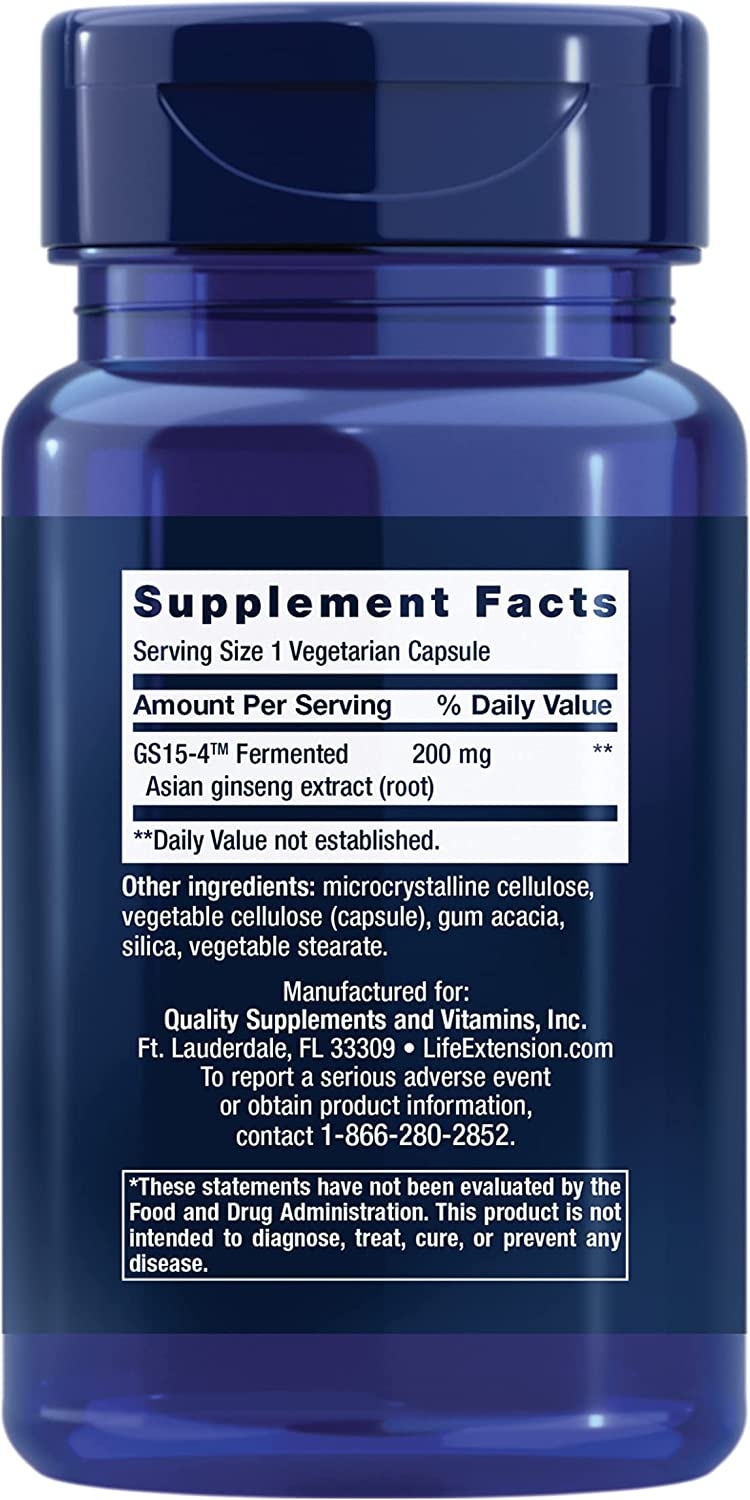
- This capsule contains 200 mg of GS15-4 fermented extract, one-thirtieth of the 6 g extract dose in the 2022 study, and the label does not state its ginsenoside content.
- NCCIH (updated February 2025) warns Asian ginseng "may worsen autoimmune disorders and interfere with blood clotting," may lower blood sugar, and most commonly causes insomnia.
In this article:
- What Is Asian Ginseng, and What Does NCCIH Say?
- Fatigue: A Non-Significant Pooled Result
- Cognition, Athletic Performance and Blood Sugar
- What Fermentation Changes, and What It Does Not Prove
- Safety, Sleep and Blood Thinners
- Inside Life Extension Ginseng Energy Boost
- Who Might Consider It, and Who Should Skip It
- Frequently Asked Questions
What Is Asian Ginseng, and What Does NCCIH Say?
According to NCCIH, Asian ginseng is native to the Far East, has been used in traditional Chinese medicine as a calming agent and as an adaptogen, and goes by names including Korean ginseng and red ginseng. "Red ginseng" and "white ginseng" refer to the same plant prepared two ways. The part used is the root, and the substances thought to matter most are called ginsenosides. It has been promoted for "stress, cognitive function, flu, fatigue, athletic performance, diabetes, aging, asthma, anxiety, and other conditions."
The agency's summary of the research base is a useful corrective to that list: the amount of research has grown, but "most of the clinical trials have been small, with fewer than 200 participants, and shorter than 3 months," and "larger multicenter studies that last longer than 3 months are needed." For a similarly adaptogen-labeled herb, see our ashwagandha article.
Fatigue: A Non-Significant Pooled Result
Energy is the headline promise, so start with fatigue. A 2023 systematic review in the Journal of Integrative and Complementary Medicine (Li and colleagues) pooled 19 randomized trials of ginseng and ginseng herbal formulas. NCCIH summarizes it, noting that Asian ginseng alone may have a small beneficial effect on general fatigue, that certain multi-ingredient formulas may help chronic fatigue but not ginseng alone, and that "not all research agrees." The abstract's numbers show why:
| Analysis | Standardized mean difference (95% CI) | Significant? |
|---|---|---|
| All ginseng versus controls, pooled | −0.36 (−0.82 to 0.11) | No (p = 0.13) |
| Ginseng herbal formulas | −0.39 (−0.66 to −0.13) | Yes (p = 0.004) |
| Chronic fatigue | −0.30 (−0.56 to −0.03) | Yes (p = 0.03) |
| General (non-disease-specific) fatigue, ginseng | −0.48 (−0.71 to −0.25) | Yes (p < 0.0001) |
Read the table from the top. The overall answer is that ginseng did not clearly reduce fatigue. The significant results came from subgroups, which is a weaker kind of evidence, and the authors state plainly that "effect sizes were small." They found no increase in adverse events versus controls and called for rigorous trials and standard usage guidelines. The honest summary is that ginseng may help a little with everyday tiredness for some people, and that the case for this particular capsule as an "energy" product is not settled by the trials.
"Most of the clinical trials have been small, with fewer than 200 participants, and shorter than 3 months."
— NIH National Center for Complementary and Integrative Health, Asian Ginseng (last updated February 2025)Mayo Clinic Health System on why you might be tired, a question worth asking before reaching for an energy supplement.
Cognition, Athletic Performance and Blood Sugar
NCCIH's reading of the other common claims is similarly hedged:
| Claim | NCCIH assessment |
|---|---|
| Cognitive function | A small amount of research suggests it may improve abstract thinking, attention, arithmetic and reaction time in middle-aged adults but not young adults; any memory benefit appeared to depend on adding ginkgo |
| Athletic performance | "The majority of research shows that Asian ginseng does not improve athletic performance" |
| Flu | "Very small amount of preliminary research" suggesting it may reduce the risk of developing flu, but not severity or duration |
| Blood sugar | A 2022 review of 20 studies found improved cardiometabolic factors in people with prediabetes and diabetes, but research on blood sugar control is "overall inconclusive and conflicting" |
| Aging, asthma, anxiety | Not enough reliable information |
Two points stand out. The memory finding depending on ginkgo is a reminder that supplements are often studied in combination, and our ginkgo article covers what a large NIH trial found for ginkgo alone. And the athletic performance conclusion matters here because this product is marketed for "energy": ginseng's reputation as a performance herb is not supported by most of the research NCCIH reviewed.
What Fermentation Changes, and What It Does Not Prove
This product's selling point is that its extract is fermented. There is real science behind the premise. A 2022 crossover trial in Pharmaceutics (Shin and colleagues) gave 16 healthy Korean men a single 6 g dose of fermented or non-fermented red ginseng extract. Every measured ginsenoside except Rb1 showed higher exposure after the fermented product, and compound K, the main ginsenoside produced during fermentation, had a 69.23-fold higher peak concentration and 74.53-fold higher area under the curve. There were no clinically significant safety findings, and the authors concluded that regular fermented ginseng "may exert better pharmacological effects." A 2012 study in the Journal of Ethnopharmacology (Jin and colleagues) found a 15.5-fold higher exposure to the metabolite IH-901 in 24 men given 3 g of fermented ginseng, though 5 of the 24 experienced diarrhea after the fermented dose. Both studies were funded by Ilhwa, the company named on this label as the GS15-4 trademark holder: the 2022 paper states that Ilhwa supplied both extracts and that one author is an Ilhwa employee, and the 2012 paper lists Ilhwa Pharmaceutical as its funder. Neither paper names its extract as GS15-4, so whether either tested this exact ingredient is not stated.
Three caveats keep that in proportion. First, these are absorption studies: higher blood levels of a compound show it gets in, not that it does anything useful. Second, they used single doses far larger than this capsule: the 2022 study gave 6 g of extract, 30 times this capsule's 200 mg, and the 2012 study gave 3 g of fermented ginseng. Third, we searched Europe PMC for the extract's name, "GS15-4," and found no published study of it, while a control search for another named ginseng extract found its studies. That is a search result, not proof that no study exists, but it means the product's efficacy rests on the general ginseng literature above.
Safety, Sleep and Blood Thinners
NCCIH says short-term oral use of Asian ginseng "in recommended amounts appears to be safe for most people," up to six months, while "questions have been raised about its long-term safety." Insomnia is "the herb's most common side effect." Uncommon side effects reported include severe rash, liver damage and severe allergic reactions. The cautions that matter for a daily capsule are these:
Genuine safety warning: NCCIH says Asian ginseng "may worsen autoimmune disorders and interfere with blood clotting," and that some evidence suggests it might lower blood sugar. If you have diabetes, an autoimmune condition or take a blood thinner, consult your health care provider before using it. NCCIH also says some studies suggest it may be unsafe orally during pregnancy, and that one of its chemicals has been found to cause birth defects in animals.
NCCIH adds that Asian ginseng "might interact with certain medications." If you take any medicine, ask your provider or pharmacist first. Our vitamin B12 article covers another supplement sold as an energy fix.
Inside Life Extension Ginseng Energy Boost
Life Extension Ginseng Energy Boost is a 30-count bottle of vegetarian capsules. The Supplement Facts panel lists a serving of one capsule containing 200 mg of "GS15-4 Fermented Asian ginseng extract (root)," with no established Daily Value. Other ingredients are microcrystalline cellulose, vegetable cellulose (the capsule), gum acacia, silica and vegetable stearate. The label directs one capsule daily, which makes the bottle a 30-day supply, and notes that GS15-4 is a trademark of ILHWA N.A.
| This product | Typical study dose | NIH RDA / AI | Tolerable Upper Limit | |
|---|---|---|---|---|
| Fermented ginseng extract | 200 mg per capsule; 1 capsule daily | Absorption studies: a single 6 g dose of fermented red ginseng extract (2022) and a single 3 g dose of fermented ginseng (2012); fatigue trials: doses not stated in the abstracts reviewed | None: not an essential nutrient | None established; NCCIH: safe up to 6 months in recommended amounts |
| Ginsenoside content | Not stated on the label | Varies by product | None | None |
Two label details deserve mention. The panel does not state a ginsenoside percentage, the standardization marker most ginseng products carry, so the concentration of the compounds NCCIH calls most important cannot be checked. And the label's plant name is "Asian ginseng" while the store listing says "Panax ginseng" and "Korean ginseng"; NCCIH treats these as names for the same plant, Panax ginseng, so this is a naming difference, not a discrepancy.
What the listing claims versus what the evidence supports: the store description says the fermentation "dramatically improve[s] the bioavailability and absorption of its active ginsenoside compounds," that the formula "supports ATP energy production," provides "adaptogenic support," and supports "positive mood, exercise endurance, and stress resilience." The absorption premise has support in two Ilhwa-funded single-dose studies at much larger doses. The remaining claims are manufacturer statements: NCCIH says most research finds no athletic-performance benefit, and the pooled fatigue result was not significant.
Who Might Consider It, and Who Should Skip It
Who this is for: healthy adults who have discussed ginseng with a clinician, are curious about a low-dose fermented extract for everyday tiredness, will use it short term (NCCIH's studied window is up to 6 months), and accept that the expected effect is small and unproven for this specific extract.
Who should skip it: anyone with diabetes or an autoimmune condition without their clinician's agreement; anyone taking blood thinners; anyone pregnant or breastfeeding; children, since NCCIH notes some experts recommend against ginseng for infants and children; anyone prone to insomnia; and, frankly, most people, whose persistent tiredness deserves a medical look before a supplement.
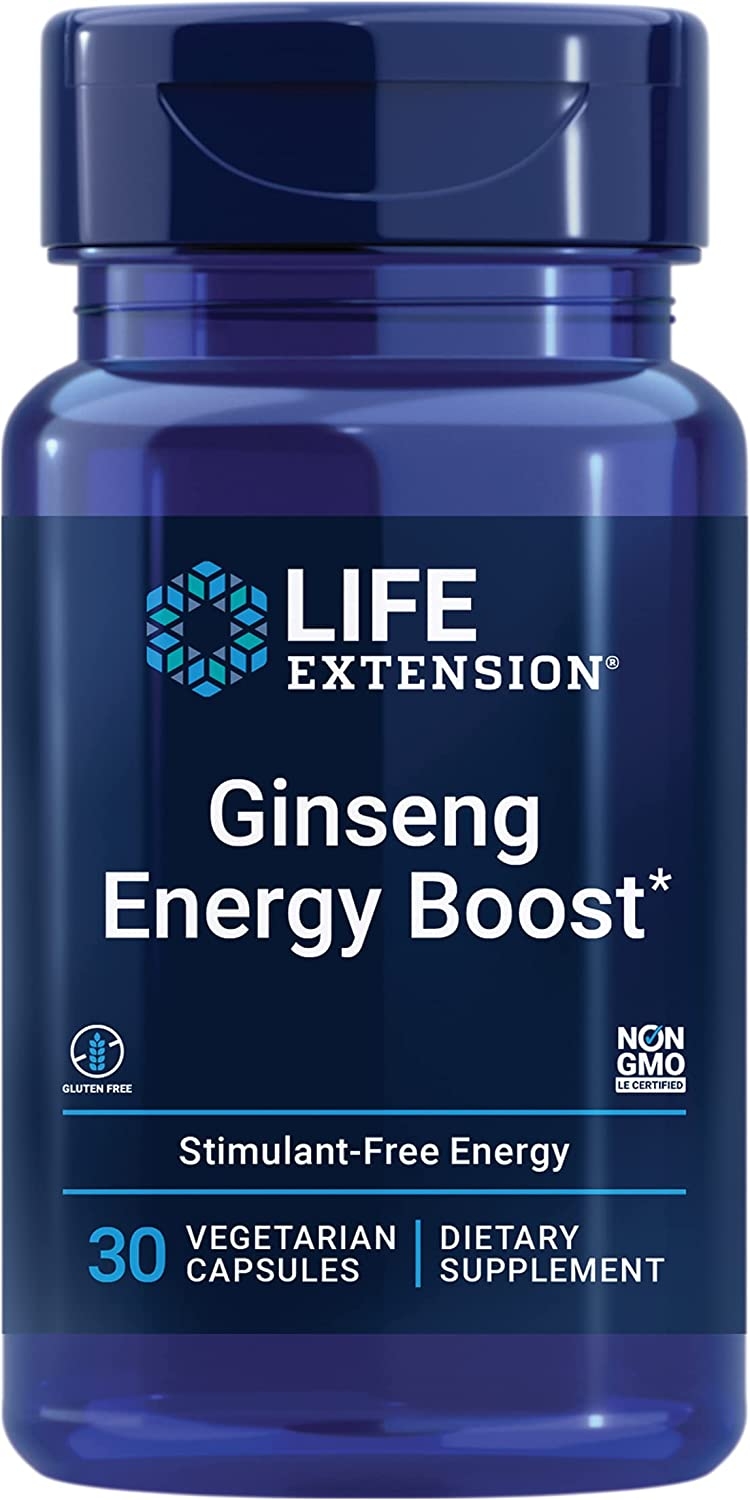
Life Extension Ginseng Energy Boost — 30 Vegetarian Capsules
200 mg of GS15-4 fermented Asian ginseng root extract per capsule, one capsule daily, 30-day supply. As covered above, the pooled evidence for ginseng and fatigue is not significant, and NCCIH warns of blood-clotting and blood-sugar effects. Browse more in our herbal supplements.
View Product DetailsFrequently Asked Questions
Does ginseng give you energy?
Not reliably. A 2023 meta-analysis of 19 trials found no significant fatigue reduction when all ginseng trials were pooled (p = 0.13), though general fatigue improved slightly in a subgroup. NCCIH says most research finds no athletic-performance benefit.
Is fermented ginseng better than regular ginseng?
It is better absorbed in some respects. Studies in healthy men found far higher blood levels of compounds like compound K after fermented ginseng. Whether that produces better health outcomes has not been shown, and this specific extract, GS15-4, has no published trial we could find.
How much ginseng should I take per day?
No official dose exists. This label directs one 200 mg capsule daily. The absorption studies used single doses of 3 g and 6 g, the larger being extract, about 30 times this capsule. Follow the label or your clinician's advice; NCCIH's safety data cover up to six months.
Is ginseng safe to take every day?
NCCIH says short-term oral use, up to 6 months, in recommended amounts appears safe for most people, but long-term safety questions exist. Insomnia is the most common side effect; rare ones include severe rash, liver damage and allergic reactions.
Does ginseng interact with medications?
NCCIH says Asian ginseng might interact with certain medications, may interfere with blood clotting, may lower blood sugar and may worsen autoimmune disorders. If you take blood thinners, diabetes medicine or any prescription, ask your provider first.
Is ginseng safe during pregnancy?
NCCIH says some studies suggest it may be unsafe when taken orally during pregnancy, and one of its chemicals has caused birth defects in animals. Little is known about breastfeeding. If you are pregnant or nursing, consult your health care provider.
Is Korean ginseng the same as Asian ginseng?
Yes. NCCIH lists Korean ginseng and red ginseng among the names for Asian ginseng, Panax ginseng. Red and white ginseng are the same plant prepared differently, and NCCIH notes that Asian ginseng is one of several types of ginseng.
Does ginseng improve memory or focus?
Slightly, in some groups. NCCIH says small studies suggest it may improve attention, arithmetic and reaction time in middle-aged adults but not young adults, and that any memory benefit appeared to depend on adding ginkgo.
Sources
- NIH National Center for Complementary and Integrative Health. "Asian Ginseng." Last updated February 2025. Accessed 29 September 2026. nccih.nih.gov
- Li X, et al. Ginseng and ginseng herbal formulas for symptomatic management of fatigue: a systematic review and meta-analysis. J Integr Complement Med, 2023;29(8):468-482. Accessed 29 September 2026. doi.org/10.1089/jicm.2022.0532
- Shin MB, et al. Pharmacokinetic comparison of ginsenosides between fermented and non-fermented red ginseng in healthy volunteers. Pharmaceutics, 2022;14(12):2807. Accessed 29 September 2026. doi.org/10.3390/pharmaceutics14122807
- Jin H, et al. Pharmacokinetic comparison of ginsenoside metabolite IH-901 from fermented and non-fermented ginseng in healthy Korean volunteers. J Ethnopharmacol, 2012;139(2):664-667. Accessed 29 September 2026. doi.org/10.1016/j.jep.2011.11.052
- NIH National Center for Complementary and Integrative Health. "Using Dietary Supplements Wisely." Accessed 29 September 2026. nccih.nih.gov
This article is for educational purposes only and is not medical advice. It is not intended to diagnose, treat, cure, or prevent any disease. These statements have not been evaluated by the Food and Drug Administration. Talk to your doctor before starting any new supplement, especially if you are pregnant, breastfeeding, have diabetes or an autoimmune condition, take blood thinners or any prescription medication, or have a medical condition.